What a Labradoodle Takes From the Poodle
Bringing a Labradoodle into your home can be incredibly exciting, but many prospective owners have a lot of questions about what traits they're really getting. There's a common misconception that because it's a crossbreed, you're guaranteed the "best of both worlds" without any of the potential downsides. That's just not how genetics work, and it leaves many folks wondering what exactly their beloved Labradoodle will inherit from its Poodle parent. This guide will dive deep into the specific characteristics and predispositions a Labradoodle can take from the Poodle side of its family tree, helping you understand what to expect.
The Poodle's Enduring Coat Contribution
When people think of a Poodle, the first thing that often comes to mind is that distinct, curly coat. This unique hair type is a massive draw for many looking at Labradoodles, primarily due to the Poodle's reputation for being low-shedding. However, it's crucial to understand the nuances of this genetic inheritance.
The Low-Shedding Myth and Reality
Poodles have hair, not fur in the traditional sense, and it grows continuously like human hair. Instead of shedding in clumps or coating your furniture in a fine layer of fuzz, their shed hair tends to get caught within the curls of their coat. This is why Poodles are often lauded as "hypoallergenic," a term that, while popular, isn't entirely accurate. No dog is 100% hypoallergenic, as people can react to dander, saliva, or urine, not just hair. However, Poodles do produce less dander and release fewer allergens into the environment than many other breeds.
When a Labrador Retriever, a notorious shedder with a dense double coat, is crossed with a Poodle, the resulting Labradoodle's coat can be a lottery. Some Labradoodles will inherit the Poodle's low-shedding qualities, often sporting a curly or wavy coat. Others might lean more towards the Labrador's shedding double coat, or a combination that still sheds significantly. There's no guarantee, especially in first-generation crosses, which can be a real frustration for families hoping for a truly "hypoallergenic" dog. Understanding Why Poodles Have Hair Rather Than Fur can help you appreciate the genetic difference at play.
Grooming Demands and Coat Types
Regardless of the shedding level, the Poodle's coat demands a significant amount of grooming, and this is a trait that Labradoodles definitely inherit. A Poodle's hair will mat quickly if not brushed thoroughly and regularly. We're talking brushing down to the skin, several times a week, often daily for longer clips, to prevent painful tangles that can turn into solid felt.
Labradoodles can exhibit a range of coat types, often categorized as wool, fleece, or hair. The wool coat is dense and curly, very much like a Poodle's, and requires rigorous brushing and professional grooming every 6-8 weeks. The fleece coat is softer, wavier, and may be slightly less prone to matting but still needs regular attention. The hair coat, which resembles more of a Labrador's, can be coarser and may shed more, but also requires grooming to prevent tangles and keep it healthy. Many a new Labradoodle owner has been surprised by the sheer amount of effort required to keep their dog's coat healthy, discovering that a short haircut doesn't eliminate the need for regular brushing entirely. You'll find yourself needing quality brushes and combs, maybe even a good dog shampoo from a reliable retailer like Chewy, to keep up with their needs. The article Whether Doodle Coats Are Predictable goes into more detail about this variability.
Intelligence and Trainability: The Poodle Mind at Play
Poodles are renowned for their exceptional intelligence, often ranked among the smartest dog breeds. This sharp mind is a significant contribution to the Labradoodle's genetic makeup, influencing everything from their ability to learn commands to their need for mental engagement.
Poodle's Reputation for Brightness
Poodles consistently rank high on intelligence scales, often placing second only to the Border Collie in studies like those conducted by Stanley Coren. This isn't just about being able to learn a "sit" command quickly; it's about problem-solving, understanding complex sequences, and adapting to new situations with remarkable ease. A Poodle can learn a new command in as few as five repetitions, and they often pick up on your routines and intentions before you even fully articulate them. This is part of Poodle Intelligence and Coren's Ranking.
However, this high intelligence comes with its own set of challenges. A Poodle's brain is always working, always analyzing, and if it's not given productive outlets, it will find its own forms of entertainment – which might not align with your preferences. Bored Poodles can become destructive, inventing their own games, which might include counter-surfing, excessive barking, or digging.
The Labradoodle's Inherited Wit
Labradoodles often inherit this incredible Poodle intelligence, making them highly trainable and eager to please. They typically excel in obedience, agility, and other dog sports, often picking up new tricks and commands at a surprising pace. This can be a huge advantage for owners who are committed to training and want an active, engaged companion. Their intelligence also makes them excellent candidates for service and therapy work.
However, just like their Poodle parent, Labradoodles with a strong Poodle influence also demand mental stimulation to thrive. Simple walks might not be enough to satisfy their keen minds. Puzzle toys, scent work, advanced obedience classes, or even just consistent training sessions that challenge them mentally are vital. Without this engagement, a Labradoodle can become easily bored, leading to undesirable behaviors. They might start to invent their own shortcuts in training, or Why a Clever Poodle Still Has Accidents could be due to a lack of proper mental engagement. Many owners find themselves frequently restocking puzzle toys and engaging treats from places like Chewy to keep their smart doodles happy.
Temperament and Personality Traits
Beyond their physical traits and intellect, Poodles bring a distinct set of temperament characteristics to the Labradoodle, shaping their overall personality and how they interact with their human families and the world around them.
The Poodle's Loyal and Affectionate Nature
Poodles are known for being incredibly loyal, affectionate, and sensitive dogs. They form strong bonds with their families and often have a "velcro" tendency, wanting to be wherever their people are. They thrive on companionship and can be quite emotionally attuned to their owners, often sensing moods and offering comfort. This deep connection makes them wonderful, devoted companions. This strong attachment explains The Poodle That Follows You Everywhere.
However, this sensitivity also means they don't respond well to harsh training methods or prolonged isolation. A Poodle can shut down or become anxious if they feel misunderstood or neglected. They are generally good with children and other pets, especially if properly socialized from a young age, but their reserved nature means they might not be immediately boisterous with strangers.
Socialization and Sensitivity in Labradoodles
Many Labradoodles inherit this loyal, affectionate, and sensitive nature from their Poodle parent. They are often described as being very people-oriented, thriving on interaction and becoming deeply devoted members of the family. This makes them excellent family dogs, eager to participate in family activities and cuddle on the sofa.
This inherited sensitivity also means that early and consistent socialization is paramount for a Labradoodle. Without it, they can become shy or wary around new people, places, or experiences. Just like Poodles, Labradoodles with a strong Poodle temperament can be prone to separation anxiety if left alone for extended periods without proper training and preparation. Their intelligent and sensitive minds require gentle, positive reinforcement training methods. A good quality dog bed, perhaps one from Chewy, can provide a comforting 'safe space' for a sensitive Labradoodle to retreat to when needed. Understanding Poodle Temperament and Sensitivity is key to raising a well-adjusted Labradoodle.
Health Considerations Inherited from the Poodle
While the idea of "hybrid vigor" often floats around discussions of crossbreeds, it's a simplification that can mislead owners. Labradoodles certainly can be healthier than some purebreds due to a wider gene pool, but they are still susceptible to many of the genetic health conditions found in both parent breeds, including those prevalent in Poodles.
Genetic Predispositions and Screening
Poodles, like all purebreds, have certain genetic health predispositions. These include:
- Hip Dysplasia: A malformation of the hip joint, common in larger Poodles.
- Progressive Retinal Atrophy (PRA): A group of degenerative eye diseases that can lead to blindness. Inherited Blindness in Poodles is a serious concern.
- Addison's Disease: An autoimmune disorder affecting the adrenal glands, which can be life-threatening if untreated. Addison's Disease in Standard Poodles is particularly notable.
- Bloat (Gastric Dilatation-Volvulus): A sudden, life-threatening condition where the stomach twists, especially prevalent in deep-chested Standard Poodles. This is covered in Bloat and the Deep Standard Poodle Chest.
- Sebaceous Adenitis: An inflammatory skin disease that affects the sebaceous glands, leading to hair loss and skin issues.
- Thyroid Disease: Hypothyroidism is not uncommon.
- Von Willebrand Disease: A bleeding disorder.
Labradoodles can inherit any of these conditions from their Poodle parent. This is why choosing a reputable breeder who performs comprehensive health testing on both parent dogs is not just recommended, but absolutely critical. A responsible breeder will screen for hip and elbow dysplasia, various eye conditions, von Willebrand disease, and often test for Addison's markers. They should be transparent with these results, proving that they're actively working to minimize the risk of passing on known genetic conditions. This diligence is part of What a Poodle Breeder Must Test For.
The "Hybrid Vigor" Myth vs. Reality
The concept of "hybrid vigor," or heterosis, suggests that crossbred animals are generally healthier and more robust than purebreds due to increased genetic diversity. While it's true that breeding two unrelated lines can reduce the incidence of recessive genetic diseases, it doesn't magically eliminate all health risks. A Labradoodle still carries the genes from both a Labrador and a Poodle. If both parents carry a gene for a specific disease, their offspring can still inherit it. For example, if both the Poodle parent and the Labrador parent have a predisposition for hip dysplasia, the Labradoodle puppy is still at risk.
Responsible breeding, whether of purebreds or crossbreeds, relies on careful health screening and selection of breeding stock. Simply mixing two breeds without health testing can result in puppies inheriting more potential health issues, not fewer, as they are now at risk for conditions from both sides of the family tree. Therefore, while a Labradoodle might, on average, have a slightly lower risk for some specific conditions compared to poorly bred purebreds, it is by no means immune to disease. Understanding Genetic Panels for the Three Poodle Sizes is helpful, as these panels would be relevant for a Poodle parent in a Labradoodle breeding program.
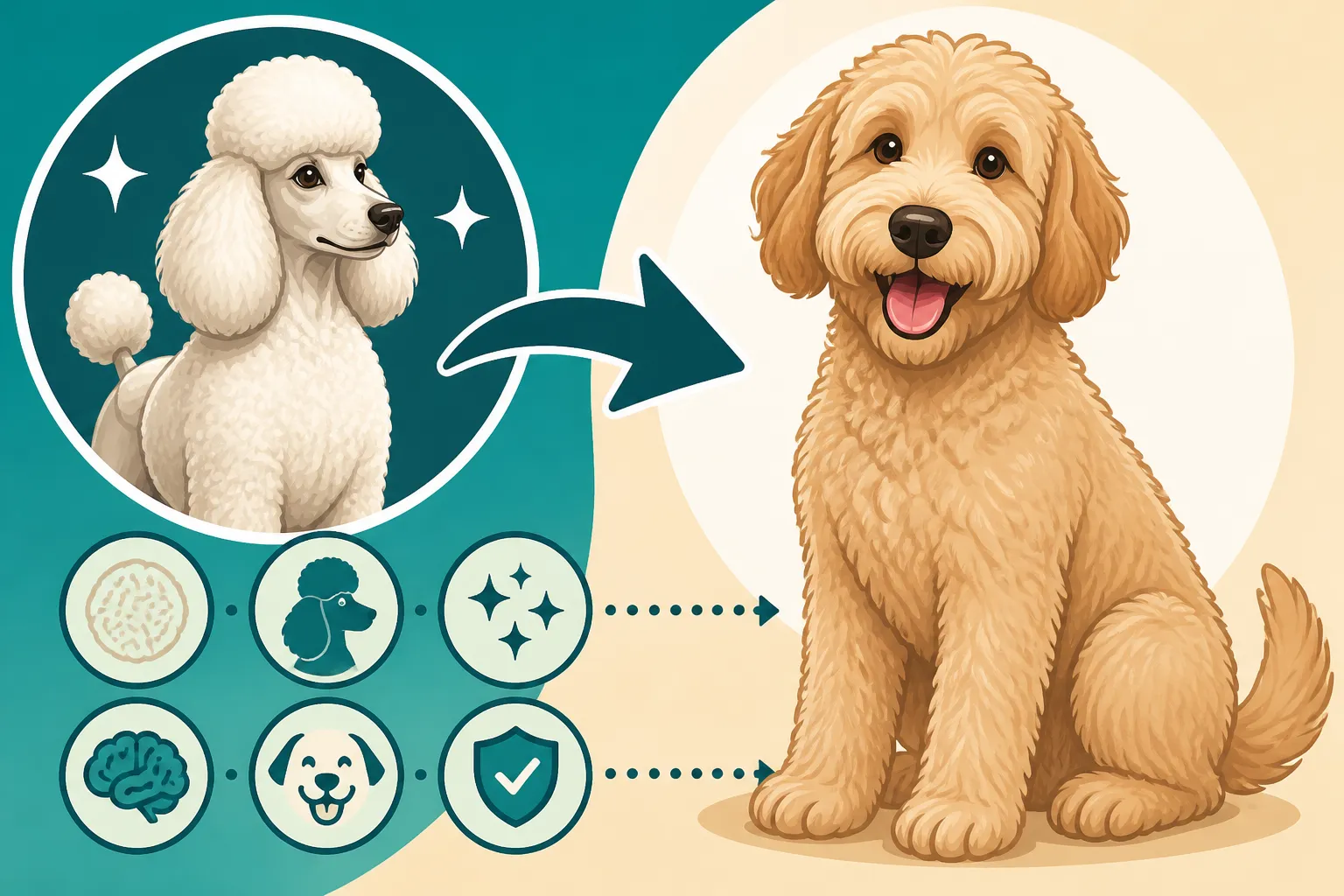
| Poodle Trait Contribution | Impact on Labradoodle | Considerations for Owners |
|---|---|---|
| Low-Shedding Coat | Can lead to reduced shedding, but not guaranteed. | Grooming is still high maintenance. |
| Curly/Wavy Hair | Requires frequent brushing to prevent matting. | Expect professional grooming every 6-8 weeks. |
| High Intelligence | Quick to learn, highly trainable. | Needs significant mental stimulation to prevent boredom and mischief. |
| Affectionate Nature | Forms strong bonds, very people-oriented. | Can be prone to separation anxiety if not trained. |
| Sensitivity | Responds best to positive reinforcement. | Avoid harsh training; requires gentle handling. |
| Genetic Health Issues | Can inherit conditions like hip dysplasia, Addison's, PRA, bloat. | Choose a reputable breeder who health tests extensively. |
Disclaimer
This article is for general informational purposes only and does not constitute professional advice. Laws, prices and regulations vary by location and change over time. Consult a qualified professional for guidance on your specific situation.