Poodle Obesity and Its Consequences
It can be incredibly frustrating to feel like you’re doing everything right for your beloved Poodle, yet still wonder if they’re carrying a little too much weight. Their gorgeous, voluminous coats, which we adore for their non-shedding qualities, are also masters of disguise, often hiding extra pounds from even the most vigilant owner. This guide is here to cut through the confusion, helping you identify, prevent, and effectively manage obesity in Poodles of all sizes, ensuring your curly companion lives their healthiest, happiest, and longest life possible.
Understanding What Poodle Obesity Truly Means
When we talk about obesity in Poodles, we’re not just talking about a little extra fluff. It's a serious medical condition with far-reaching consequences, impacting nearly every system in your dog's body. The challenge, however, often lies in the breed's very aesthetic.
Why a Poodle's Coat Hides Weight Gain
Let's be honest, one of the most distinctive features of a Poodle is that magnificent coat. Whether it’s in a fluffy puppy clip, a sleek continental, or a practical kennel cut, that dense, curly hair adds significant visual volume. This makes it incredibly difficult to assess your Poodle's true body shape just by looking at them. You might be staring at your Poodle, thinking they look perfectly plump and cuddly, when in reality, underneath all that gorgeous curl, they’re carrying excess fat.
This optical illusion is a common frustration for Poodle owners. A Poodle can gain a surprising amount of weight before it becomes visibly obvious through their coat. Fat deposits tend to accumulate first over the ribs, along the spine, and around the base of the tail – precisely the areas often obscured by their thick hair. By the time you see the weight gain, it might be more substantial than you realize, which means we need to learn to "feel" for their condition rather than just "see" it.
The Health Risks of Carrying Extra Weight
Obesity isn't just about appearance; it's a gateway to a host of debilitating health issues for Poodles. Just like in humans, extra weight puts immense strain on the body, accelerating the onset and severity of many diseases. It's a silent killer that can drastically shorten your Poodle’s life and diminish their quality of every single day.
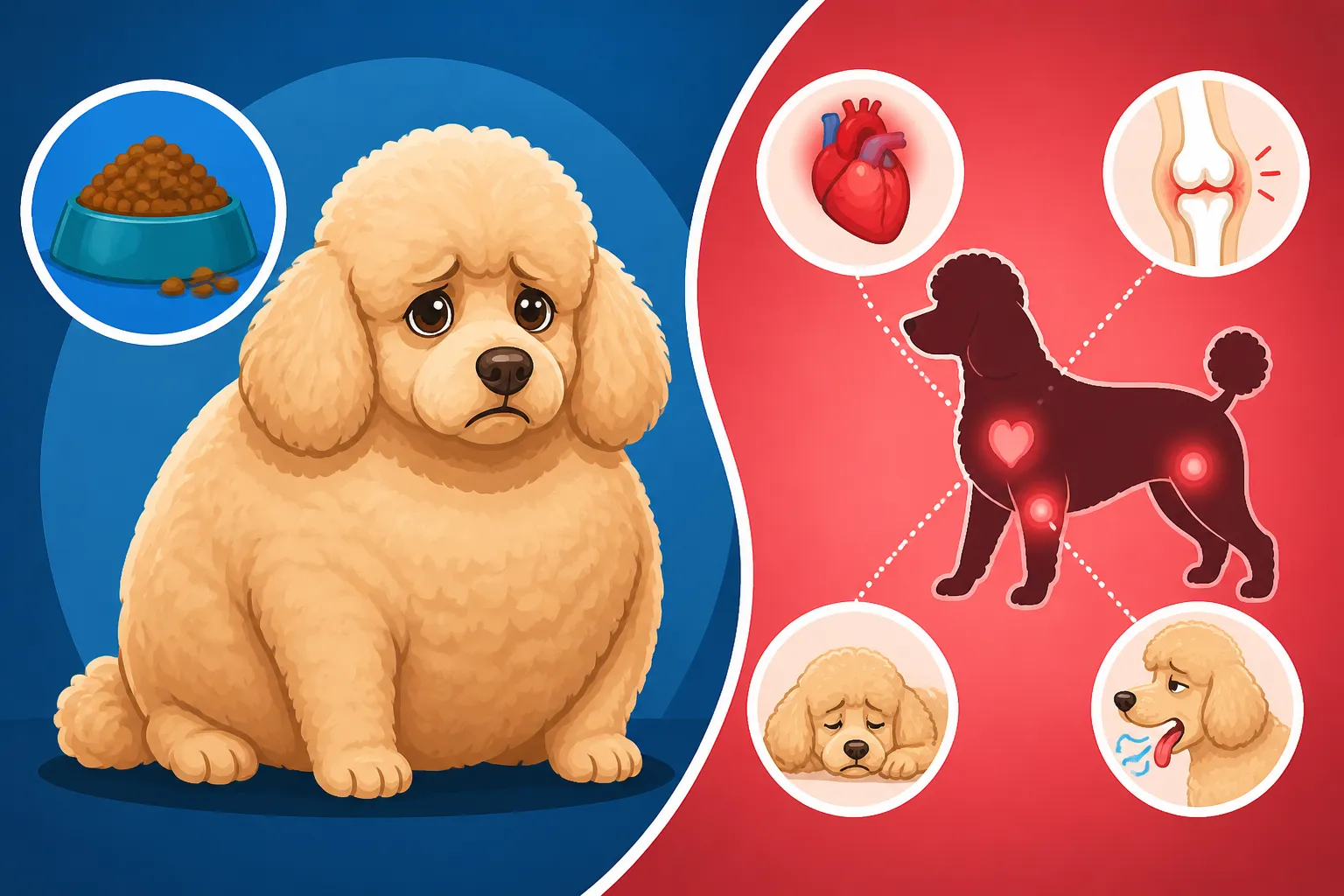
Consider the joint problems we see in Poodles, like Luxating Patella in Toy and Miniature Poodles or even hip issues in larger Standards. Add extra weight to already stressed joints, and you're speeding up degenerative changes and increasing pain. Beyond the orthopedic issues, obesity significantly increases the risk of metabolic diseases such as type 2 diabetes, certain types of cancer, heart disease, high blood pressure, and even respiratory problems, particularly in older or smaller Poodles. A heavier dog requires more oxygen, which puts more stress on their lungs and heart. It's a vicious cycle that, left unchecked, can lead to a severely compromised life for your beloved companion.
Spotting the Signs: How to Accurately Assess Your Poodle's Weight
Since their luscious coats can be such masterful deceivers, actively and regularly assessing your Poodle's body condition is absolutely critical. You can't rely on sight alone; you need to get hands-on and pay attention to their behavior.
Feeling Ribs Under a Thick Poodle Coat
This is perhaps the most fundamental skill every Poodle owner needs to master: performing a proper body condition assessment by touch. Forget what your Poodle looks like after a fresh groom; what matters is what you can feel underneath that beautiful hair.
To do this correctly, gently run your hands along your Poodle's sides, over their rib cage. You should be able to easily feel their ribs, almost like feeling the knuckles on the back of your hand. You shouldn’t see them jutting out, but you should definitely be able to distinguish each individual rib without having to press hard. If you have to dig your fingers in, or if you feel a thick layer of padding over the ribs, your Poodle is likely overweight. Do the same over their spine, feeling for the individual vertebrae, and around their hip bones. If these bony prominences are hard to locate through a layer of fat, it’s a red flag. Practicing this regularly – perhaps once a week while you’re brushing them – will help you recognize subtle changes quickly.
Behavioral Clues That Suggest Obesity
Sometimes, your Poodle will tell you they’re struggling before you even lay a hand on them. Pay close attention to subtle shifts in their daily routine and enthusiasm. Are they suddenly reluctant to jump on the sofa or into the car, something they used to do with ease? Do they seem less keen on their usual walk or playtime, lagging behind or tiring out much faster than before? This reduced activity isn't just a sign of aging; it could be their joints protesting under extra weight.
Other behavioral indicators include labored breathing after minimal exertion, an increase in snoring (which can indicate fat accumulation around the throat), or even difficulty reaching to scratch certain spots or perform their own grooming. You might notice they struggle to get comfortable lying down or seem to sleep more, not out of contentment, but out of lethargy. Any significant change in energy levels or mobility should prompt a closer look at their weight and a conversation with your veterinarian. Remember, Reading Pain in a Sensitive Poodle can be subtle, and a Poodle might hide discomfort until it becomes severe.
The Body Condition Scoring (BCS) System for Poodles
Veterinarians use a standardized tool called the Body Condition Scoring (BCS) system to objectively assess a dog’s weight, typically on a 1-5 or 1-9 scale. For Poodles, understanding how to apply this is crucial because of their dense coat.
| BCS Score (1-9) | Appearance & Feel | Poodle Interpretation |
|---|---|---|
| 1-3 (Underweight) | Ribs, spine, and pelvic bones easily visible, no fat on the body. Obvious waist and abdominal tuck. | Even with a Poodle's coat, you'd feel bones very prominently. This is rare in pet Poodles but can indicate underlying illness or severe neglect. |
| 4-5 (Ideal) | Ribs easily palpable without excess fat covering. Waist easily noted when viewed from above. Abdominal tuck present. | You can easily feel each rib and the hip bones with light pressure. Your Poodle will have a noticeable "tuck" in their abdomen when standing, and a waist when viewed from above (though their coat might obscure the visual, you should feel it). This is the goal for a healthy Poodle. |
| 6-7 (Overweight) | Ribs palpable with slight difficulty; heavy fat cover. Waist discernible but not prominent. Slight abdominal tuck or none. | You'll have to press a bit to feel the ribs. The waist will be less defined, and the abdominal tuck will be less obvious or even absent. This is where many Poodles unfortunately begin to sit, often due to owners misinterpreting the coat. |
| 8-9 (Obese) | Ribs not palpable without significant pressure. Heavy fat deposits over lumbar area, face, limbs. No waist. Obvious abdominal distention. | Ribs are very difficult or impossible to feel. There are obvious fat deposits, particularly over the chest, neck, and tail base. Your Poodle's silhouette will look more like a barrel, and they'll likely show behavioral signs of discomfort or lethargy. This is a severe health risk. |
The ideal score for most Poodles is a 4 or 5. Regularly performing this physical assessment will become second nature and is one of the most effective ways to monitor your Poodle's health. Don't hesitate to ask your vet to demonstrate how to properly body condition score your Poodle during your next check-up.
The Far-Reaching Consequences of Poodle Obesity
Beyond the immediate visual, the true cost of obesity in Poodles is borne internally, impacting their long-term health and overall well-being in profound ways. It's a cascading effect that touches everything from their bones to their most vital organs.
Increased Strain on Joints and Mobility Issues
Poodles, especially the smaller varieties, are already predisposed to certain orthopedic conditions. Toy Poodles and Miniature Poodles can be prone to Luxating Patella in Toy and Miniature Poodles, where their kneecap slips out of place. Standard Poodles, while generally robust, can still experience Hip Scores Standard Poodle Breeders Publish that indicate a predisposition to hip dysplasia. When you add extra weight to this equation, you’re not just increasing the risk; you’re accelerating the damage.
Every extra pound your Poodle carries puts exponential strain on their joints, ligaments, and cartilage. This leads to increased inflammation, pain, and the premature onset or worsening of degenerative joint diseases like arthritis. Imagine carrying a heavy backpack all day, every day – that's what it feels like for an overweight dog. They’ll struggle to move comfortably, play, or even get up from a lying position. This chronic discomfort can drastically reduce their mobility, making them less willing to exercise, which only further exacerbates the weight problem. For an aging Poodle, carrying excess weight can make Arthritis in a Twelve-Year-Old Poodle far more painful and limiting, severely impacting their golden years.
Metabolic Disorders and Internal Organ Stress
Obesity isn't just a physical burden; it's a metabolic one. Fat cells are not inert storage units; they are active endocrine organs that release hormones and inflammatory substances, disrupting the body's delicate balance. This can lead to a host of metabolic disorders, the most common being type 2 diabetes, where the body struggles to regulate blood sugar. Poodles are already susceptible to conditions like Thyroid Disease in Poodles, and while not directly caused by obesity, being overweight can complicate the management of existing metabolic issues or even contribute to their development.
The internal organs also take a hit. The liver can become fatty, leading to hepatic lipidosis. The heart has to work harder to pump blood to a larger body mass, increasing the risk of cardiac disease and high blood pressure. The kidneys can be stressed, and the immune system can be compromised, making your Poodle more vulnerable to infections. Even certain types of cancer have been linked to obesity. It’s a systemic issue that silently erodes your Poodle's health from the inside out.
Reduced Lifespan and Quality of Life
Perhaps the most heartbreaking consequence of Poodle obesity is the reduction in both lifespan and overall quality of life. Studies have consistently shown that dogs maintained at an ideal body weight live, on average, two years longer than their overweight counterparts. For a breed with a lifespan that can already vary significantly between sizes, this is a substantial difference. To learn more about how size impacts longevity, you can read about Poodle Lifespan Across the Three Sizes.
Beyond the numbers, think about what those extra years, and every day within those years, mean for your Poodle. An obese Poodle is often a less joyful Poodle. They might be unable to participate in the playful activities they once loved, struggle to keep up on walks, or even find comfort in simple actions like stretching or lying down. This decline in physical capability can lead to a decrease in mental stimulation and overall happiness. They might become more withdrawn or grumpy due to constant discomfort. Ultimately, obesity steals precious time and moments of joy from both your Poodle and you, robbing them of the vibrant, active life they deserve.
Preventing Poodle Obesity: A Proactive Approach
The good news is that preventing obesity is largely within your control. It requires a mindful approach to diet, consistent exercise, and a keen eye on their overall well-being. Think of it as a daily commitment to their health.
Tailoring Diet to Your Poodle's Size and Activity Level
One of the biggest mistakes owners make is feeding a generic amount of food without considering their Poodle's individual needs. A bustling Standard Poodle who spends hours playing fetch and swimming has vastly different caloric requirements than a more sedentary Toy Poodle who enjoys short strolls and couch cuddles. It's not a one-size-fits-all situation.
You need to pay close attention to the feeding guidelines on your dog food bag, but always remember these are just starting points. Factors like age, metabolism, and individual activity levels mean you'll need to adjust. For example, a young, active Standard Poodle puppy might need a higher calorie intake to fuel its rapid growth, but too much, too fast, can lead to orthopedic issues. Conversely, a senior Toy Poodle will require fewer calories as their metabolism slows. It's a delicate balance. You can dive deeper into this topic by exploring Feeding a Poodle by Size. Consider measuring food precisely with a kitchen scale rather than relying on scoops, as scoop measurements can be surprisingly inaccurate.
The Role of Regular Exercise and Mental Stimulation
A well-fed Poodle also needs to be a well-exercised Poodle. Physical activity is paramount for burning calories, maintaining muscle mass, and keeping their metabolism humming. This doesn't just mean a quick walk around the block; Poodles are intelligent and energetic dogs that thrive on varied activities.
For Standard Poodles, think brisk walks, jogging (once fully grown and cleared by a vet), retrieving games, and swimming. They are natural athletes! For Miniature and Toy Poodles, while their legs are shorter, they still need consistent activity. Multiple shorter walks throughout the day, indoor play sessions, and even small agility courses can be fantastic. Beyond physical exertion, mental stimulation is equally important. A bored Poodle is more likely to engage in unwanted behaviors, including excessive eating out of boredom. Puzzle feeders, obedience training, scent work, and learning new tricks can all tire out their clever minds. To get some ideas for daily activities, check out Daily Work for a Poodle's Body and Mind. And for those bigger Poodles, understanding How Far a Standard Poodle Should Walk can make a difference.
Smart Snacking and Avoiding Counter-Surfing
Treats are an important part of training and bonding, but they can quickly derail a healthy weight plan if not managed properly. Many commercial treats are high in calories and fat. Instead, opt for low-calorie alternatives like small pieces of cooked chicken breast, carrots, green beans, or blueberries. Remember, these should still be given in moderation and factored into their daily caloric intake.
Training sessions are a great place to use tiny, pea-sized treats, but be conscious of the total quantity. Teach your Poodle that "treat" doesn't always mean food – sometimes it means praise, a belly rub, or a quick game of tug. As for avoiding counter-surfing, Poodles are smart and can be opportunistic. Never leave human food unattended within their reach. Be firm and consistent with "leave it" commands, and ensure all family members are on board. Those seemingly harmless scraps from the dinner table can quickly add up and contribute to significant weight gain. For more insights on this, you might find Treats and a Poodle's Waistline helpful.
Managing an Overweight Poodle: Steps Towards a Healthier Future
If you've identified that your Poodle is carrying extra weight, don't despair! It’s a common issue, and with a structured plan, you can help them achieve a healthier weight and improve their quality of life dramatically. This journey starts with your veterinarian.
Working With Your Vet to Create a Weight Loss Plan
The very first step is a thorough check-up with your veterinarian. It’s crucial to rule out any underlying medical conditions that might be contributing to weight gain or making weight loss difficult. Conditions like Thyroid Disease in Poodles or even Poodle Addison's Mistaken for Sulking can mimic obesity symptoms or slow metabolism, making diagnosis essential. Your vet might recommend blood work to assess thyroid function, kidney, and liver health, and check for diabetes.
Once any underlying health issues are addressed, your vet can help you calculate a realistic target weight and a safe rate of weight loss. Rapid weight loss can be dangerous, especially for smaller dogs. They'll help you determine your Poodle's ideal daily caloric intake for weight loss, which will likely be less than what they're currently consuming. This isn't just about feeding less; it's about feeding smarter and ensuring they still get all the necessary nutrients.
Adjusting Food Portions and Introducing Prescription Diets
Based on your vet’s recommendations, you'll need to make precise adjustments to your Poodle's food portions. This means no more guessing. Invest in a digital kitchen scale to accurately weigh out their kibble. You'll be surprised how much variation there can be in a "scoop"! Divide their daily allowance into two or three smaller meals to keep them feeling fuller and help manage blood sugar levels.
Your vet might also suggest a prescription weight-loss diet. These diets are specifically formulated to be lower in calories but higher in fiber and protein, which helps your Poodle feel satisfied without consuming excess energy. Brands like Hill's Prescription Diet Metabolic, Royal Canin Satiety Support, or Purina Pro Plan Veterinary Diets OM (Overweight Management) are common examples. These specialized foods can make the weight loss journey much easier and more effective. Using slow feeders or puzzle toys for meals can also extend eating time, making your Poodle feel more satisfied and engaged.
Gentle Exercise and Activity Modifications
When your Poodle is overweight, jumping into intense exercise too quickly can be detrimental and even dangerous, especially on already stressed joints. Start with gentle, low-impact activities. Leash walks are excellent, gradually increasing the duration and pace as your Poodle's fitness improves. Instead of one long walk, consider several shorter walks throughout the day.
Swimming can be a fantastic option as it’s non-weight bearing and provides a full-body workout without stressing joints. Many dog rehabilitation centers offer canine hydrotherapy or pools for supervised swimming. If swimming isn’t an option, focus on games that don’t involve excessive jumping or pounding, like gentle retrieving in a soft grassy area. As your Poodle sheds pounds and gains stamina, you can gradually introduce more vigorous activities. The key is consistency and incremental progress, always paying attention to signs of discomfort or fatigue.
Long-Term Well-being and Maintaining a Healthy Weight
Achieving a healthy weight is a significant accomplishment, but the journey doesn't end there. Maintaining that ideal weight requires ongoing commitment and vigilance, ensuring your Poodle enjoys a vibrant life for years to come.
Consistent Monitoring and Regular Vet Check-ups
Maintaining a healthy weight is an ongoing process, not a one-time fix. Continue to perform the body condition score assessment regularly at home, feeling for those ribs, spine, and hip bones. It's easy to gradually slip back into old habits, so consistency is key. Keep a small journal to track their weight if you have a dog scale, or note changes in their body condition.
Regular veterinary check-ups, ideally every six months, are crucial for long-term weight management. Your vet can monitor their weight, adjust their feeding plan if needed, and catch any potential health issues early. These routine visits are an opportunity to discuss any concerns you have about their diet, exercise, or overall health, especially as they enter their senior years when considerations like Caring for an Aging Poodle become important.
Addressing Underlying Health Issues That Affect Weight
Sometimes, maintaining a healthy weight isn't just about diet and exercise; it's also about managing any underlying health conditions. As mentioned earlier, thyroid disease can affect metabolism, making weight management a challenge. If your Poodle has been diagnosed with hypothyroidism, ensuring they are on the correct medication and dosage is vital for regulating their weight.
Similarly, other conditions like Poodle Addison's Mistaken for Sulking can have symptoms that impact appetite or energy levels, which in turn affect weight. Chronic pain, for example from arthritis, might also reduce activity levels and contribute to weight gain. Working closely with your veterinarian to diagnose and manage these conditions effectively is a cornerstone of successful long-term weight control. It's a holistic approach that considers every aspect of your Poodle's health.
The Financial and Emotional Investment in Poodle Health
Investing in your Poodle's healthy weight is not just about physical health; it's also a smart financial and emotional decision. While feeding a high-quality diet and providing regular exercise might seem like an upfront cost, it pales in comparison to the potential veterinary bills associated with obesity-related illnesses. Treating diabetes, managing advanced arthritis, or performing emergency surgeries for conditions exacerbated by obesity can be incredibly expensive. This is where having comprehensive pet insurance, like a plan from Healthy Paws, can provide immense peace of mind, covering unexpected accident and illness costs. However, even with insurance, prevention is always the best medicine.
Beyond the financial aspect, there’s the immeasurable emotional return. A healthy-weight Poodle is a happier, more active, and more engaged companion. They'll have more energy for play, be more comfortable, and share more quality years with you. The joy of seeing your Poodle thrive, full of vitality, is a reward that far outweighs the effort involved in maintaining their ideal weight. It strengthens your bond and allows you both to enjoy a fulfilling life together, for as long as possible. Many Healthy Paws customers report feeling more confident in managing their pet's health challenges knowing they have support.
Disclaimer
Please remember that this article is for informational purposes only and is not a substitute for professional veterinary advice. Always consult with your veterinarian for any health concerns or before making any changes to your Poodle's diet, exercise, or medical care plan.