Feeding Habits That Raise Poodle Bloat Risk
It's every Poodle owner's nightmare: one moment your beloved dog is happy and healthy, the next they're showing signs of bloat, or Gastric Dilatation-Volvulus (GDV), a condition that can escalate into a life-threatening emergency in mere hours. The fear is palpable, and the rapid progression of this illness leaves little room for error. While some risk factors are outside our control, many common feeding habits can inadvertently increase your Poodle's susceptibility. This guide is here to shed light on those specific mealtime practices and empower you to make safer, more informed choices for your companion's well-being.
Understanding Bloat and Gastric Dilatation-Volvulus in Poodles
Before we dive into feeding specifics, let's briefly unpack what bloat actually entails. When we talk about bloat in Poodles, especially larger varieties like the Standard Poodle, we're usually referring to Gastric Dilatation-Volvulus, or GDV. This isn't just an upset stomach; it's a critical, often fatal, condition where the stomach first fills with gas and fluid (dilatation) and then twists upon itself (volvulus). This twisting cuts off blood supply to the stomach and other vital organs, leading to rapid tissue death, shock, and if not treated immediately, death.
The breed's deep chest, particularly in Standard Poodles, is a known anatomical predisposition for GDV. If you own a Standard, you’re likely already acutely aware of this risk, but it's important for all Poodle owners to understand the gravity of the condition. You can learn more about Bloat and the Deep Standard Poodle Chest in our comprehensive article on the topic. Recognizing the Emergency Signs of Poodle Bloat is paramount because every minute counts in this situation.
The Two Phases: Dilatation and Volvulus
It's crucial to understand that GDV typically happens in two phases, though they can occur almost simultaneously. First, the stomach distends or "dilates" significantly. This distension is caused by an accumulation of gas, fluid, or food. Imagine a balloon inflating rapidly inside your dog's abdomen. This alone is painful and dangerous, putting pressure on other organs and restricting breathing. The second, more deadly phase, is the "volvulus," where the distended stomach then twists around its longitudinal axis. This twist pinches off the esophagus and the exit to the small intestine, trapping everything inside. It also kinks major blood vessels, sending the dog into shock very quickly.
Why Poodles Are Particularly Susceptible
While any deep-chested dog breed can suffer from GDV, Standard Poodles are disproportionately affected. Their deep, narrow chest conformation creates a larger abdominal cavity space, allowing the stomach more room to move and twist when distended. Factors such as genetics, age, and even temperament can play a role, but the physical structure is a significant piece of the puzzle. It’s a terrifying reality for many Poodle parents, and it’s why being proactive about preventative measures, especially around feeding, is so critical. Owners often worry about What Usually Ends a Standard Poodle's Life, and GDV is high on that list.
Risky Feeding Habits That Increase Bloat Risk
Many common, seemingly innocent feeding practices can unfortunately elevate your Poodle's risk of developing bloat. It's not about making you feel guilty, but about awareness and empowering you to modify routines for the safety of your beloved companion.
Eating Too Quickly and gulping Air
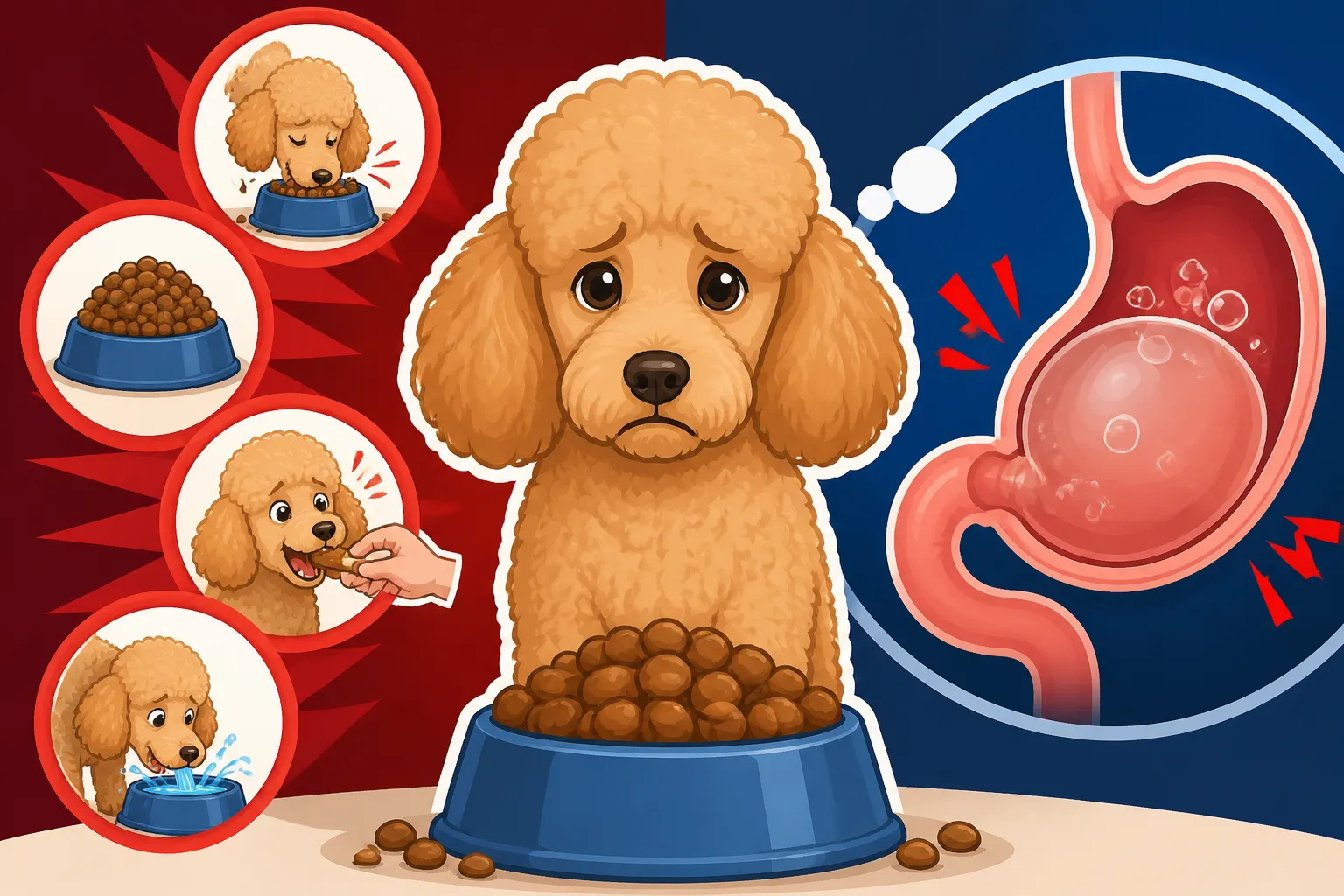
One of the most significant risk factors linked to feeding is rapid ingestion of food, often accompanied by gulping large amounts of air. Think of your Poodle as a vacuum cleaner, inhaling their meal in seconds flat. When they eat this quickly, they’re not just swallowing food; they’re also drawing in excessive air, which then gets trapped in the stomach. This trapped air contributes to the initial gastric dilatation, setting the stage for a potential twist.
Imagine your Poodle scarfing down a meal after a long, active morning. The excitement, combined with hunger, can lead to frantic eating. This is particularly common in households with multiple dogs, where competition for food, even if perceived, can accelerate eating speed. Even if your Poodle is the only pet, their natural drive or previous experiences might encourage them to eat at a breakneck pace. We’ve all seen it – the meal is gone before you even turn your back.
Feeding One Large Meal Per Day
Another common habit that can significantly increase bloat risk is feeding your Poodle just one large meal a day. A large volume of food entering the stomach all at once can cause it to distend more rapidly and to a greater degree than smaller, more frequent meals. This distension, as discussed, is the first critical step towards GDV.
Consider a Standard Poodle, which needs a substantial amount of food daily. If that entire portion is given in a single sitting, their stomach must expand considerably to accommodate it. This puts undue strain on the ligaments that hold the stomach in place and increases the likelihood of it rotating if other factors, like activity or stress, are present. Splitting meals, even if it feels like more work, is a simple yet effective preventative measure. Our article on Feeding a Standard Poodle for a Month can offer insights into portioning and dietary needs.
Elevated Food Bowls
This one might come as a surprise, as elevated food bowls were once widely recommended, especially for large breeds, with the theory that they aided digestion and reduced strain on the neck. However, recent scientific studies have actually linked elevated food bowls to an increased risk of bloat in large and giant breed dogs, including Poodles. The exact mechanism isn't fully understood, but it's theorized that eating from an elevated position might allow dogs to gulp more air, or it could change the ergonomics of their swallowing in an unfavorable way.
It’s a frustrating piece of information for many owners who bought these bowls with the best intentions. If your Poodle currently eats from an elevated feeder, it's worth discussing this with your vet. Many experts now advise feeding Poodles, particularly Standard Poodles, from bowls placed directly on the floor. You can delve deeper into this specific risk factor in our dedicated piece on Bowl Height and Standard Poodle Bloat Risk.
Exercise Immediately Before or After Meals
The timing of physical activity around meal times is a critical, yet often overlooked, risk factor. Allowing your Poodle to engage in strenuous exercise, vigorous play, or even running around immediately before or after eating can significantly increase the risk of bloat. A full stomach, jostled during activity, has a greater chance of twisting.
Imagine a scenario: your Poodle comes in from a spirited game of fetch, panting and ready to eat. They quickly devour their meal, and then, still full of energy, perhaps run back outside for another burst of play. This sequence of events – rapid eating, a full stomach, and then high-impact physical activity – creates a perfect storm for the stomach to become distended and then potentially flip. It's better to allow ample time for digestion before any energetic endeavors.
Stress and Anxiety at Mealtime
While not a direct physiological cause, a highly stressful or anxious mealtime environment can indirectly contribute to bloat. Stress can affect a dog's digestive process, leading to altered gut motility and potentially faster, more frantic eating. If your Poodle feels rushed, threatened, or uncomfortable while eating, they might inadvertently swallow more air or experience digestive upset.
Think about a Poodle living in a bustling household with other pets or young children. If their meal area isn't calm, they might gobble their food to "protect" it or to finish before being disturbed. Even subtle anxieties, like unfamiliar noises or feeling vulnerable, can have an impact. Ensuring a peaceful, predictable mealtime routine can help mitigate this.
Adjusting Feeding Practices to Minimize Risk
The good news is that many of the risky feeding habits we've discussed can be easily modified to significantly reduce your Poodle's bloat risk. These aren't just minor adjustments; they are proactive steps that can make a real difference in your Poodle's long-term health and safety.
Smaller, More Frequent Meals
The single most impactful change you can make is to divide your Poodle's daily food allowance into two or three smaller meals rather than one large one. This prevents the stomach from becoming excessively distended at any given time, reducing the pressure on its supporting ligaments and lessening the chance of a twist.
For instance, if your Standard Poodle normally eats 4 cups of kibble per day, instead of one 4-cup meal, offer two 2-cup meals or even three 1.3-cup meals throughout the day. This keeps their digestive system working steadily without overloading it. It might mean a slight shift in your schedule, but the peace of mind knowing you're reducing a major risk factor is invaluable.
Using Slow Feeder Bowls
If your Poodle is a fast eater, a slow feeder bowl is an absolute game-changer. These bowls have various ridges, mazes, or obstacles built into them, forcing your dog to eat around them, thus slowing down their ingestion of food. This reduces the amount of air they swallow with their meal and extends the eating process, promoting better digestion.
There are many styles available, from plastic inserts to ceramic designs. Brands like Outward Hound offer popular slow feeder options. You might find your Poodle initially frustrated, but they quickly adapt. This simple tool can transform a 30-second meal into a 5-minute activity, which is a huge improvement for preventing bloat. Our article on Slow Feeders for a Gulping Standard Poodle offers more specific recommendations.
Timing Exercise and Rest Around Meals
Establishing a clear routine for exercise and rest around meal times is crucial. Aim for at least one hour of calm activity or rest before and after each meal, ideally two hours after. This means no vigorous play, running, or high-energy training sessions when your Poodle has a full stomach.
For example, if your Poodle eats at 7 AM, a brisk walk or morning play session should conclude by 6 AM, followed by a quiet period before breakfast. After eating, ensure they have a relaxed environment where they can digest their food without being encouraged to run or jump. This allows the stomach to process its contents without the mechanical forces that can contribute to twisting.
Creating a Calm and Consistent Mealtime Environment
Making mealtime a peaceful, predictable event can help reduce stress and anxiety, leading to a calmer eating pace. Designate a specific, quiet spot for your Poodle to eat where they won't be disturbed by other pets, people, or loud noises.
If you have multiple dogs, feed them separately to prevent any perceived competition, even if they usually get along. Use positive reinforcement to teach them to wait patiently for their food. A consistent routine – same time, same place, same bowl – helps create a sense of security and minimizes the need for hurried eating.
Ensuring Constant Access to Fresh Water
While not a direct feeding habit, ensuring your Poodle always has access to fresh, clean water is vital for overall health and digestion. However, avoid letting your Poodle drink excessive amounts of water immediately after eating a large meal, especially if they are prone to gulping water. This can also contribute to stomach distension. Offer smaller amounts of water more frequently, or place a water bowl a short distance from the food bowl to encourage a slight pause between eating and drinking.
Beyond Feeding: Other Factors and Preventative Measures
While optimizing feeding habits is a powerful preventative strategy, it’s important to remember that bloat is a complex condition with multiple contributing factors. Understanding these other elements allows for a more holistic approach to your Poodle’s health.
Genetic Predisposition and Breed Traits
As mentioned, the Poodle's deep-chested conformation, particularly in Standard Poodles, is a significant anatomical risk factor. This isn't something you can change, but it underscores the importance of being extra vigilant with preventative measures. If you're considering getting a Poodle puppy, ask breeders about the incidence of bloat in their lines. While there isn't a definitive genetic test yet, responsible breeders strive to minimize health issues where possible. You might find our article on Genetic Panels for the Three Poodle Sizes insightful for understanding inherited conditions.
Age, Sex, and Temperament
Older dogs tend to have a higher risk of bloat, and some studies suggest that male dogs may be slightly more prone than females. Additionally, certain temperaments, particularly anxious or easily stressed Poodles, might be at a marginally increased risk, as stress can impact digestion and eating habits. Recognizing Reading Pain in a Sensitive Poodle can also help you quickly identify discomfort that might signal bloat.
Gastropexy: A Surgical Preventative Option
For Poodles at very high risk of bloat, such as Standard Poodles with a family history of GDV, a prophylactic gastropexy is a surgical option that many owners choose. This procedure involves surgically attaching the stomach to the abdominal wall, preventing it from twisting. While it doesn't prevent the stomach from dilating (filling with gas), it dramatically reduces the chance of the fatal volvulus.
Many veterinarians recommend performing a gastropexy at the same time as spaying or neutering, as it only requires one anesthetic event. Discussing Whether a Standard Poodle Should Have a Gastropexy with your veterinarian is a crucial conversation for high-risk Poodles. It's a significant decision, but one that can offer immense peace of mind. Veterinary costs for such procedures can be substantial, and considering pet insurance like Healthy Paws, which covers accidents and illnesses, can be a wise financial preparation for unexpected emergencies, including potential gastropexy or bloat treatment. Knowing that you have support from providers like Healthy Paws can alleviate some of the financial stress during critical times.
Maintaining a Healthy Weight
Keeping your Poodle at a lean, healthy weight is beneficial for their overall health and may indirectly impact bloat risk. Obesity can exacerbate many health problems, and while not directly linked to bloat, a healthier digestive system and less abdominal fat generally contribute to better well-being. Regular exercise appropriate for their size and age, combined with portion control, are key. Our guide on Poodle Obesity and Its Consequences offers advice on managing your Poodle's weight.
Table of Risky vs. Safer Feeding Habits
To give you a clear overview, here’s a table summarizing the key feeding habits and their safer alternatives:
| Risky Feeding Habit | Why It Increases Bloat Risk | Safer Alternative |
|---|---|---|
| Eating Too Quickly | Gulping excessive air, rapid stomach distension. | Use a slow feeder bowl; add water to kibble. |
| One Large Meal Per Day | Overloads the stomach, increases distension. | Divide daily food into 2-3 smaller, more frequent meals. |
| Elevated Food Bowls | May encourage more air gulping (research indicates higher risk). | Feed from bowls placed on the floor. |
| Strenuous Exercise Around Meals | Jarring motion can cause a full, distended stomach to twist. | Allow 1-2 hours of calm rest before and after meals. |
| Stressful Mealtime Environment | Leads to frantic eating, increased air intake, digestive upset. | Provide a quiet, consistent, undisturbed feeding location. |
| Gulping Water After Eating | Rapid ingestion of large water volume can distend stomach. | Offer smaller, frequent water access; separate from food area. |
By proactively implementing these safer feeding practices, you can significantly reduce the Gastric Torsion Risk in a Standard Poodle and give yourself greater peace of mind. Remember, vigilance is key, and any suspected signs of bloat warrant immediate veterinary attention. Investing in pet insurance, such as a plan from Healthy Paws, can be an important safeguard, as emergency bloat surgery can be incredibly expensive. It’s always best to be prepared for the unexpected, especially with a high-risk condition like GDV.
Disclaimer
The information provided in this article is for educational purposes only and is not intended to be a substitute for professional veterinary advice. Always consult with a qualified veterinarian for any health concerns or before making any decisions about your Poodle's diet, care, or medical treatment.