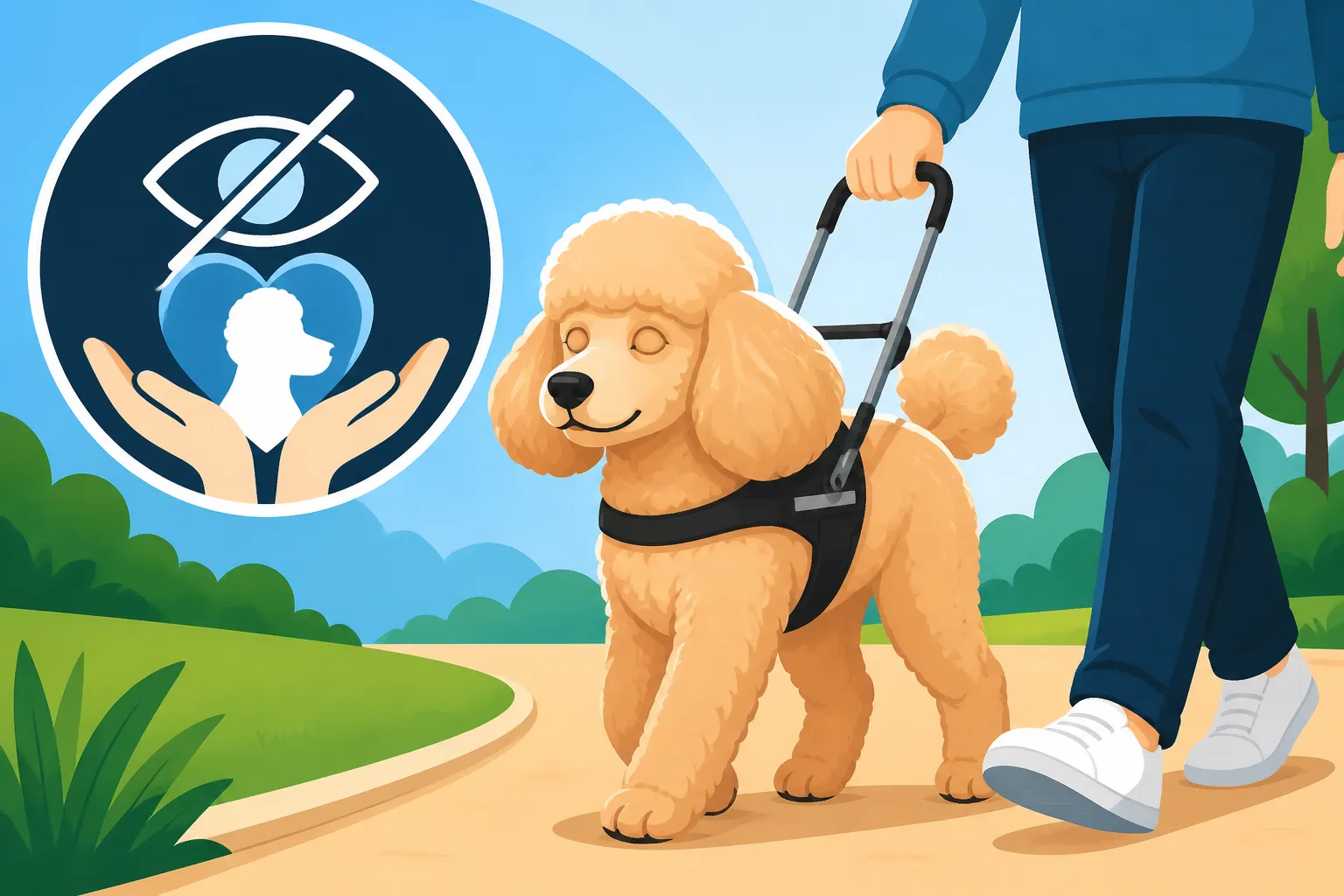
Guiding a Poodle Blinded by Retinal Atrophy
It’s a heartbreaking reality when your beloved Poodle, once so vibrant and keen-eyed, starts to bump into furniture or hesitate in familiar spaces. The diagnosis of Progressive Retinal Atrophy (PRA) can feel like a punch to the gut, leaving you wondering how on earth you'll navigate this new chapter and ensure your furry companion maintains a good quality of life. This guide is here to walk you through the practical steps and emotional support needed to confidently guide your Poodle through a world without sight, making their days safe, predictable, and full of joy.
Understanding Progressive Retinal Atrophy in Your Poodle
Progressive Retinal Atrophy (PRA) is a cruel disease because it gradually steals your Poodle's vision, often leaving owners feeling helpless as they watch their dog's world shrink. It’s not an overnight change, which can make it even harder to pinpoint at first. Understanding what's happening and how it progresses is the first step toward effective management.
How PRA Steals Their Sight
PRA is a genetic disease that affects the photoreceptor cells in your Poodle's retina. These are the cells responsible for detecting light and sending signals to the brain, essentially how your dog sees the world. In simple terms, these cells gradually deteriorate over time, leading to eventual blindness. The onset and progression can vary, but generally, it starts with an impairment of night vision. You might notice your Poodle becoming more hesitant in dimly lit rooms or outdoors at dusk, bumping into objects they would normally navigate with ease. This early symptom, often called "night blindness," is a significant indicator that something is amiss.
As the disease progresses, the deterioration extends to daylight vision. What began as difficulty in the dark slowly creeps into their daytime world. They might start relying more on their nose and ears, their gait becoming a bit more cautious, especially in unfamiliar territory. It's a slow, insidious process, and because Poodles are so intelligent and adaptable, they often compensate remarkably well, making it challenging for owners to detect in the very early stages. Many owners first realize the extent of the vision loss when their Poodle is in a new environment or when furniture has been rearranged, disrupting their carefully memorized mental map of the home. This genetic condition is unfortunately common in some lines, which is why DNA Testing a Poodle for PRA is such a crucial step for responsible breeders.
The Emotional Toll on Poodles and Owners
Discovering that your Poodle is losing its sight, or is already blind, is an incredibly emotional experience for any owner. You might feel a mix of sadness, anxiety, guilt, and even frustration. It’s okay to feel all of these things. Your Poodle, too, will experience a range of emotions. Initially, they might seem confused, disoriented, or even depressed. A Poodle's temperament is often sensitive, and this sudden loss of a primary sense can be genuinely frightening for them. They might become clingier, more vocal, or even a bit snappy if startled, which is a natural reaction to fear and vulnerability.
It’s crucial to recognize that your Poodle isn't being difficult; they're simply trying to cope with a profound change. Their world has fundamentally shifted, and they are relying on you more than ever to be their eyes and their guide. Validating these feelings, both yours and your Poodle's, is essential. This journey requires immense patience, understanding, and a deep well of empathy. Remember that your Poodle still loves you fiercely, and your calm presence can be the anchor they need to feel secure in their new reality. The way you respond to their fear and frustration will shape their ability to adapt and thrive. It also highlights why understanding Reading Pain in a Sensitive Poodle is so important during this transition.
Transforming Your Home for a Blind Poodle
One of the most immediate and impactful ways you can help your Poodle is by making their home environment safe, predictable, and easy to navigate. Think of yourself as redesigning their world with their other heightened senses in mind. Consistency is absolutely key here.
Maintaining Consistency and Routine
The golden rule for a blind Poodle is "no surprises." This means committing to keeping furniture and obstacles in the same place. Once you've established a safe layout, stick to it religiously. Moving a chair even a few inches can disorient your Poodle and lead to bumps and falls, eroding their confidence. Imagine walking through your house blindfolded; you’d quickly learn the layout by memory. Your Poodle does the same, and any change can be deeply unsettling.
Beyond physical objects, routines are equally vital. Keep feeding times, potty breaks, and playtime on a consistent schedule. Your Poodle will come to rely on these routines as mental markers throughout their day. For example, if you always take them out for their morning potty break immediately after their breakfast, they will learn to associate the sound of their food bowl being placed down with the upcoming outdoor trip. This predictability reduces anxiety and helps them feel more in control of their day. They can't see the clock, but they certainly know the rhythm of the household. This applies to every Poodle, regardless of size, as their internal body clocks are strong, a concept explored further in Caring for an Aging Poodle.
Sensory Markers and Aids
Since sight is no longer an option, we need to engage your Poodle's other incredibly powerful senses: touch, smell, and hearing. You can strategically place different textures or scents to act as navigational cues. For instance, a small, textured rug or runner could always lead to their water bowl. A slightly elevated mat could signal they are approaching their bed. The change in texture under their paws provides a clear, consistent signal.
Scent can also be a powerful tool. A drop of a specific essential oil (ensure it's dog-safe and diluted, like a tiny bit of lavender near their bed) or a unique air freshener (again, dog-safe) could mark a doorway or a specific area. Some owners use subtle wind chimes near a backyard gate to indicate the boundary. Even changing the surface texture outside, like having a patch of artificial turf before stepping onto concrete, can help your Poodle map their outdoor space. You can also get creative with bumper collars, sometimes called "halo" vests or rings, which offer a physical barrier that prevents their head from directly bumping into obstacles, giving them an early warning system.
Preventing Hazards
It’s time to puppy-proof your home again, but this time for a blind adult dog. Start by getting down on your hands and knees to see the world from their perspective. What sharp corners or low-lying objects could they bump into? Pad sharp furniture edges with corner guards, especially at your Poodle's head height. Consider child gates at the top and bottom of stairs, even if your Poodle has navigated them for years. A misstep could lead to serious injury. You can also use scented strips or different textured mats at the top and bottom of stairs to indicate the change in elevation.
Outdoors, ensure your yard is securely fenced. Your Poodle can no longer see an open gate or an approaching car. Remove any garden tools, hoses, or other trip hazards. If you have a pool, secure it with a cover or fence. Supervise all outdoor excursions closely, using a long leash even in a fenced yard until you are absolutely certain they have re-mapped the space and can navigate it safely. Remember that even small changes like new garden pots can become major obstacles for a blind dog.
Effective Communication and Building Trust
When vision is gone, communication becomes primarily about sound and touch. Your voice and gentle touch are your Poodle's new beacons, guiding them safely through their day. Building rock-solid trust in your guidance is paramount.
Verbal Cues and Touch Signals
Consistent verbal cues are your Poodle's lifeline. Start using specific words for common actions and obstacles, and use them consistently. For example:
- "Step up" or "step down" for curbs or stairs.
- "Watch out" or "obstacle" for an approaching object.
- "Left" or "right" for turns.
- "Slow" to encourage a more cautious pace.
- "Stop" to halt them before a collision.
Pair these verbal cues with gentle physical guidance initially. For example, when you say "step up," gently lift a paw or guide their head up. When you say "watch out," place your hand lightly on their side to steer them. Your Poodle will quickly associate the sound with the action and learn to trust your voice implicitly. Keep your tone calm and reassuring, even when you're feeling frustrated. A calm voice signals safety, while a frantic one can increase their anxiety.
The Importance of Your Scent and Voice
Your scent and voice are immensely comforting to your Poodle, perhaps even more so now that they can't see you. Allow them to be close to you, letting them nuzzle against your legs or rest their head on your lap. Your familiar presence is a constant source of reassurance. When you enter a room, speak softly to let them know you’re there. A sudden touch from an unseen person can startle a blind Poodle, leading to fear or a defensive snap. Always announce your presence with your voice before making physical contact.
Regular grooming sessions, like the gentle brushing Poodles adore, also become more important for reaffirming your bond through touch. This consistent physical interaction, combined with your steady voice, reinforces that you are their safe harbor, always there to guide and protect them. This strong connection also helps manage their natural sensitivity, which is discussed further in Poodle Temperament and Sensitivity.
Introducing New Environments Slowly
Introducing a blind Poodle to a new environment, even just a different room at a friend's house, requires immense patience and a methodical approach. Never simply let them loose. Always keep them on a leash and start by slowly walking them around the perimeter of the new space. Let them sniff every corner, exploring with their nose. Gently guide them, using your verbal cues, to help them build a mental map.
Point out important features like water bowls, beds, or doors. Allow plenty of time for exploration without rushing. Keep the first few visits short and positive. Over time, as they gain confidence in your guidance and their ability to navigate, you can gradually increase the duration of these visits. It’s like building a puzzle, piece by painstaking piece, with each familiar scent and sound contributing to their understanding of the space.
Engaging a Blind Poodle Through Other Senses
Blindness doesn't mean the end of a full, happy life for your Poodle. It simply means adapting how they interact with the world, leaning heavily on their incredible sense of smell and hearing. Their minds are still sharp, and they crave engagement.
Safe Outdoor Exploration
Outdoor time is still crucial for your Poodle's physical and mental health, but it needs to be managed carefully. Stick to familiar, safe routes for walks. A long lead (10-15 feet) can give them a sense of freedom while still allowing you to maintain control and guide them away from potential hazards like sudden drops, busy roads, or unexpected obstacles. Keep the leash loose to avoid pulling, letting them sniff and explore at their own pace.
Utilize secure, fenced-in areas, such as a private backyard or a designated enclosed dog park, during off-peak hours. Always scout the area first for any potential dangers. Your presence is their most important safety net. You can walk alongside them, using your verbal cues to indicate turns or obstacles. Remember, your Poodle's world is now largely scent-driven, so let them take their time sniffing every interesting patch of grass. This is an excellent way for them to "read the newspaper" of their neighborhood. While their daily physical requirements might adapt, the need for daily exercise for a Poodle's body and mind remains constant.
Engaging the Other Senses
Poodles are highly intelligent dogs, and their minds still need stimulation. Redirect their energy from visual cues to auditory and olfactory ones. Scent work is an absolute game-changer for blind dogs. Hide treats around the house and encourage them to sniff them out. You can start with easy hides and gradually make them more challenging. Simple sniff mats or puzzle toys that dispense treats when manipulated are also excellent tools for mental enrichment. These activities tap into their natural hunting instincts and provide immense satisfaction.
Auditory toys are also fantastic. Look for balls with bells inside, squeaky toys, or crinkly objects. Rolling a noisy ball and encouraging them to find it can be a great game, teaching them to follow sound. You can even make your own by putting a few dried beans or rice into an old plastic bottle (securely taped shut!) for a DIY shaker toy. Interactive toys that talk or make sounds can also keep them entertained when you're busy. This redirection to other senses helps keep their clever Poodle minds occupied, a vital part of Keeping a Poodle Mind Occupied.
Maintaining Social Connections
It's natural to worry about how a blind Poodle will interact with other dogs and people. The key is careful management and slow introductions. When meeting new dogs, always supervise closely. Let the other dog approach calmly, allowing for a gentle sniff. You can put a "Blind Dog" vest or bandana on your Poodle to alert others, preventing accidental startling. This is especially helpful if they encounter boisterous dogs who might not understand the subtle cues of a sight-impaired dog.
For new people, again, a verbal warning that they are blind and to approach slowly and speak softly before touching is essential. Encourage visitors to offer the back of their hand for a sniff before petting. Maintaining these social connections is important for your Poodle's happiness, but always prioritize their safety and comfort. Some blind Poodles may become more particular about their playmates, preferring calm, gentle dogs who understand their limitations.
| Challenge for a Blind Poodle | Owner Adaptation & Aid | Primary Sense Utilized |
|---|---|---|
| Navigating home | Keep furniture consistent, use non-slip rugs, pad sharp edges | Touch, Memory |
| Finding food/water | Place bowls in a fixed spot, use textured mats leading to them | Scent, Touch |
| Avoiding obstacles outdoors | Use long leash, familiar routes, scout safe areas, verbal cues | Hearing, Scent, Owner's Guide |
| Mental stimulation | Scent games, puzzle toys, noisy balls | Scent, Hearing |
| Social interaction | "Blind Dog" vest, slow introductions, verbal alerts to others | Hearing, Touch, Scent |
| Fear/Anxiety | Consistent routine, calm voice, gentle touch, predictable environment | Hearing, Touch, Scent |
Nurturing Your Poodle's Emotional and Physical Health
Guiding a Poodle blinded by PRA extends beyond just physical navigation; it encompasses their emotional well-being and continued physical health. A holistic approach ensures they live their best possible life.
Regular Vet Check-ups
Even though PRA is typically progressive and not curable, regular veterinary check-ups are still incredibly important. Your vet can monitor for any secondary eye issues, such as glaucoma or cataracts, that might cause pain or discomfort. They can also assess your Poodle's overall health, ensuring they're coping well and that their other senses aren't being negatively impacted by other conditions. For instance, good dental health is important for overall comfort, and Poodle Dental Disease by Size can vary.
Your vet can also help you determine if your Poodle is experiencing any pain or discomfort that could be contributing to anxiety or behavioral changes. They might recommend supplements that support general eye health, though these typically won't stop the progression of PRA itself. These visits are opportunities to discuss any new challenges you're facing and get professional advice tailored to your Poodle's specific needs.
Nutrition and Comfort
Maintaining a healthy diet is paramount for your Poodle, especially as they age or face health challenges like blindness. A balanced diet supports overall well-being, energy levels, and can help maintain a healthy weight. Poodle Obesity and Its Consequences can exacerbate mobility issues for a blind dog, making navigation even harder. Your vet can recommend a high-quality diet appropriate for their age and activity level.
Ensure your Poodle has a comfortable, easily accessible bed in a quiet, safe corner of the house. This provides them with a secure retreat where they can rest undisturbed. For Toy Poodles, sometimes an orthopedic bed can provide extra comfort for older joints. Their comfort zone is more important than ever. Access to fresh water should always be in a consistent, easily locatable spot.
Patience, Love, and Empathy
Ultimately, guiding a Poodle blinded by retinal atrophy is a journey of profound patience, unwavering love, and deep empathy. There will be good days and challenging days. Your Poodle will have moments of brilliant adaptation and moments of confusion or fear. Your calm, reassuring presence is the most powerful tool you have. Celebrate their small victories, whether it's navigating a new path or finding a hidden treat.
Remember that your Poodle still possesses the same loving personality, intelligence, and desire to be part of your family. They might not see you, but they feel your presence, hear your voice, and smell your comforting scent. Your bond will deepen as you become their trusted guide. This shared journey will undoubtedly bring you closer, demonstrating the incredible resilience of both Poodles and their devoted owners. This transition, while difficult, ultimately highlights the enduring strength of the human-animal bond, as explored in articles like Poodle Lifespan Across the Three Sizes.
Disclaimer
The information provided in this article is for general informational purposes only and is not a substitute for professional veterinary advice. Always consult with a qualified veterinarian for any health concerns or before making any decisions related to your Poodle's care.