Why a Poodle Goes Quiet Before It Limps
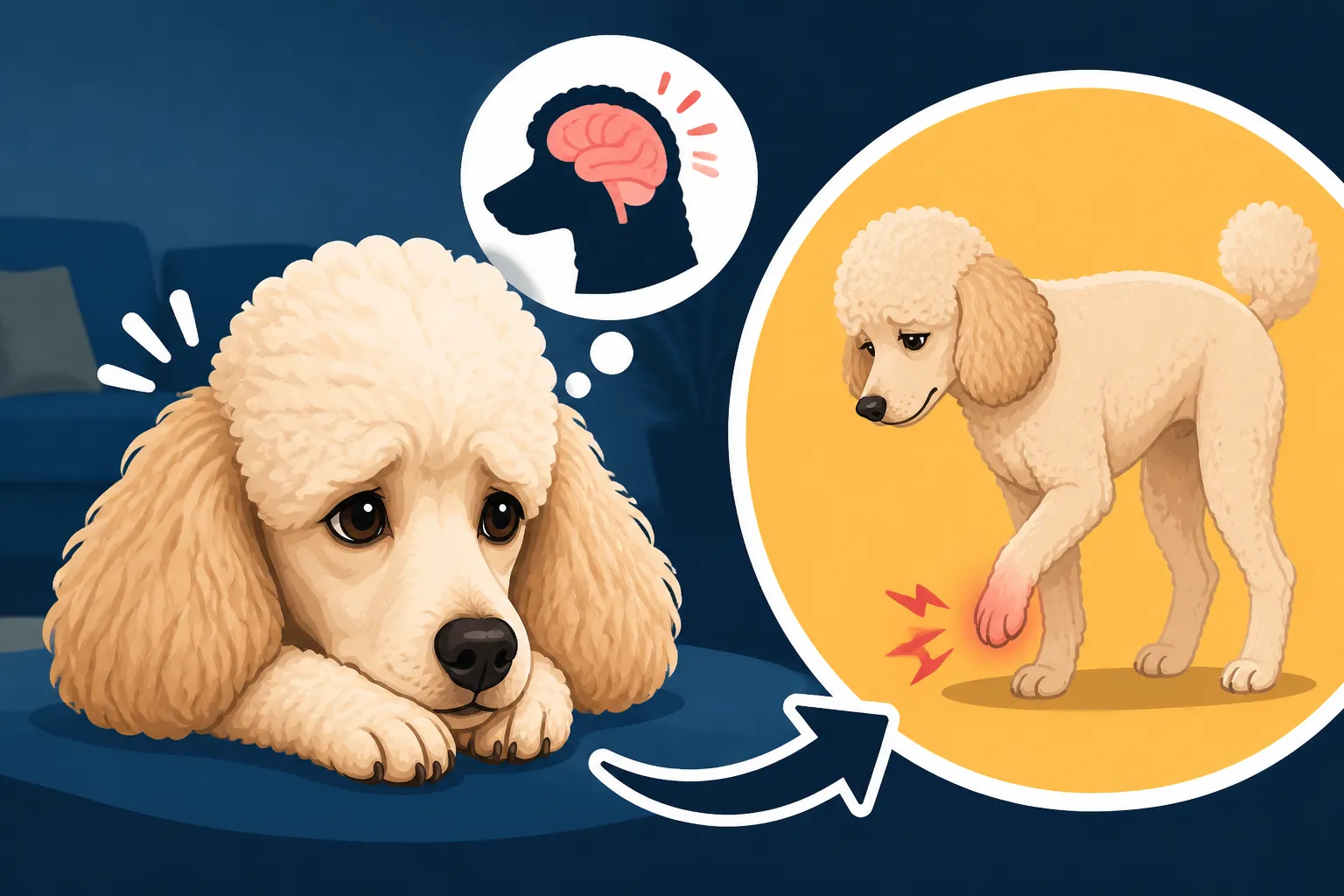
It’s a scenario Poodle owners know all too well: one day, your usually vivacious Poodle just seems… off. They're not whining, they're not overtly favoring a limb, but there’s a quietness about them, a subtle shift in their usual bouncy demeanor. Then, a day or two later, the limp finally appears, clear as day. This frustrating delay in obvious symptoms is incredibly common in Poodles, and understanding why they tend to suffer in silence before visible lameness sets in is crucial for their well-being. This guide will delve into the Poodle's unique pain responses, pinpoint common causes of limping across the different sizes, and help you become a super-sleuth when it comes to detecting those quiet, early signs of discomfort.
The Poodle's Stoic Nature and Pain Response
Poodles, for all their expressive charm and intelligence, can be surprisingly stoic when it comes to pain. They are often described as sensitive and attuned to their owners, which paradoxically can make them masters of hiding discomfort. This isn't out of stubbornness or a lack of feeling; it's often an instinctive behavior rooted in their canine heritage, where showing weakness could make them vulnerable. For an animal so devoted to its human family, appearing "fine" can sometimes feel like a priority.
Think about it from their perspective: a Poodle wants to please you, to be part of the family activities, and to maintain their usual routine. If they're experiencing a twinge or a dull ache, their first inclination might not be to broadcast it with a yelp or a pronounced limp. Instead, they might try to "work through it," to adjust their movements subtly, or simply become less engaged in activities that would exacerbate the discomfort. This can be incredibly misleading for owners, especially those new to the breed, who might assume no overt signs mean no problem. Understanding Why a Sensitive Poodle Hides Illness is key to early detection.
This natural inclination to mask pain is particularly pronounced in breeds like the Poodle, who are also highly intelligent. They can learn to compensate for pain, shifting weight, altering their gait slightly, or avoiding certain movements altogether, all without making a fuss. It's only when the pain becomes truly undeniable, or the compensatory mechanisms are no longer enough, that the visible limp or more obvious signs of distress become apparent. By this point, the underlying issue might have progressed further than it would have in a more overtly vocal breed.
Reading Beyond the Obvious: Subtle Behavioral Cues
Since a Poodle won't always cry out or hold up a paw the moment something is wrong, you need to become adept at reading their more subtle language. A quiet demeanor is often the first, most telling sign. Your Poodle might go quiet before it limps because it's preserving energy, trying to manage discomfort internally, or simply not wanting to draw attention to itself. This isn't just about vocalizations; it's about a shift in their entire presence.
Consider your Poodle's normal routines and habits. Do they usually greet you with a joyful leap, but now they simply walk over, tail wagging a bit lower? Do they typically bound up the stairs, but now hesitate or take them one at a time? Perhaps they're usually first in line for a walk, but now they seem less enthusiastic, even if they still go along. These small deviations are often the earliest indicators that something isn't quite right. They might be avoiding certain jumps, choosing a different sleeping position, or simply being less playful. You might notice they're a little slower to get up from a nap, or they shift their weight more frequently when standing. Even something as subtle as a change in appetite or a reluctance to engage in their favorite games can be a signal. It’s crucial to pay attention to Reading Pain in a Sensitive Poodle.
Another behavioral cue to watch for is a change in interaction. A Poodle in pain might be less tolerant of being handled, especially in certain areas. They might flinch, growl softly, or pull away if you touch a sore spot. Conversely, some Poodles might become clingier, seeking comfort and reassurance more than usual. Observe how they lie down and get up. Do they do it gingerly? Do they struggle? Even a slight stiffness after rest can indicate discomfort. They might also start licking or chewing at a particular area of their body, which can be a sign of localized pain or irritation.
The Impact of Size on Pain Expression
It's also worth noting that the way a Poodle expresses or hides pain can sometimes vary with their size. Toy Poodles, being so small and delicate, might be more prone to injuries that cause acute, immediate pain, such as a sprain from a jump or a fall. However, even they can be surprisingly resilient. Standard Poodles, with their larger frames, might hide chronic joint pain or muscle soreness for longer, as their size allows them more compensatory movement. They might adjust their stride for weeks before a full-blown limp becomes undeniable.
A Toy Poodle with a minor ache might just sit still more often, preferring to be held rather than romping around. A Standard Poodle, on the other hand, might cut short a walk, seem less eager to play fetch, or simply move with less fluidity, making it harder to spot a specific point of pain. These differences aren't hard and fast rules, but they are helpful considerations when you're trying to figure out if your Poodle is just having an off day or subtly signaling something more serious.
Common Reasons a Poodle Might Go Quiet Before It Limps
When your Poodle eventually shows that tell-tale limp, it’s often the culmination of days or even weeks of silent suffering. The reasons for limping in Poodles are diverse and can be specific to their size and age. Being aware of the most common culprits can help you communicate more effectively with your veterinarian.
Joint Issues: A Poodle's Vulnerable Points
Joint problems are a significant cause of limping in Poodles across all three sizes, though the specific conditions can differ.
- Standard Poodles: These elegant giants can be prone to conditions like Poodle Hip Dysplasia by Size and elbow dysplasia, especially as they age or if they come from lines not thoroughly screened. These conditions involve malformation of the hip or elbow joints, leading to grinding, inflammation, and pain. A Poodle with developing hip dysplasia might subtly reduce their running, be reluctant to jump into the car, or develop a sway in their hindquarters before a noticeable limp. They might also become less enthusiastic about their favorite activities, seeming "quiet" or subdued, even if they're not overtly vocalizing pain. Early signs might be a difficulty getting up after rest or a noticeable stiffness in their gait that improves slightly with movement, but then worsens later. Osteoarthritis, a degenerative joint disease, often follows these developmental issues, causing chronic, worsening pain.
- Miniature and Toy Poodles: For the smaller varieties, issues like Luxating Patella in Toy and Miniature Poodles are much more common. This is where the kneecap (patella) slips out of its groove, causing sudden lameness, a skip in their step, or a "bunny hop" gait. Initially, your Poodle might only have mild discomfort that they quickly recover from, leading to intermittent limping that comes and goes. Over time, as the cartilage wears down and arthritis sets in, the pain can become more constant, and they might become quieter and less active to avoid the discomfort. They might also hesitate to use stairs or jump off furniture, opting for more cautious movements before a full-blown limp makes an appearance. Another condition seen more in smaller breeds, particularly Toy Poodles, is Legg-Calve-Perthes in Small Poodles. This involves the degeneration of the femoral head (the ball part of the hip joint), leading to pain, muscle atrophy, and eventually a limp, often becoming noticeable between 5 and 8 months of age.
Soft Tissue Injuries: Sprains, Strains, and Tears
Poodles are active and often playful dogs, which makes them susceptible to various soft tissue injuries. These can range from minor sprains to more serious ligament tears.
- Everyday Mishaps: A simple misstep during a walk, a clumsy landing after a jump, or a sudden twist during play can result in a sprained ankle, wrist, or shoulder. These injuries might not immediately cause a dramatic limp. Instead, your Poodle might try to walk it off, showing only a slight hesitation or stiffness for a day or two before the inflammation and pain make the limp undeniable. This initial quiet period is often when they're trying to compensate and manage the pain without drawing attention.
- Ligament Tears: The cranial cruciate ligament (CCL) in the knee is a common site for tears, particularly in active dogs. A partial tear might cause intermittent lameness, where the Poodle seems fine some days and limps on others. They might just be less enthusiastic about running or jumping, or slow down their pace, before a complete tear or worsening inflammation makes the limp constant. This is a common injury across all Poodle sizes, though larger, more active Standard Poodles might be at a slightly higher risk. These types of injuries usually require veterinary intervention, sometimes even surgery, so catching the subtle signs early is paramount.
Other Health Issues Mimicking Pain
Sometimes, a Poodle's quietness and eventual limping might not even be directly related to a bone or joint injury. Other health conditions can manifest in ways that mimic lameness.
- Back Pain: Spinal issues, such as intervertebral disc disease (IVDD) or nerve impingement, can cause referred pain that might appear as a limp, a reluctance to move, or an overall stiffness. A Poodle with back pain might be quiet because moving is painful. They might hesitate to jump, climb, or even shake off. The limp might not be localized to a specific limb but rather a general awkwardness or weakness in their hindquarters.
- Toe or Paw Pad Injuries: Something as simple as a thorn in the paw, a cracked nail, or a cut pad can cause significant discomfort. Your Poodle might try to protect the paw by walking differently, leading to a subtle limp that only becomes pronounced once the irritation or infection worsens. They might lick the paw excessively, but before that, their quietness and reluctance to put full weight on the foot could be your only clue.
- Bone Cancers: While less common, certain types of bone cancer (osteosarcoma) can cause insidious, worsening pain in the limbs, often starting as a subtle lameness that your Poodle might try to hide. This is more prevalent in larger breeds, including Standard Poodles, and typically affects older dogs. The quietness, followed by a persistent, unexplained limp, should always warrant a veterinary check-up, especially in senior dogs.
The table below summarizes some common causes of limping by Poodle size, highlighting the nuances that can make diagnosis tricky.
| Poodle Size | Common Limping Causes | Initial "Quiet" Signs to Watch For |
|---|---|---|
| Toy Poodle | Luxating Patella, Legg-Calve-Perthes, Sprains | Skipping gait, reluctance to jump/use stairs, preferring to be held, less desire to play or walk. |
| Miniature Poodle | Luxating Patella, Sprains, Arthritis | Intermittent lameness, stiff gait after rest, decreased enthusiasm for walks, hesitation to jump. |
| Standard Poodle | Hip Dysplasia, Elbow Dysplasia, CCL Tears, Osteoarthritis, Bone Cancer | Stiffness, reluctance to run/jump, difficulty rising, changed posture, less active or playful, subtle sway. |
Observing and Identifying Subtle Signs of Discomfort
Since Poodles are masters of disguise when it comes to pain, becoming a super-sleuth is essential. You need to look beyond the obvious. This means not just observing if they're limping, but how they're moving, when they're moving, and what their overall demeanor is telling you.
The Daily Wellness Check: Beyond a Glance
Make it a habit to observe your Poodle during their regular activities. When they wake up from a nap, do they stretch easily, or do they seem a bit stiff? Watch them walk across the room. Is their gait smooth and even, or do you notice any subtle head bobs, hip swings, or leg lifts that weren't there before? Pay attention to how they sit and lie down. Do they prefer one side, or do they struggle to get comfortable?
A great time for a more hands-on check is during your regular grooming routine. As you brush them, gently run your hands over their legs, joints, spine, and paws. Feel for any warmth, swelling, or tenderness. Does your Poodle flinch, pull away, or even give a slight growl when you touch a particular spot? This is invaluable information. Check between their paw pads for foreign objects, cuts, or irritation, and inspect their nails for cracks or overgrowth, which can also cause discomfort.
Even watching them eat or drink can provide clues. Are they able to stand comfortably, or do they shift their weight? Do they seem less eager to go to their bowl? Any deviation from their normal routine, even if it seems minor, can be a symptom. Maybe your Poodle used to love chasing squirrels in the yard but now just watches them from the porch, appearing subdued. This reduction in their usual zest for life is a classic "quiet" sign that something needs investigation.
Documenting Changes for Your Vet
When you notice these subtle changes, it's incredibly helpful to start a little log. Note down:
- When you first noticed the change: Was it after a particularly long walk, a playful wrestling match, or did it seem to appear out of nowhere?
- Specific behaviors: What exactly did you observe? "Less enthusiastic about stairs," "hesitates before jumping on the sofa," "shifts weight while standing."
- Duration and frequency: Is the quietness constant, or does it come and go? Does the subtle limp appear only after exercise, or is it worse in the morning?
- Any attempts to self-soothe: Are they licking a paw or a joint more than usual?
- Response to touch: Did they react when you touched a certain area?
This detailed information will be invaluable for your veterinarian. A Poodle's quiet stoicism can make diagnosis challenging, and your observations are often the missing piece of the puzzle. Being able to tell your vet, "He's been quiet for three days, and he avoided the stairs twice yesterday, and today I noticed a slight head bob when he walked," is far more helpful than simply saying, "He's limping now."
What to Do When Your Poodle Goes Quiet Before It Limps
Once you've noticed the subtle cues and suspect your Poodle is in pain, it's time to take action. Ignoring these signs, hoping they'll just go away, is never a good strategy, especially with a breed that hides discomfort so effectively.
Immediate Steps and Veterinary Consultation
The very first step is to contact your veterinarian. Explain all the subtle signs you've noticed, not just the eventual limp. Be prepared to discuss recent activities, any potential injuries, and your Poodle's general health history. Your vet will perform a thorough physical examination, checking range of motion in joints, palpating muscles and bones, and observing your Poodle's gait.
Depending on their findings, they might recommend further diagnostic tests such as X-rays to visualize bones and joints, blood work to check for inflammation or underlying systemic issues, or even more advanced imaging like an MRI or CT scan for soft tissue injuries or spinal problems. Don't be surprised if your vet suggests a referral to an orthopedic specialist, especially if the cause isn't immediately clear or if a complex joint issue is suspected.
During this process, it's wise to consider the financial aspect of veterinary care. Having pet insurance, such as through a provider like Healthy Paws, can significantly ease the burden of unexpected diagnostic tests, specialist visits, or even potential surgeries for conditions like a luxating patella or a cruciate ligament tear. Many owners find peace of mind knowing that they can make medical decisions based on what’s best for their Poodle, rather than being solely driven by cost. For example, knowing the Knee Surgery Prices for a Toy Poodle can be substantial, having a plan in place is invaluable.
Management and Support at Home
While you're waiting for a diagnosis or during the recovery period, there are several things you can do at home to support your Poodle and minimize their discomfort.
- Restrict Activity: This is crucial. Even if your Poodle seems willing, limit their strenuous activity. No jumping, no running, no rough play. Short, controlled leash walks for potty breaks are usually acceptable, but avoid long walks or off-leash park visits. Crating or confining them to a small, safe area might be necessary, especially for active Poodles or those recovering from surgery.
- Comfort and Accessibility: Make sure your Poodle has a comfortable, supportive bed that's easy to get in and out of. Memory foam orthopedic beds can be excellent for supporting sore joints. If they're struggling with stairs, block access or provide ramps. Use rugs or non-slip mats on slippery floors to prevent further injury.
- Pain Management (Vet Prescribed Only!): Never give your Poodle over-the-counter human pain medication without veterinary guidance, as many are toxic to dogs. Your vet might prescribe anti-inflammatory drugs (NSAIDs) or other pain relievers to manage discomfort. Follow their dosage instructions precisely.
- Supplements and Diet: Discuss with your vet whether joint supplements containing glucosamine, chondroitin, or omega-3 fatty acids might be beneficial. These can help support joint health, especially in older Poodles or those with chronic conditions. Managing their weight is also paramount. A Poodle at a healthy weight puts less stress on their joints. Learn more about Joint Supplements Worth Giving a Poodle and the consequences of Poodle Obesity and Its Consequences.
- Physical Therapy: For certain conditions, your vet might recommend physical rehabilitation exercises or hydrotherapy. These can help strengthen supporting muscles, improve range of motion, and reduce pain.
Remember, the goal is not just to alleviate the limp, but to address the underlying cause of your Poodle's discomfort and restore their quality of life. Being attentive to their quiet signals, seeking prompt veterinary care, and providing supportive home care are all vital components of ensuring your beloved Poodle remains happy and healthy for years to come. Thinking ahead with something like pet insurance from Healthy Paws can truly make a difference in your ability to afford the best care should serious issues arise. Don't wait for the obvious limp; listen to your Poodle's quiet pleas.
Disclaimer
The information provided in this article is for educational purposes only and is not intended to be a substitute for professional veterinary advice, diagnosis, or treatment. Always seek the advice of your veterinarian or other qualified animal health provider with any questions you may have regarding a medical condition.