The Poodle That Follows You Everywhere
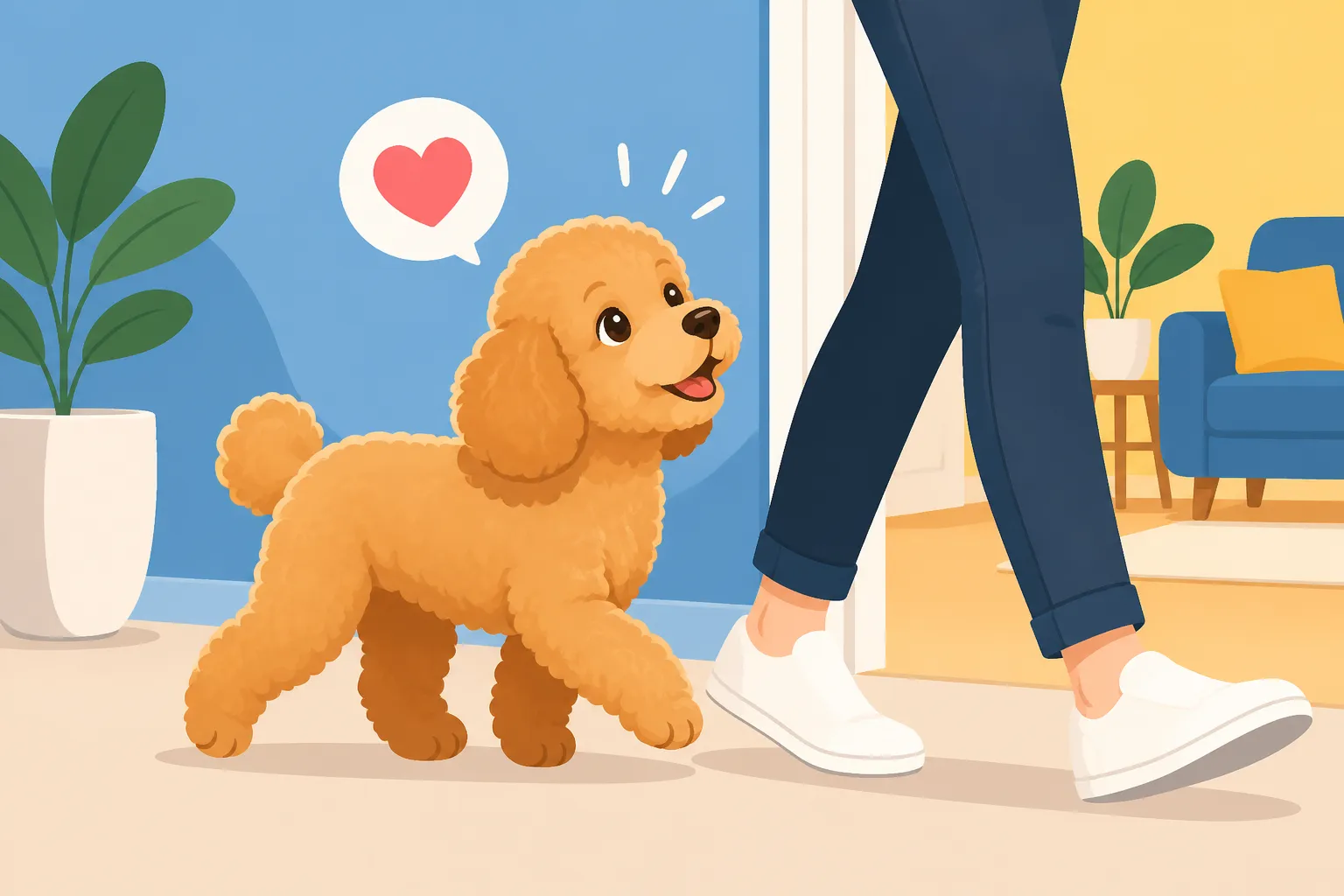
That feeling when you stand up from the sofa, and your Poodle, who was just sound asleep, instantly springs to their feet and follows you to the kitchen, then the laundry room, and then the bathroom? You're not alone. Many Poodle owners affectionately (or sometimes exasperatedly) refer to their curly-coated companions as "Velcro dogs" because they seem to be attached at the hip. This guide will delve into why Poodles are so prone to this shadowing behavior, when it's just a charming quirk versus a sign of deeper anxiety, and practical steps you can take to encourage a little more independence for both your sanity and your Poodle's well-being.
Understanding the Poodle's "Velcro" Tendencies
It's easy to write off constant following as just "being a dog," but with Poodles, there's often a rich history and deep-seated personality traits that contribute to this behavior. They aren't just seeking attention; they're often operating on instinct and a profound connection to their people.
A History of Closeness: The Poodle's Working Roots
Believe it or not, the elegant Poodle we know today started as a robust water retrieving dog in Germany, long before they became the fashion icon of France. Their original job involved plunging into cold water to fetch downed game, often ducks, and bringing them back to their handler. This wasn't a job for a dog that wandered off or was easily distracted. It required an intense bond, constant communication, and an unwavering focus on their human partner. The handler was the center of their world, providing direction, safety, and reward.
Think about it: a hunter would stand on the shore, giving commands and cues to their Poodle, who would then navigate the water, locate the bird, and return. This kind of work bred a dog that paid close attention to its human's movements, expressions, and intentions. They had to be tuned in, always aware of where their person was and what they might ask next. This historical blueprint is still etched into the Poodle's DNA. They are naturally inclined to stay close, observe, and be ready for action alongside their human. It’s not just an arbitrary preference; it’s a remnant of their original purpose, where staying near meant success and survival. That strong drive for partnership meant they excelled at understanding and anticipating their handler's needs, which naturally translates to staying close and observant in a modern home.
The "People Dog" Persona: Why Poodles Crave Connection
Beyond their working history, Poodles are inherently "people dogs." They are renowned for their high intelligence, which often translates into a deep understanding of human emotions and routines. They thrive on companionship and integration into family life. They’re not content to be left alone in a corner; they want to be where the action is, even if the "action" is you simply making a cup of tea. Their sensitivity means they often pick up on subtle cues from their owners, further solidifying their desire to be involved. This intense connection can sometimes lead to a Poodle picking a single favorite person, following them above all others. Why a Poodle Picks One Person explores this dynamic further.
This craving for connection is often what endears Poodles to their owners. They are loyal, affectionate, and genuinely seem to enjoy simply being with you. They'll often lay at your feet, follow you from room to room, or even just watch you from a comfortable distance, seemingly content just to be in your orbit. It’s their way of participating in the "pack" and ensuring they don't miss out on any potential interaction, playtime, or even just a quiet moment of shared presence. For many Poodle owners, this constant companionship is one of the most rewarding aspects of the breed. They love to be part of everything, observing, learning, and often, offering a comforting presence just by being there. They are highly social creatures, and their social instinct manifests as a desire to be physically close to their chosen family.
Is It Normal Poodle Behavior or Something More?
While a Poodle's affectionate shadowing is often charming, there's a fine line between a beloved companion who enjoys your company and a dog whose constant presence stems from insecurity or anxiety. It's important to understand this spectrum to address the behavior appropriately.
The Spectrum of "Following": From Sweet to Suffocating
On one end of the spectrum, you have the sweet Poodle who enjoys being in the same room as you. They might move from the living room to the kitchen when you do, settling down nearby. This is often just a sign of their strong bond and desire for companionship. They're content to nap while you work or read, knowing you're there. They aren't necessarily distressed when you step out of sight for a moment, and they easily transition to a different activity if you're preoccupied. This level of following is generally healthy and reflects a secure attachment. It shows they value your presence but don't depend on it for their emotional stability in every single second.
However, on the other end, you might have a Poodle who exhibits what feels like "suffocating" clinginess. This Poodle might stand directly under your feet in the kitchen, trip you up as you walk, whine or pace when you go into another room, or even try to force their way into the bathroom. Their following isn't just about company; it seems driven by an underlying anxiety about being separated, even momentarily. They might be unable to settle down unless they can see or touch you, and any attempt to create physical distance results in immediate distress signals. This can sometimes be a precursor to more severe separation anxiety, which is a very real and challenging condition for many dogs and their owners. Understanding Telling Poodle Boredom From Real Panic can be crucial in discerning the root of their clinginess.
Identifying Potential Underlying Causes
When your Poodle's following feels more intense than just a loving bond, it's worth exploring potential reasons. Addressing these can help you develop a more independent and confident companion.
One common culprit is boredom. Poodles are incredibly intelligent, ranking very high among dog breeds. A Poodle whose mind isn't regularly challenged can easily become under-stimulated. When they're bored, they might attach themselves to you because you're the most interesting thing in their environment. Your movements, your activities, even your thoughts, become their entertainment. They follow you, hoping for an interaction, a game, or just a new scent to investigate in the next room. If your Poodle isn't getting enough mental enrichment through training, puzzle toys (which you can find a huge variety of on Amazon), or interactive games, they might see shadowing you as their primary "job" for the day. This is a classic sign of What a Poodle Does When Its Brain Is Idle.
Another significant factor can be lack of confidence or insecurity. Some Poodles, despite their intelligence, can be quite sensitive. If they haven't been adequately socialized as puppies or have experienced changes in their environment, they might feel insecure when left alone, even in a familiar home. They rely on your constant presence to feel safe and secure. This can manifest as clinginess because they believe that if they stay close, nothing bad will happen, and they won't be abandoned. This is particularly true for Poodles who may have come from difficult backgrounds or who haven't had consistent, positive experiences with being alone.
Learned behavior also plays a huge role. We, as owners, often inadvertently reinforce the following. Every time your Poodle follows you and you absent-mindedly pet them, speak to them, or even just look at them, you've rewarded the behavior. They learn that being at your heels means they get attention, even if it's minimal. Over time, this creates a strong behavioral loop: follow human, get attention. Even negative attention, like a sigh or a gentle push away, can sometimes be interpreted by a Poodle as some form of interaction, which is better than none for a dog craving connection. It can also be linked to Why a Poodle Invents Its Own Shortcuts if they've learned that constant presence gets them what they want faster.
Finally, while less common, it’s always wise to rule out health issues with your veterinarian. A sudden change in your Poodle's behavior, including an increase in clinginess, can sometimes be a subtle sign of discomfort or pain. If your Poodle isn't feeling well, they might seek more comfort and reassurance from you, leading to increased following. Any significant behavioral shift warrants a vet check-up to ensure there isn't an underlying medical cause. Once medical issues are excluded, you can focus on behavioral interventions with peace of mind.
Strategies to Encourage Independent Poodle Time
Encouraging independence in your Poodle isn't about loving them less; it's about fostering a confident, well-adjusted dog who feels secure even when you're not within arm's reach. This benefits both of you, reducing potential stress and allowing for healthy boundaries.
Building Confidence and Self-Sufficiency
The key to reducing clinginess is to build your Poodle's confidence in their own ability to be calm and content without your constant presence. This takes patience and consistency.
Start incredibly small with short periods of separation, even within the same room. For instance, if your Poodle is usually on the sofa with you, ask them to lie on a dog bed a few feet away. Reward them for staying there for increasing durations. Use a "place" command, training them to go to a designated spot (like their bed or a mat) and stay there until released. Start with seconds, then minutes, gradually building up. Always keep these sessions positive and calm. When they successfully stay, reward them with a quiet treat or praise after you release them, so they don't associate the reward with breaking the "stay." This teaches them that good things happen when they're in their own space.
Positive reinforcement for calm, independent behavior is absolutely vital. Catch your Poodle in the act of being relaxed and not following you, and reward them. If they're lying quietly in another room, or even just looking out the window instead of watching your every move, go over and calmly give them a treat or a gentle scratch. The goal is to make them realize that independent behavior earns good things, not just following you. Avoid making a big fuss when they do follow you; try to be neutral. Save your enthusiasm for when they show independence.
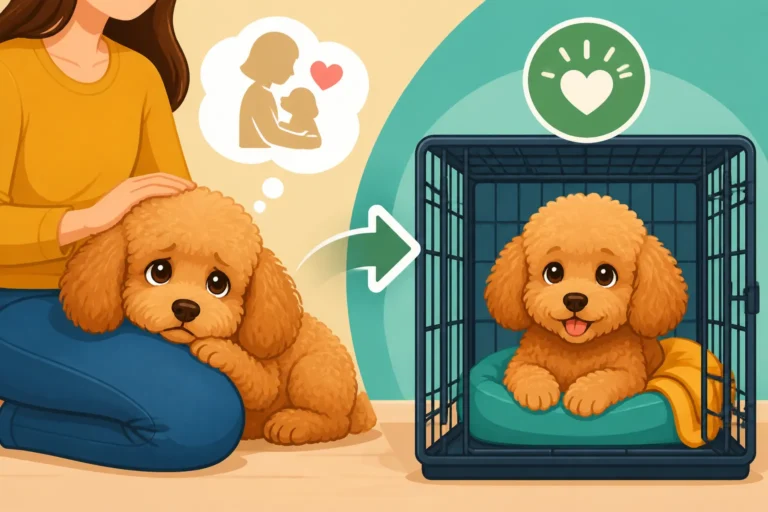
Many Poodles also benefit immensely from crate training, not as a punishment, but as their own safe, cozy den. A properly introduced crate can become a sanctuary where your Poodle feels secure and can relax when you need a moment. It's a structured way to teach them that being alone in their space is okay and even pleasant. Start with very short periods, always ensuring positive associations with treats and chew toys. Over time, they'll learn that their crate is their personal retreat. Crate Training a Poodle That Wants Company delves deeper into making the crate a positive experience. This space provides a clear boundary and teaches them to self-soothe in their own designated area.
Incorporating "place" or "stay" commands into your daily routine is incredibly helpful. These commands empower your Poodle to choose calm, independent behavior rather than defaulting to shadowing. When you're busy in the kitchen, for example, send your Poodle to their "place" with a long-lasting chew or a puzzle toy. This not only keeps them out from underfoot but also gives them a fulfilling activity that doesn't involve constantly monitoring you. By teaching these skills, you're not just managing a behavior; you're equipping your Poodle with tools for self-regulation and confidence.
Enriching Their Environment for Mental & Physical Engagement
A bored Poodle is often a clingy Poodle. Because they are so bright, their minds need regular stimulation to prevent them from creating their own (often undesirable) entertainment, which can include hyper-focusing on your movements.
Puzzle toys and sniff games are absolute gold for Poodles. Instead of just putting their kibble in a bowl, make them work for it. There are countless interactive feeders and puzzle toys available on Amazon that require your Poodle to push, pull, or manipulate objects to get their food. Sniff games, where you hide treats around the house for them to find, tap into their natural scenting abilities and are incredibly tiring mentally. These activities provide a productive outlet for their intelligence and can keep them happily engaged for significant periods, diverting their attention from your every step. Think of it as giving them a job to do that doesn't involve being your shadow. Scent Games That Stretch a Poodle's Mind offers more ideas for engaging their powerful nose.
Beyond mental stimulation, regular, engaging exercise is crucial. Poodles, especially Standard Poodles, need more than just a quick stroll around the block. They need opportunities to run, play, and burn off physical energy. Fetch in a secure yard, brisk walks with varying routes, or even dog sports like agility or flyball can make a huge difference. A physically tired Poodle is a much calmer and more independent Poodle, less likely to feel the need to follow you everywhere. The exercise should be stimulating, not just repetitive. Varying the environment and incorporating short bursts of training into walks can make them more enriching.
Don't underestimate the power of training sessions for new tricks or obedience refreshers. Poodles love to learn, and short, fun training sessions several times a day can satisfy their intellectual needs. Teaching them new commands, refining existing ones, or even working on fun tricks like "tidy up" (putting toys in a basket) provides valuable mental exercise. Programs like BAXTER & Bella offer online resources that can guide you through positive reinforcement training, providing structure and fun ideas for keeping your Poodle's mind busy. These structured learning opportunities not only tire them out but also strengthen your bond in a productive way, reinforcing that interaction doesn't always have to come from them following you.
Managing the "Velcro" Behavior in Daily Life
Even with enrichment and confidence-building, you'll need to actively manage the "Velcro" behavior in your day-to-day interactions. This involves setting boundaries and subtly teaching your Poodle that your movements aren't always about them.
Setting Clear Boundaries and Expectations
One of the most effective ways to manage constant following is to establish clear boundaries in your home. This means certain rooms might be "off-limits" for your Poodle at certain times, or that they need to stay a certain distance from you. For example, if your Poodle always follows you into the bathroom, quietly and gently block their entry with your body or a baby gate. Don't make eye contact or speak, just prevent their access. The idea is to make these rooms uninteresting and unavailable when you're using them.
Similarly, teaching a "wait" command before you enter a new room or leave one can be incredibly helpful. Ask your Poodle to "wait" at the threshold, step into the room yourself, and then give them a release cue like "okay" to join you. This teaches them that they don't automatically get to follow; they need an invitation. This subtle control helps shift the dynamic from them dictating the movement to you initiating it. It's a small but powerful way to establish that you lead, and they follow on your terms.
Perhaps the most challenging boundary for many owners is to avoid inadvertent reinforcement. This means being mindful of how you react when your Poodle follows you. If they're underfoot, try not to pet them, talk to them, or even make eye contact every single time. It's hard because they're so endearing, but any attention reinforces the behavior. Instead, when they follow, ignore them. When they choose to lie down away from you, that's when you can offer quiet, calm praise or a treat. This teaches them that attention comes from not following, or from being calm and independent. It's about shifting the reward system to encourage the behavior you want to see more of.
Gradual Desensitization to Departures
The goal is to teach your Poodle that your moving away or leaving a room isn't a big deal and doesn't always mean a prolonged absence. This process is called desensitization.
Practice short departures and returns without fanfare. This is key. Start by stepping out of a room for literally a second, then immediately returning. Don't say goodbye, don't make a big deal, don't even look at your Poodle. Just step out and step back in. Repeat this many times a day, gradually increasing the time you're out of sight by mere seconds. The crucial part is the lack of emotion or attention upon leaving and returning. You want your Poodle to learn that your exits are neutral events, not triggers for anxiety or excitement.
An excellent exercise is the "Poodle doesn't care if you leave" game. Pick up your keys, walk to the door, and then sit back down on the sofa. Don't leave. Put your coat on, then take it off. Jingle your keys, then put them back. The goal is to make all the "departure cues" (keys, coat, purse, door handle) meaningless by disconnecting them from an actual departure. Your Poodle will stop associating these cues with your leaving, reducing their anticipation and potential anxiety. This helps them understand that these actions are just part of your normal routine, not necessarily a precursor to being left alone.
For a more structured approach, consider using online training programs. Platforms like BAXTER & Bella offer step-by-step guidance on separation training and desensitization, with video tutorials and support that can be invaluable. They focus on positive, gradual methods to help your Poodle build confidence. This kind of program can help you systematically work through the stages of independence, from short absences in sight to longer periods out of sight, ensuring your Poodle learns to cope calmly. It truly helps to normalize your comings and goings. This process is vital for their emotional well-being and is part of Teaching a Poodle That Leaving Is Ordinary.
When to Seek Professional Guidance
While many Poodles benefit from the strategies above, there are times when constant following crosses into a more serious behavioral issue that requires expert help. Recognizing these signs is crucial for your Poodle's welfare.
Recognizing Signs of Separation Anxiety
The most important distinction to make is between a Poodle who simply enjoys your company and one who genuinely cannot cope with being alone. When the clinginess escalates into distress when you're absent, even for short periods, you might be dealing with separation anxiety.
Signs of separation anxiety can include destructive chewing (especially around exit points like doors or windows), excessive barking, howling, or whining, house soiling (urination or defecation) even when they are fully house-trained, pacing, drooling, or attempting to escape when left alone. These behaviors are not acts of defiance or "bad behavior"; they are panic responses from a dog experiencing extreme stress and fear. The Poodle isn't trying to be naughty; they are genuinely terrified. This is why it's so important to distinguish normal Poodle behavior from true anxiety. Your Poodle might be able to manage for a short period, but eventually, the panic sets in. It's a heartbreaking situation for both dog and owner. Understanding What a Panicking Poodle Does to the Door is critical for identifying these severe responses.
Another less obvious sign is if your Poodle is completely unable to settle when you are preparing to leave, or if they greet you with an almost frantic level of excitement upon your return, as if they were gone for days, even if you were only gone for minutes. This heightened emotional state, both before and after your absence, suggests an unhealthy level of reliance and anxiety. It's also worth considering Hours a Poodle Copes With an Empty House as a factor; pushing their limits too often can exacerbate existing anxieties.
Finding a Positive Reinforcement Trainer or Behaviorist
If you suspect your Poodle is suffering from separation anxiety, or if the clinginess is severely impacting your household despite your best efforts, it's time to seek professional guidance. The crucial point here is finding a professional who uses positive reinforcement methods. Harsh corrections, punishment, or force-based training will only increase your Poodle's anxiety and damage your bond, making the problem worse. Poodles are sensitive dogs, and they shut down under harsh handling. Why a Poodle Shuts Down When Scolded is a prime example of this.
Look for a certified professional dog trainer (CPDT-KA) or a certified applied animal behaviorist (CAAB) or a veterinary behaviorist (DACVB). These professionals have the knowledge and experience to accurately diagnose the root cause of the behavior and create a tailored behavior modification plan. A good behaviorist will take a thorough history, observe your Poodle, and help you implement a step-by-step plan that addresses the anxiety at its core, often including counter-conditioning, desensitization protocols, and environmental management. They can also advise on whether medication might be a helpful adjunct to behavioral therapy in severe cases.
These professionals can guide you on everything from specific exercises to build confidence to setting up your home environment for success, and even teaching you how to read your Poodle's body language more effectively. Reading a Poodle's Body Language is a skill that can greatly aid in understanding their subtle signals of stress or comfort. Investing in professional help for true separation anxiety is an investment in your Poodle's mental health and your peace of mind. They can help you devise a clear path forward. Finding a trainer who uses no force on a Poodle is essential for their well-being and for the success of the training. Finding a Trainer Who Uses No Force on a Poodle emphasizes the importance of this approach for such a sensitive breed.
Ultimately, your Poodle's desire to be close to you is a testament to their loving nature and the deep bond you share. By understanding the reasons behind their "Velcro" tendencies and implementing thoughtful, consistent strategies, you can help them become a more confident, well-adjusted companion who enjoys both your presence and their own independent time.
| Behavior Trait | Normal Poodle "Velcro" Behavior | Concerning Clinginess (Potential Anxiety) |
|---|---|---|
| Following You | Moves to same room, settles nearby, observes calmly. | Follows everywhere, trips you, paws, whines when out of sight. |
| When You Leave Room | May stand up, watch you go, then settle back down. | Paces, whines, barks, tries to push open doors, can't settle. |
| When Left Alone at Home | Rests, plays with toys, naps, greets you calmly on return. | Destructive chewing, howling/barking, house soiling, attempts to escape. |
| Reaction to Cues (Keys, etc.) | Notices, but doesn't show excessive distress or excitement. | Becomes agitated, panics, hyperventilates, shakes. |
| Settling Ability | Easily settles down in various spots, even if not right next to you. | Struggles to settle unless touching or very close to you. |
| Desire for Interaction | Seeks attention, enjoys play, but also content to chill. | Seems to need constant interaction to feel secure. |
| Body Language | Relaxed posture, soft eyes, loose tail. | Tense muscles, wide eyes, furrowed brow, panting, tucked tail. |
Disclaimer
This article is for general informational purposes only and does not constitute professional advice. Laws, prices and regulations vary by location and change over time. Consult a qualified professional for guidance on your specific situation.