Teaching Children to Handle a Toy Poodle
Bringing a delightful little Toy Poodle into a home with children can be an incredibly rewarding experience, filling your days with laughter and companionship. However, it also presents a unique set of challenges, as small dogs are inherently more fragile and prone to injury, and their sensitive nature can sometimes be misunderstood by enthusiastic little hands. This guide will walk you through how to teach children to handle a Toy Poodle safely, fostering a harmonious relationship built on respect and understanding for everyone, two-legged and four-legged alike.
Understanding the Toy Poodle's Perspective
It's easy for us as adults to see a Toy Poodle as just a tiny, fluffy bundle of joy, but for a child, they might seem like a living toy. This fundamental difference in perception is where we often run into issues, so it's crucial to help children understand the world from their Poodle's point of view.
The Fragility Factor and Why It Matters
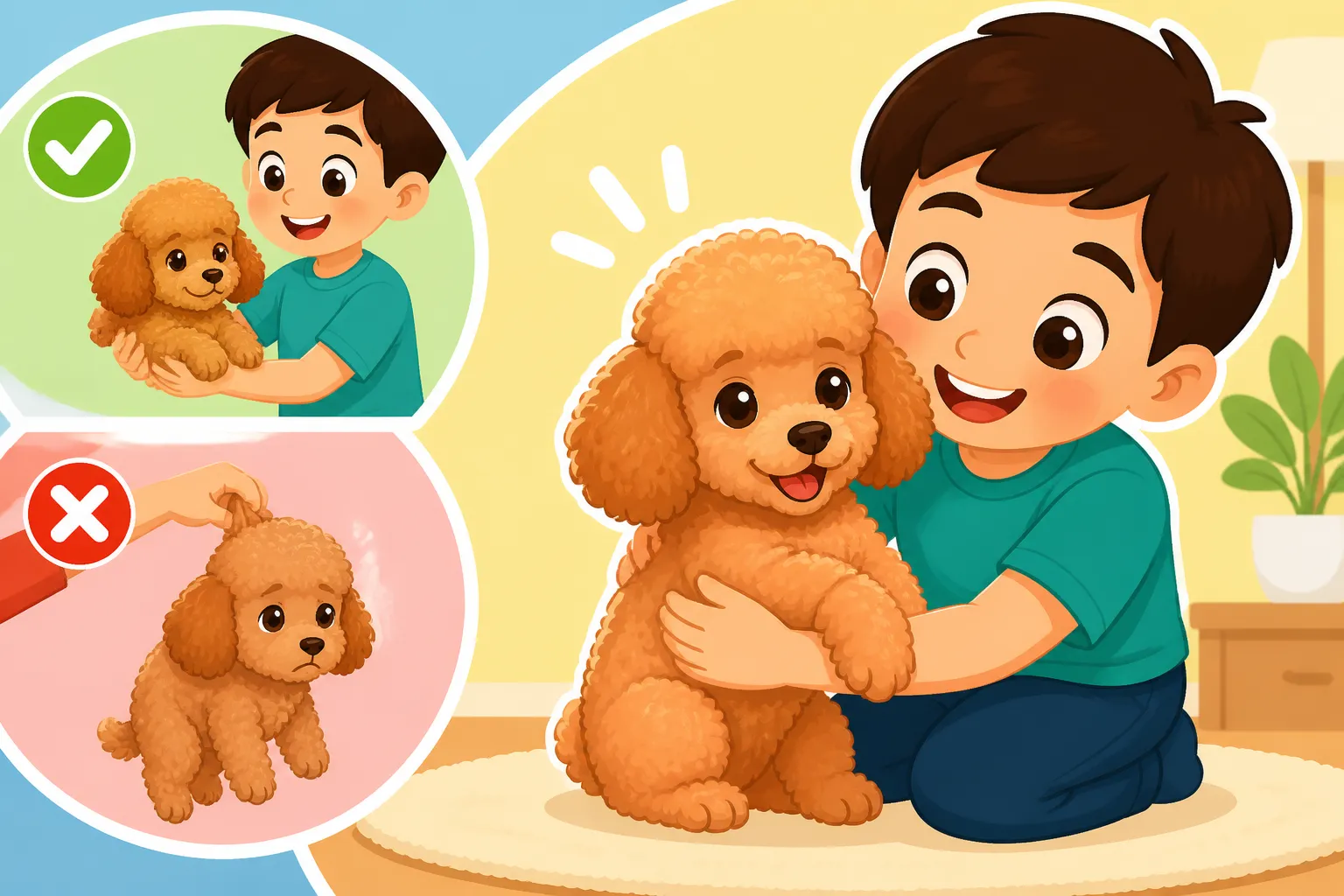
Let's be honest, Toy Poodles are delicate creatures. Their bones are tiny, their joints are small, and a wrong step or an accidental fall can lead to serious injury. Imagine a child, perhaps a toddler, trying to pick up a Toy Poodle like a stuffed animal, gripping it too tightly around the ribs or dropping it from a small height. These aren't malicious acts; they're simply a lack of understanding regarding the dog's physical vulnerability. A fall from a sofa, for instance, which might be a mere inconvenience for a larger dog, could result in a broken leg or worse for a Toy Poodle. It's not just about immediate injury, either. Repeated rough handling can lead to chronic pain and fear in your Poodle, making them wary or even reactive towards children over time. This is why discussions around topics like Toy Poodle Kneecaps and Windpipes are so important; these tiny dogs are predisposed to certain orthopedic and respiratory issues that can be exacerbated by rough play.
We often assume children intuitively know how to be gentle, but they need explicit instruction and demonstration. Explain to them, in terms they can grasp, that the Poodle's body is like a very fragile glass ornament, not a bouncy rubber ball. Show them pictures of bones (maybe even comparing a human finger bone to a dog's leg bone to emphasize the size difference), or use a delicate doll as an example to practice gentle handling. Emphasize that certain areas, like the back, neck, and tummy, are especially vulnerable.
Toy Poodle Sensitivity and Stress Signals
Toy Poodles are incredibly intelligent and sensitive dogs. They pick up on moods, tones of voice, and even subtle changes in our body language. While this makes them wonderful, empathetic companions, it also means they can become easily stressed or overwhelmed, particularly by the unpredictable energy of children. A child's sudden loud shriek, a quick movement, or an insistent poke can be genuinely frightening for a small dog that views itself as vulnerable.
It's vital for both adults and children to learn how to read a Poodle's stress signals. These aren't always obvious to the untrained eye. Your Poodle might not growl or snap immediately; instead, they might lick their lips, yawn repeatedly when not tired, turn their head away, avoid eye contact, tuck their tail, or even try to hide. These are all subtle ways your Poodle is saying, "I'm uncomfortable, please stop." Ignoring these early signals can escalate the situation, potentially leading to a more defensive reaction from your dog. Understanding Reading Pain in a Sensitive Poodle goes hand in hand with this; sometimes what appears to be fear is actually discomfort or pain being communicated in a subtle Poodle way.
Help your children identify these subtle cues. You can make it a game: "Can you see Fifi's tail? What is it telling us?" or "Look, Fifi is licking her lips, that means she needs a break." The more children understand these signals, the better equipped they'll be to back off and give the Poodle space before things get overwhelming.
When a Toy Poodle Snaps
No one wants to think about their beloved Poodle snapping at a child, but it's a very real possibility if boundaries aren't clear and stress signals are ignored. A snap, a growl, or even a bite is almost always a last resort for a dog that feels trapped, threatened, or is in pain. It's rarely a sudden, unprovoked act. For a Toy Poodle, whose physical options for self-defense are limited, these vocal and physical warnings are their primary way of saying "enough!"
Imagine a child cornering a Toy Poodle under a table, trying to pull them out for a hug. The Poodle has nowhere to go, has given numerous subtle signals of discomfort, and now, feeling desperate, might resort to a snap. This is often the point where owners mistakenly label the dog as "aggressive" or "unpredictable," when in reality, the dog was simply trying to communicate its distress and was not heard. This situation is precisely why it's so important to understand Why a Toy Poodle Snaps When Startled – often it's not aggression, but an instinctive reaction to feeling overwhelmed or physically vulnerable.
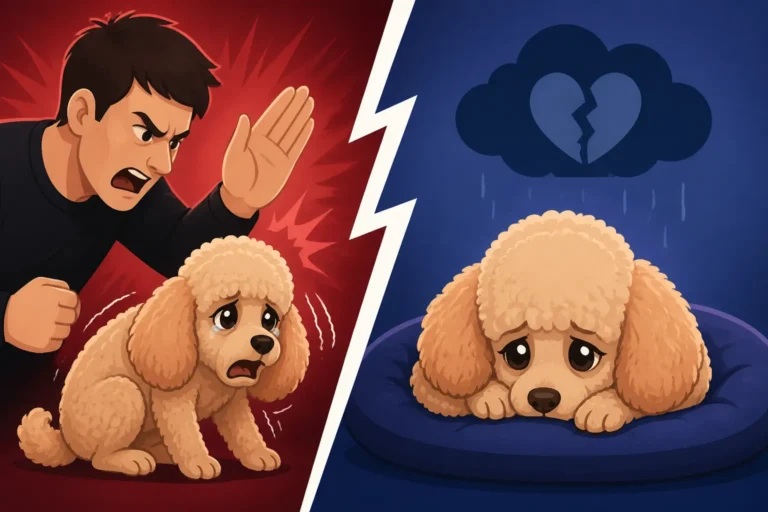
The goal is to prevent these situations entirely by teaching children respect, gentle handling, and how to recognize when the Poodle needs space. Never punish a growl; a growl is a warning, and if you punish it, the dog might learn to go straight to a bite without warning next time. Instead, thank the dog for giving a warning and intervene immediately to remove the child or dog from the situation.
Educating Children on Safe Interaction
The cornerstone of a happy multi-species home is education. Children are capable of understanding a great deal, especially when information is presented clearly and consistently.
Gentle Hands, Quiet Voices
This is the golden rule for interacting with any small dog, especially a sensitive Toy Poodle. Teach children from the very beginning that their hands must be soft and gentle, not grabbing or poking. Demonstrate how to pet with an open palm, using light strokes along the back or chest, avoiding the face, ears, and tail initially. Have them practice on a stuffed animal first, emphasizing the "gentle" aspect. "Imagine you're petting a cloud," you might say.
Equally important are quiet voices and calm movements. Children can be loud and boisterous, which is perfectly natural for them, but terrifying for a small dog. Explain that sudden loud noises or running can scare the Poodle. Encourage them to use a soft, calm voice when talking to the dog and to move slowly and predictably. This helps create a sense of safety and predictability for the Poodle, making them more comfortable and less likely to feel startled. If your child is struggling, a good online training resource like those offered by BAXTER & Bella can provide structured lessons not just for the dog, but for the entire family on how to interact respectfully and gently. Their programs often include modules on basic manners that indirectly teach children how to respond to a dog's cues.
Respecting Boundaries and Personal Space
Every living creature, including your Toy Poodle, needs personal space. For children, this is a concept that needs repeated reinforcement. Teach them that when the Poodle is sleeping, eating, or in its designated safe space (like a crate or bed), they are off-limits. No exceptions. This rule protects both the child from a potential defensive reaction and the Poodle from feeling constantly vulnerable.
Explain that the Poodle isn't a toy to be dragged around or picked up whenever they feel like it. Instead, interaction should always be on the Poodle's terms, or at least initiated by an adult. Encourage children to invite the Poodle to interact by sitting quietly on the floor and letting the dog come to them. If the Poodle walks away, that means they need a break, and that decision must be respected without chasing or coaxing. A Poodle that feels it has control over its interactions is a Poodle that is less likely to feel threatened.
Recognizing Poodle Body Language
As discussed earlier, understanding body language is critical. For children, this can be simplified into a few key indicators. Create a simple chart or use flashcards with images of dogs showing different emotions – happy (loose body, wagging tail, relaxed mouth), nervous (lip licking, yawning, looking away, tucked tail), and uncomfortable (stiff body, growling, ears back).
Teach children to look for the "happy tail" (a relaxed, sweeping wag, not a stiff, rapid one) and a loose, relaxed body. If the Poodle is stiff, frozen, or trying to move away, it's a sign they're not happy with the interaction. This is where you, as the parent, need to step in and gently redirect the child or remove the Poodle. Think of it as teaching a new language. The more fluent children become in "dog speak," the better they can understand and respond appropriately. This skill will not only benefit their relationship with your Poodle but also with other dogs they encounter.
Here's a simplified guide you can use with your children:
| Poodle Signal | What it Might Mean | What Your Child Should Do |
|---|---|---|
| Loose body, wagging tail | Happy, wants to play | Gentle petting, calm talking |
| Lip licking, yawning | A bit worried, needs space | Stop petting, give space, be quiet |
| Turning head away | Uncomfortable, please stop | Move away, let Poodle relax |
| Tail tucked, ears back | Scared, feeling shy | Leave them alone, tell an adult |
| Growling, snapping | Very upset, STOP NOW | Move away immediately, tell an adult |
Setting Up a Safe Environment for Both
Creating a physical environment that supports safe interactions is just as important as education. It's about proactive management to prevent problems before they start.
Designated Safe Spaces for Your Poodle
Every Toy Poodle, especially one living with children, needs its own sanctuary. This could be a crate, a dog bed in a quiet corner, or even a playpen. This space should be off-limits to children at all times. It's the Poodle's personal room, where they can retreat for peace and quiet without being disturbed. Children need to understand that when the Poodle is in its safe space, they are not to bother it.
A well-placed crate, for example, gives your Poodle a secure den where they can nap without fear of being tripped over or startled awake. You can find excellent crates and comfortable beds on platforms like Amazon, offering a range of sizes appropriate for Toy Poodles. Make this space inviting with soft blankets and favorite toys. When the Poodle is in its crate, teach children to walk quietly past and respect that boundary. This concept of a safe space is crucial for preventing stress and allowing your Poodle to regulate their own needs for downtime. Using a properly sized crate, as discussed in Crate Size for Each Poodle Variety, is key to ensuring your Poodle feels secure, not confined.
Managing Playtime and Energy Levels
Children and Toy Poodles both have bursts of energy, but their play styles can clash. Children often want to engage in rough and tumble games, chasing and wrestling. For a small Poodle, this can quickly become overwhelming or even dangerous. Teach children appropriate ways to play with the Poodle, focusing on games that are safe and controlled.
Fetch with soft toys, gentle tug-of-war (with clear rules about letting go), or hide-and-seek with treats are much better options than games involving chasing or grabbing. Supervise all interactions closely, especially during playtime. If play gets too rambunctious, immediately intervene and redirect the child or put the Poodle in its safe space for a break. Remember, a tired Poodle is a well-behaved Poodle, but over-stimulation can lead to nipping or unwanted behaviors. Consider incorporating mental games and puzzle toys, which can tire out an intelligent Poodle without excessive physical exertion, preventing them from getting bored and inventing their own, potentially less desirable, games. After all, you don't want to find out What a Poodle Does When Its Brain Is Idle by having them chew on your furniture!
Supervision Tools and Resources
Even with the best intentions, you can't be everywhere at once. That's where supervision tools come in handy. Baby gates are fantastic for creating physical boundaries, allowing the Poodle and children to be in separate areas while still being able to see and hear each other. This is particularly useful in common areas where children might play without constant, direct adult supervision.
Pet cameras, easily found on Amazon, can offer peace of mind, allowing you to monitor interactions from another room or even when you step out briefly. While they are no substitute for direct supervision, they can alert you to potential issues. For comprehensive guidance, online puppy and dog training programs, such as BAXTER & Bella, offer a wealth of resources, including video tutorials on appropriate play, setting boundaries, and socialization, often with specific advice for integrating dogs into families with children. These programs can provide structured learning for both your Poodle and your family, helping everyone understand their roles and responsibilities.
Consistent Supervision and Reinforcement
The journey of teaching children to handle a Toy Poodle isn't a one-time lecture; it's an ongoing process that requires consistent effort and positive reinforcement.
Modeling Good Behavior
Children learn by example. The most powerful way to teach them how to interact with your Toy Poodle is to consistently model the behavior you want to see. When you pet the Poodle, do it gently. When you talk to them, use a soft, calm voice. Show respect for the Poodle's personal space and demonstrate how to invite interaction rather than demand it.
If your Poodle comes to you for comfort or attention, show your children how you respond in a calm, reassuring manner. Let them see you give the Poodle a break when it seems overwhelmed. Your consistent actions will speak volumes and reinforce the lessons you're trying to teach. Make sure every adult in the household is on the same page and models these behaviors. Consistency across all caregivers is key to avoiding confusion for both the children and the Poodle.
Rewarding Calm and Gentle Interactions
Positive reinforcement isn't just for dogs; it works wonders with children too! Whenever you see your child interacting gently and respectfully with the Toy Poodle, acknowledge it immediately. Praise them ("Wow, you're being so gentle with Fifi! I love how you're petting her so nicely!"), or offer a small, non-food reward like a sticker or extra playtime. This reinforces the desired behavior and makes them feel good about their actions.
Similarly, when the Poodle is calm and relaxed around the children, reward the Poodle with quiet praise or a tiny, high-value treat. This helps the Poodle associate children with positive experiences. Keep a small container of appropriate treats, like those small enough for a Toy Poodle, handy for these moments. The more positive experiences both the children and the Poodle have together, the stronger their bond will become. Focusing on rewarding calm and gentle interactions creates a virtuous cycle where everyone feels safe and appreciated.
What to Do When Things Go Wrong
Despite your best efforts, there will be times when interactions don't go perfectly. A child might accidentally step on a paw, or get too boisterous, causing the Poodle to react. How you respond in these moments is crucial.
First and foremost, remain calm. Shouting or panicking will only escalate the tension for both the child and the Poodle. Immediately separate them. Gently remove the child from the situation or put the Poodle in its safe space. Assess the situation. Was anyone hurt? If the Poodle snapped, was it a warning, or did it make contact? If there's any injury, seek appropriate medical attention for the child or veterinary care for the dog.
Once everyone is safe and calm, take a moment to understand what happened. Replay the scenario. What were the triggers? What signals might have been missed? Use it as a teaching moment for the child, without blame. "Remember how Fifi licks her lips when she's worried? She was doing that right before she growled because your hands were moving too fast. Next time, let's slow down and watch for those signals." For the Poodle, it's a reminder to reinforce the positive associations with children, perhaps by ensuring more supervised, calm interactions moving forward and utilizing tools like baby gates when you can't actively supervise. Always remember that a dog that feels safe and understood is a dog that is less likely to resort to defensive behaviors.
Disclaimer
This article is for general informational purposes only and does not constitute professional advice. Laws, prices and regulations vary by location and change over time. Consult a qualified professional for guidance on your specific situation.