Whether a Toy Poodle Is Safe With a Toddler
Bringing a new baby, especially an active toddler, into a home with an existing Toy Poodle often fills devoted pet parents with a mix of joy and apprehension. You adore your little Poodle, but you also know how easily a small dog can be overwhelmed or accidentally hurt by an unpredictable tiny human. This guide will walk you through the unique dynamics between Toy Poodles and toddlers, offering realistic strategies to foster a safe, harmonious environment for everyone, preventing stress for your sensitive Poodle and potential nips for your curious child.
Understanding the Unique Challenges
It’s easy to assume that because Poodles are intelligent and generally good-natured, they'll instinctively know how to interact with a toddler. However, the reality is far more complex, especially with a petite Toy Poodle and a human who is still learning impulse control. The size disparity alone creates significant risks, and understanding these challenges is the first step toward preventing incidents.
The Toy Poodle's Delicate Nature and Temperament
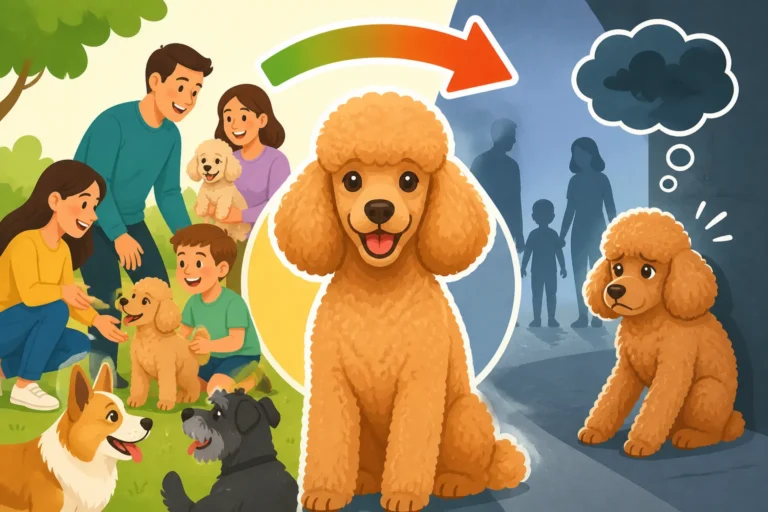
Toy Poodles, while sturdy for their size, are still quite fragile compared to a rambunctious toddler. Their bones are delicate, and they can easily be injured by an accidental fall, a misplaced step, or a tight squeeze. Beyond the physical, their temperament plays a huge role. Poodles, across all sizes, are known for their Poodle Temperament and Sensitivity. They are highly intelligent, yes, but also incredibly perceptive and can be quite sensitive to loud noises, sudden movements, and rough handling.
A Toy Poodle might interpret a toddler's enthusiastic grab or sudden shriek not as playful curiosity, but as a threat or an alarming invasion of their personal space. This isn't aggression; it's a natural instinct to protect themselves. A scared Poodle might vocalize or, if feeling trapped, might nip as a last resort, not out of malice but out of fear. Owners sometimes misinterpret a Poodle’s quiet withdrawal as sulking, when it’s often a clear sign of discomfort. Learning to recognize subtle cues in Reading a Poodle's Body Language is paramount. They also thrive on routine and calm, both of which are often absent when a toddler is around.
The Unpredictable World of Toddlers
Toddlers, bless their hearts, are a force of nature. They are driven by an insatiable curiosity and are still developing their motor skills and understanding of cause and effect. They haven't learned "gentle hands" yet, and their movements can be jerky, their voices loud, and their grasp surprisingly strong. They might view your Poodle as another toy, something to pull on, sit on, or "hug" with crushing force.
They don't understand that a dog's tail isn't a pull-cord, or that those cute curly ears aren't handles. This lack of understanding is natural for their age, but it puts your small Poodle in a vulnerable position. Furthermore, toddlers often don't pick up on subtle canine warning signals like a stiff body, a lip lick, or a growl. They can inadvertently push a dog past its breaking point simply because they don't comprehend the communication. This unpredictable nature is why constant, active supervision is not just recommended, but absolutely essential.
Establishing a Safe and Structured Environment
Once you understand the inherent challenges, the next step is to proactively create a living situation where both your Toy Poodle and your toddler can coexist safely. This isn't about hoping for the best; it's about intentional setup, consistent training, and vigilant management.
Creating Safe Havens for Your Poodle
Every Toy Poodle living with a toddler needs a designated safe space where they can retreat and be completely undisturbed. This is non-negotiable. It could be a comfy crate in a quiet room, a dog bed behind a baby gate, or even a raised platform that the toddler cannot reach. This "den" needs to be respected by all family members as a no-go zone for the toddler. When your Poodle is in their safe space, they are off-limits.
Think of it like a toddler's crib – a place of peace and security. You can find excellent, sturdy crates and baby gates on platforms like Amazon, which can be invaluable tools for creating these physical boundaries. Teach your Poodle to go to their crate or bed on command, using positive reinforcement. This "place" command is a lifesaver when things get too chaotic or your toddler is having a particularly energetic moment. Having a safe retreat reduces stress for your Poodle, making them less likely to feel trapped or reactive when interactions do occur. Consistent Crate Training a Poodle That Wants Company can make this space a true sanctuary.
Teaching Controlled Interactions
Formal training for both your Poodle and your toddler (or, more accurately, the adults supervising the toddler) is crucial. Your Poodle should be well-versed in basic obedience commands like "sit," "stay," "leave it," and "come." These commands are your tools for managing interactions. If your toddler approaches too quickly, a "stay" can keep your Poodle in place, or a "come" can bring them to you. A strong "leave it" is essential if your toddler is holding something tempting. Investing in an online training program, like those offered by BAXTER & Bella, can give you structured lessons on these foundational skills, allowing you to train at your own pace and address specific challenges.
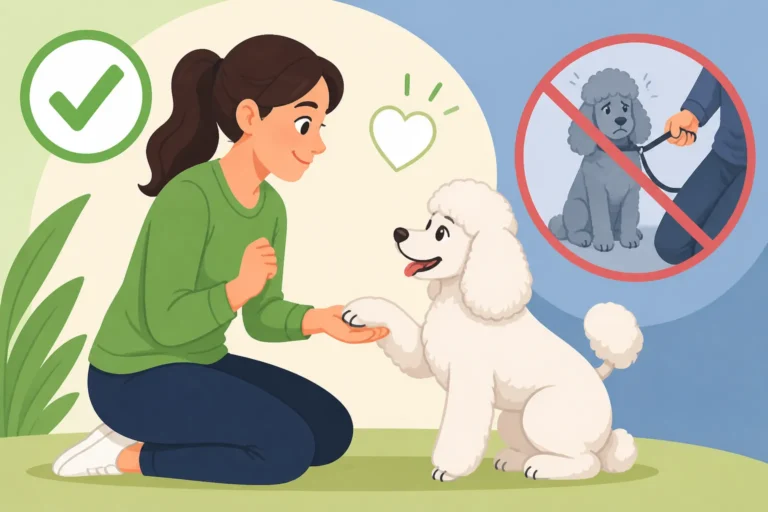
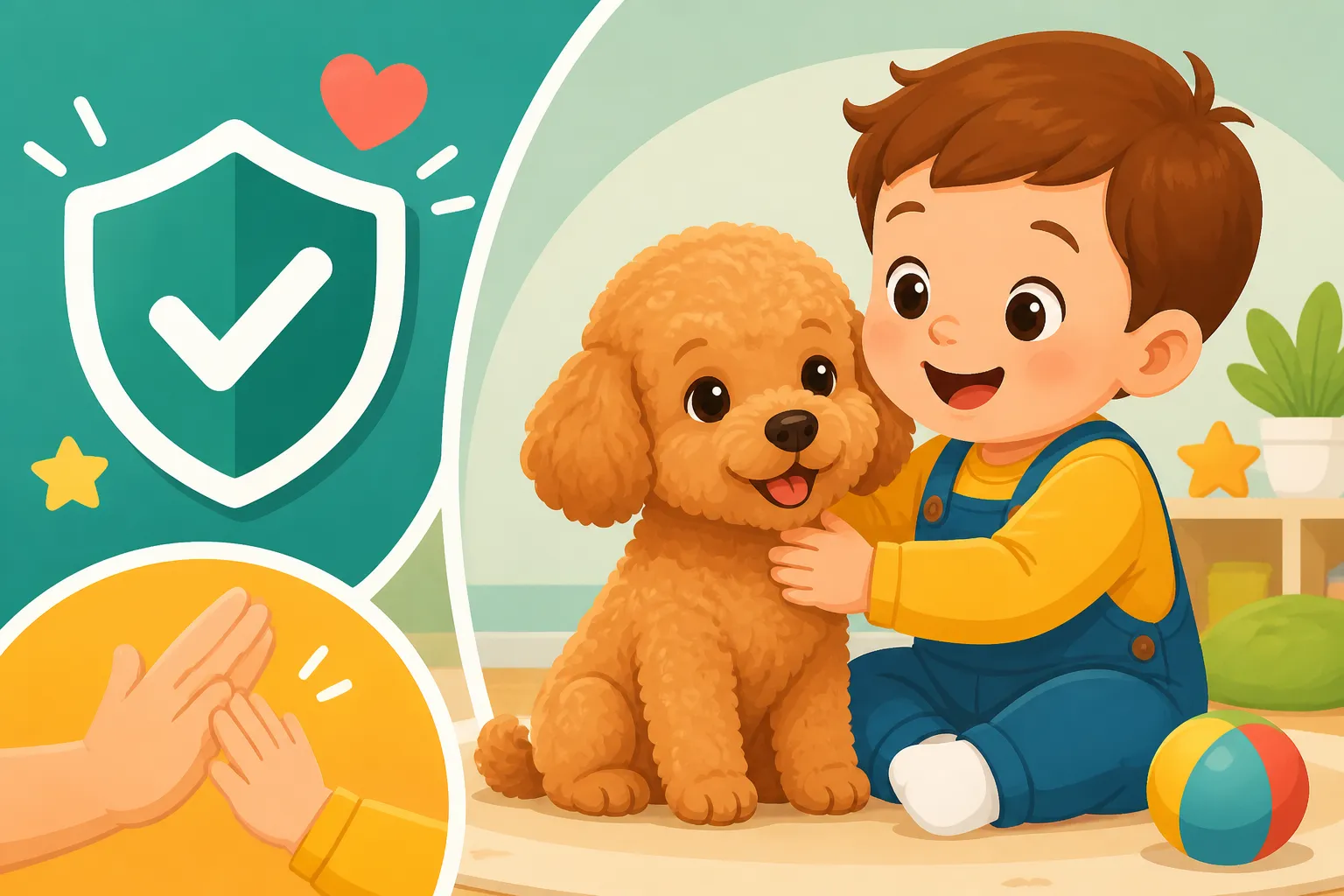
For the toddler, it’s about consistent education from the adults. Teaching Children to Handle a Toy Poodle means showing them how to gently pet (flat hand, not grabbing), where to pet (shoulders and chest, not face or tail), and when to leave the Poodle alone. Always supervise interactions directly, with an adult within arm's reach. This is not the time to step away to grab a coffee. If you cannot give 100% active supervision, the Poodle and toddler should be separated. Remember, Why Harsh Handling Breaks a Poodle, so teaching gentle interactions from the start protects their sensitive nature.
Proactive Management and Ongoing Vigilance
It's not enough to set up safe spaces and teach a few commands. Living safely with a Toy Poodle and a toddler requires constant, proactive management and an understanding that this is an ongoing process, not a one-time fix.
Active Supervision and Separation Strategies
The golden rule for Toy Poodles and toddlers is never, ever leave them unsupervised. Even for a second. An adult should always be actively engaged, watching both the Poodle and the toddler. This means your phone is down, you're not cooking dinner, and you're not distracted. If you need to step away, even briefly, either the Poodle or the toddler (or both) must be safely separated. This might mean the Poodle goes into their crate, or the toddler goes into a secure playpen.
Utilize physical barriers consistently. Baby gates are fantastic for sectioning off areas of your home, allowing your Poodle peaceful access to certain rooms while keeping the toddler contained elsewhere, or vice versa. Leash management indoors can also be a temporary solution when the toddler is active and you need to keep your Poodle close and controlled, especially if your Poodle is not fully Socializing a Poodle Before It Turns Wary to young children. Remember, it's about managing the environment to prevent problems, rather than reacting after one has occurred.
Reading Signals and Preventing Stress
Your Toy Poodle will tell you when they are uncomfortable, if you know how to listen. Subtle signs of stress include lip-licking, yawning (when not tired), turning their head away, stiffening their body, wide eyes showing the whites (whale eye), or a low, tucked tail. If you see any of these signals, it’s your cue to intervene immediately. Physically separate the Poodle from the toddler and give your dog a break. Do not wait for a growl or a snap. Ignoring these early warning signs teaches your Poodle that their polite communication is ineffective, forcing them to escalate.
Conversely, ensure your Poodle is getting enough physical and mental exercise separate from the toddler. A tired Poodle is generally a calmer Poodle. Regular walks and playtime, focusing on your Poodle's needs, can significantly reduce overall stress levels. Mental enrichment, like puzzle toys, can also help keep their intelligent minds occupied. Providing Daily Exercise for a Toy Poodle and mental stimulation can make a huge difference in their overall demeanor.
| Toddler Action | Poodle Body Language (Stress Signs) | Adult Intervention Strategy |
|---|---|---|
| Reaching/grabbing at Poodle | Lip lick, yawn, head turn, stiff body | Gently redirect toddler, remove Poodle |
| Loud shrieking/sudden movements | Ears back, tail tucked, cowering | Remove Poodle to quiet space, calm toddler |
| Chasing Poodle | Running away, hiding, freezing | Stop toddler, create physical barrier |
| Pulling Poodle's hair/tail | Growl, snap, yelp, flinch | Immediately separate, teach "gentle hands" |
| Approaching Poodle in its bed/crate | Low growl, tense posture | Respect Poodle's space, reinforce "place" |
Ongoing Training and Support
Raising a dog and a child together is an evolving process, and your strategies will need to adapt as both your Poodle and your toddler grow. Continue reinforcing good behavior in your Poodle with positive reinforcement, and keep working on their obedience skills. Consider enrolling in a local dog training class if you feel your Poodle needs more structured socialization or behavior modification. Training the Second Smartest Dog Breed means they are capable of learning, but it also means they will learn your habits, good or bad.
For parents, consistency is key. Ensure all caregivers (parents, grandparents, babysitters) understand and follow the established rules for Poodle-toddler interactions and supervision. If you notice any concerning behaviors developing in your Poodle, such as increased fear or reactivity, consult with a certified professional dog trainer or a veterinary behaviorist. Early intervention is always best. Remember, the goal is not just to prevent bites, but to foster a relationship of mutual respect and safety between your beloved Toy Poodle and your growing toddler. This dedication will ensure a peaceful home for many years to come, extending your Poodle Lifespan Across the Three Sizes in comfort and safety.
Disclaimer
This article is for general informational purposes only and does not constitute professional advice. Laws, prices and regulations vary by location and change over time. Consult a qualified professional for guidance on your specific situation.