Face, Feet and Tail Trimming on a Poodle
If you've ever admired a Poodle's elegant silhouette, you know that distinct, clean look around their face, feet, and tail isn't magic – it's meticulous grooming. But trying to achieve that sharp, tidy appearance at home can feel like a daunting task, especially with a wiggling, fluffy companion and a buzzing clipper. This guide is here to walk you through the essential steps for face, feet, and tail trimming, helping you keep your Poodle looking pristine and feeling comfortable.
Understanding the 'Clean Face, Feet, and Tail' Aesthetic
The Poodle's signature "clean" look around the face, feet, and the base of the tail isn't just about aesthetics; it's steeped in history and serves practical purposes for a breed renowned for its intelligence and athleticism. For many Poodle owners, maintaining these areas is the hallmark of proper Poodle care, signaling a well-kept and healthy companion. It’s a part of what makes a Poodle, well, a Poodle, and deviating too much from this can often lead to misunderstandings about the breed itself.
The Traditional Poodle Look
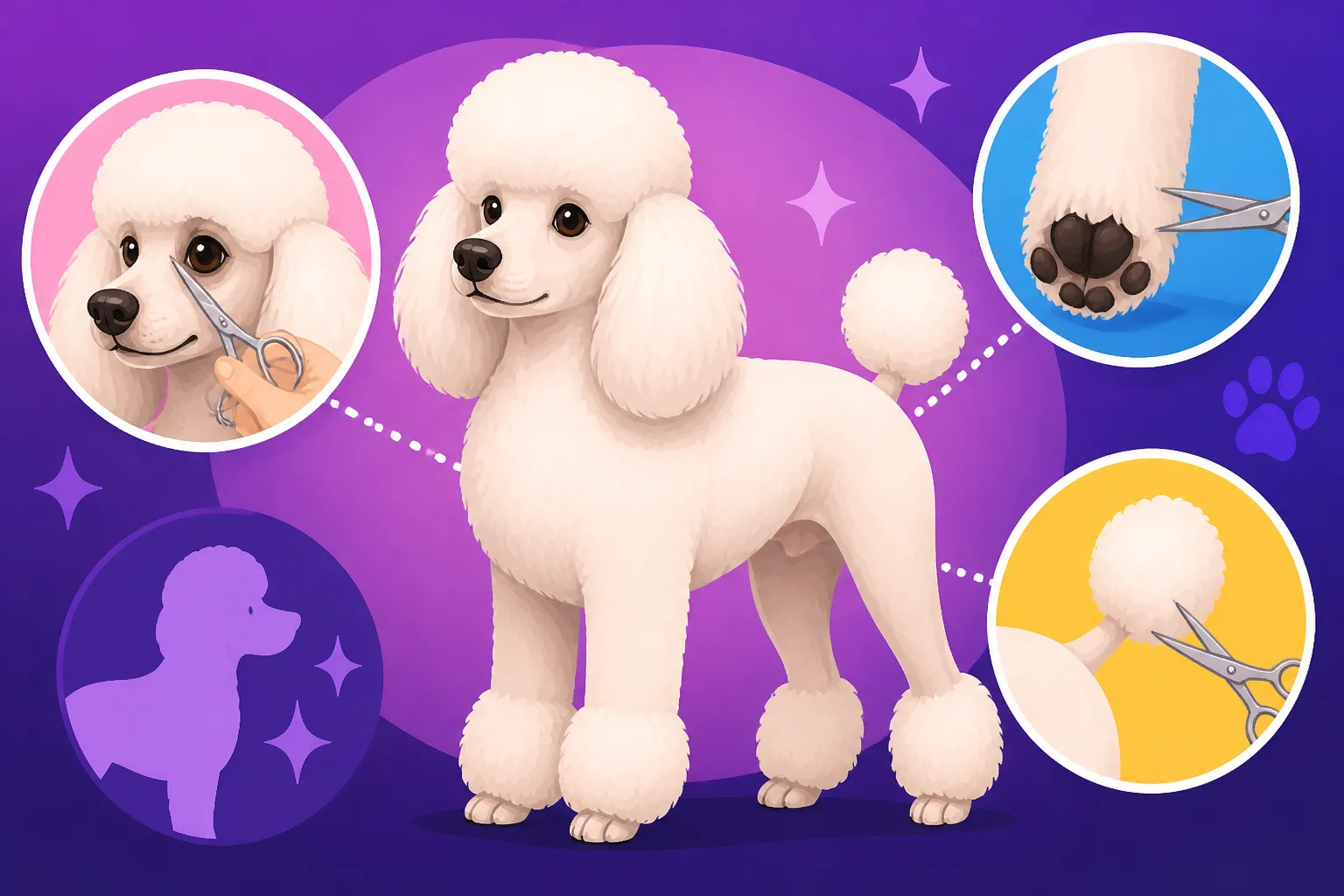
When you picture a Poodle, whether it’s a regal Standard, a sprightly Miniature, or a dainty Toy, there’s an immediate image that comes to mind: a dog with defined features, often accentuated by closely clipped hair on certain parts of its body. This isn't a modern fad. The practice of trimming a Poodle's face, feet, and tail dates back to their origins as water retrievers. Hunters would shave certain areas to reduce drag in the water, allowing the dog to swim more efficiently, while leaving strategic "pompoms" of hair over joints and vital organs to provide warmth in cold waters. While today's pet Poodles rarely brave icy lakes for ducks, the tradition of these clipped areas remains. It highlights their elegant neck, intelligent eyes, and graceful movement. The clean face, in particular, showcases their expressive features and makes it easier to keep food and debris out of their mouth and eyes. Similarly, clean feet prevent ice, burrs, or mud from accumulating between the paw pads, which can cause discomfort, matting, and even infections.
The Challenge of Poodle Hair Growth
The Poodle coat is unique because it's single-layered hair that continuously grows, much like human hair. Unlike many other breeds that have a shedding cycle, a Poodle's hair doesn't fall out in the same way. Instead, loose hairs get caught within the growing curls, quickly forming mats if not brushed out regularly. This continuous growth is precisely why these "clean" areas require such frequent attention. On the face, the hair around the muzzle can grow long enough to interfere with eating and drinking, becoming stained and dirty. Around the eyes, hair can grow into the eyes themselves, causing irritation or obstructing vision. On the feet, the hair between the pads grows quickly, creating slick surfaces, trapping debris, and becoming a breeding ground for moisture and bacteria, particularly if your Poodle is prone to Ear Infections Under a Poodle's Drop Ears or other moisture-related issues. The hair at the base of the tail, if left untrimmed, can also become tangled, matted, and unhygienic, especially after potty breaks. Without regular trimming, these areas quickly lose their tidy appearance and can become a source of discomfort or even health problems for your Poodle. This constant battle against growth means that even if you choose a longer overall body clip, the face, feet, and tail often need attention every 2-4 weeks. The Poodle Coat and Why It Never Stops Growing provides more insight into this unique hair type.
Essential Tools for Face, Feet, and Tail Trimming
Before you even think about firing up the clippers, you need to gather the right equipment. Using dull blades or the wrong type of scissors can make the experience uncomfortable for your Poodle and frustrating for you, often leading to a less-than-perfect result or, worse, accidental nicks. Investing in quality tools designed for canine grooming makes a world of difference in safety, efficiency, and the final look.
Clippers and Blade Selection
A good quality clipper is paramount for clean face, feet, and tail work. Look for a quiet, lightweight model that fits comfortably in your hand, as precision is key in these delicate areas. Cordless models offer flexibility, but corded versions often provide consistent power without worrying about battery life. When selecting blades, the size refers to the length of hair left behind. For the truly "clean" Poodle look, you'll typically be working with very short blades:
- #10 Blade: This is a good general-purpose blade, leaving about 1/16th of an inch of hair. It's often used for sanitary trims and can be a safe choice for beginners around the face and feet if you're nervous about going too short. It still gives a relatively clean look without being overly drastic.
- #15 Blade: Leaves approximately 1/32nd of an inch. This blade gives a slightly closer shave than a #10 and is commonly used by professional groomers for clean faces and feet on pet Poodles.
- #30 or #40 Blade: These blades provide the closest shave, leaving 1/50th or 1/100th of an inch respectively. They create the super-smooth, velvet-like finish often seen on show Poodles or very short pet clips. However, these blades require more experience as they can heat up quickly and pose a higher risk of clipper burn or skin irritation, especially on sensitive Poodles. Always use a cooling spray and check blade temperature frequently if using these. For safety, many home groomers prefer to stick with a #10 or #15. You can find a wide selection of clippers and blades on sites like Amazon or Chewy.
Remember to keep your blades clean, oiled, and sharp. Dull blades pull at the hair, causing discomfort for your Poodle and producing a choppy, uneven cut. What Poodle Clippers and Blades Cost delves deeper into choosing and maintaining your clipping equipment.
Scissor Work and Finishing Touches
While clippers do the heavy lifting for the "shaved" areas, scissors are indispensable for detailing and finishing, especially around the eyes, ears, and for blending purposes. Just like with clippers, quality matters here.
- Straight Shears: These are your go-to for precise trimming, especially around the outside edges of the ears, for tidying up a topknot, or for any stray hairs the clippers missed. A 7- or 8-inch straight shear is versatile for most Poodle sizes. Always use blunt-nosed scissors for areas close to the eyes for added safety.
- Thinning Shears (or Blenders): These scissors have one bladed edge and one serrated edge, designed to remove bulk and create a softer, more natural finish. They are excellent for blending the clipped areas into longer coat, smoothing out harsh lines, or softening the edges of a Poodle's topknot or ear fringe. They can be particularly useful around the outside of the eye or where the clean face meets the cheek hair.
- Small, Curved Shears: These can be very helpful for shaping around the paws and for more intricate work, though they are not strictly necessary for basic face, feet, and tail trimming.
Always ensure your scissors are sharp and clean. Dull scissors will fold or chew the hair rather than cut it cleanly, leading to a frayed appearance. When working with scissors, always point the tips away from your Poodle's body, especially when near delicate areas like eyes and ears. Hold the skin taut with one hand and cut with the other.
Grooming Aids and Safety Gear
Beyond the primary cutting tools, a few supplementary items will make the trimming process smoother, safer, and more comfortable for both you and your Poodle.
- Grooming Table with Arm and Loop: This is a non-negotiable item for safety and comfort, especially for a Standard Poodle or a particularly wiggly Miniature. The loop keeps your Poodle safely contained and reduces movement, allowing you to use both hands to groom. Trying to trim a Poodle on the floor or a regular table is an invitation for injury. You can find various sizes on Chewy or Amazon.
- Styptic Powder: This is a must-have for any home groomer. Even the most experienced groomers can occasionally nick a quick when trimming nails or catch a tiny piece of skin. Styptic powder helps to stop minor bleeding quickly.
- Cooling Spray: If you're using close-cut blades like a #30 or #40, blades can heat up rapidly. A cooling spray can instantly bring down the blade temperature, preventing discomfort or clipper burn for your Poodle.
- Ear Powder: Some Poodles have excessive hair growth inside their ears, which can trap moisture and lead to infections. While ear plucking is a separate topic, if you're already handling the face, it's a good time to check those ears. A little ear powder can help grip the hairs if you do choose to pluck. Plucking Hair From a Poodle's Ear Canal provides guidance on this.
- Cotton Balls/Pads & Ear Cleaner: Before you start trimming the face, a quick ear clean can make the experience more pleasant. Wipe away any visible dirt or wax.
- High-Quality Comb & Slicker Brush: Before any clipping, you'll need to thoroughly brush and comb through the coat to remove tangles and mats. Even short hair on the face, feet, or tail can have tiny knots. Tools That Reach a Poodle's Undercoat gives more details on essential brushing tools.
| Tool Category | Specific Item | Typical Use | Key Considerations |
|---|---|---|---|
| Clippers | Corded/Cordless | Shaving face, feet, tail base | Quiet motor, comfortable grip, consistent power |
| Blades | #10, #15, #30, #40 | Achieving desired hair length for clean areas | Safety for beginner (#10), closeness, heat generation |
| Shears | Straight Shears | Detailing, tidying, blending | Blunt tips for safety around eyes, sharpness |
| Shears | Thinning Shears | Softening lines, removing bulk, blending | Number of teeth affects hair removal |
| Safety/Aids | Styptic Powder | Stopping minor bleeding from nicks/quicks | Essential for every grooming kit |
| Safety/Aids | Blade Coolant Spray | Reducing blade temperature during clipping | Prevents clipper burn, extends blade life |
| Restraint | Grooming Table/Arm | Securing Poodle for stability and safety | Prevents jumping, reduces movement, hands-free work |
Step-by-Step Guide to Face Trimming
Trimming a Poodle's face requires patience, a steady hand, and a calm demeanor. It's often the most intimidating part for new groomers because of the delicate areas involved. However, with practice and the right technique, you can achieve that clean, expressive Poodle face that truly showcases their personality. Remember, positive reinforcement throughout the process will make it easier each time.
Preparing the Face
Before you even turn on the clippers, preparation is key. A calm Poodle is a cooperative Poodle. Start by ensuring your Poodle has had a potty break and some exercise so they aren't restless. Have all your tools laid out and within easy reach on your grooming table.
First, give their entire face a thorough brush and comb-through. Even short hair needs to be free of tangles, especially around the eyes and muzzle, as mats can hide skin issues and make clipping uneven or difficult. Use a fine-toothed comb to gently clear any eye boogers or debris. If the hair is particularly greasy or stained, a gentle wipe with a damp cloth or a specialized tear stain remover (if applicable, ensuring it's safe for their eyes) can help. Next, gently clean their ears. Poodle Ears, Eyes and Nails covers overall maintenance for these areas. Make sure the face is dry before clipping, as wet hair can clog blades and give an uneven cut. Finally, ensure good lighting so you can clearly see what you're doing. Have your Poodle in a secure grooming loop, facing you, and speak to them in a calm, reassuring voice. This positive interaction is crucial, especially when you are Introducing Clippers to a Poodle Puppy.
Clipping the Muzzle and Cheeks
This is where the clippers come into play. For the face, many pet owners feel comfortable starting with a #10 blade for safety, or a #15 for a closer look.
- Hold the Muzzle: With one hand, gently but firmly hold your Poodle's muzzle, closing their mouth. This stretches the skin and keeps their tongue safely inside. It also prevents them from snapping at the clippers or trying to lick them.
- Start at the Top: Begin clipping at the top of the muzzle, between their eyes, moving the clipper with the grain of the hair (in the direction the hair grows) down towards their nose. Use short, even strokes.
- Work Down the Muzzle: Continue clipping down the sides of the muzzle, making sure to stretch the skin taut with your free hand. This is critical for getting a smooth, even cut and preventing skin nicks. Imagine pulling the skin away from the teeth and lips.
- Under the Chin: Gently lift your Poodle's chin and carefully clip the hair underneath, from the jawline down to the throat. Again, stretch the skin firmly. This area can be prone to matting if not kept clean, especially from dribbling water.
- Cheeks: Carefully clip the hair on the cheeks, working from just below the eye down towards the jawline and blending into the neck. Always keep your fingers between the clipper and their eye. Remember to regularly check your blade for heat, especially if doing a longer session. A quick spritz of blade coolant can make a big difference in comfort.
Trimming Around the Eyes and Ears
These are the most sensitive areas, requiring the utmost care and a very steady hand. If you're unsure, or your Poodle is particularly squirmy, it's always better to use scissors with blunt tips for the eye area, or leave it to a professional.
- Around the Eyes: For clipping around the eyes, use a small, quiet clipper with a #10 blade.
- Gently pull the skin around the eye taut, pulling it away from the eyeball.
- Using just the edge of the clipper blade, carefully shave the hair away from the eye, moving outwards. Never point the blade towards the eye itself.
- Be incredibly cautious here. You're aiming to remove the hair that might poke into the eye or collect tear stains. Many Poodles have tear stains, and keeping this area clipped clean helps manage them.
- If clipping makes you too nervous, switch to small, blunt-nosed scissors. Carefully lift small sections of hair with a comb and snip only the very tips, always pointing the scissors away from the eye.
- Inside the Ears (Close to the Canal): The hair on the inside of the Poodle's ear flap, around the actual ear canal, should be kept short for hygiene and air circulation.
- With your Poodle's ear flap folded back, exposing the inside, carefully use your #10 clipper blade to shave the hair that grows on the inside of the flap, down towards the opening of the ear canal.
- Do not put the clippers into the ear canal. You are simply clearing the hair from the visible, inner surface of the ear flap.
- This helps to reduce the amount of hair that can fall into the canal and prevents mats from forming in this warm, moist area, which are often precursors to infections.
- Outside the Ears and Blending: For the beautiful long ear leathers, you won't be clipping here. Instead, use your straight shears to tidy up any straggly ends or to shape the ear fringe if desired. If your Poodle has a long coat on their ears, you might use thinning shears to blend where the clipped face meets the longer ear hair for a softer transition. Always ensure you have a firm grip on the ear leather so you don't accidentally cut it. Gently fold the ear in half lengthwise and carefully trim the edge to create a clean, even line. This creates a much neater appearance and prevents the ear hair from dragging on the ground or dipping into food and water bowls.
Mastering the Poodle's Shaved Feet
The "Poodle foot" is another defining characteristic of the breed – a small, round, compact paw with neatly shaved hair. This trim isn't just for show; it's vital for hygiene, comfort, and preventing various paw problems. Mud, debris, and even ice can easily collect in the hair between the paw pads, leading to discomfort, matting, and potential infections. Learning to do this trim at home can save you frequent trips to the groomer, especially if your Poodle is active outdoors. Poodle Hip Dysplasia by Size and other joint issues can sometimes be exacerbated by slippage on overgrown paw hair, so keeping these areas tidy is crucial for long-term health.
Prepping the Paws
Just like with the face, proper preparation is the cornerstone of a successful and safe foot trim. Start with a calm Poodle, ideally after a walk so they're a bit tired.
First, lift each paw and thoroughly inspect it. Check for any debris caught between the pads, small cuts, foxtails, or matted hair. Gently remove anything you find. Next, give the paw a good brush and comb-through, paying special attention to the hair between the pads and toes. Any tangles or mats here will prevent a smooth, even clip and can pull at the skin, causing pain or nicks. If the paws are particularly dirty, a quick wash and thorough drying are essential. Clippers will not glide smoothly through damp or dirty hair. Ensure your Poodle is secure on your grooming table. For the feet, some Poodles prefer to stand, while others are more cooperative when gently laid on their side. Find what works best for your dog, always prioritizing their comfort and safety. Teaching a Poodle to Hold Still on the Table offers excellent advice on conditioning your Poodle for this kind of handling.
Clipping Between the Pads and Toes
This is the most critical part of the shaved foot. The hair between the pads and toes grows quite quickly and can cause problems if left untrimmed. For this area, a #10 blade is generally recommended. Some experienced groomers might use a #30 or #40 for a super clean look, but the risk of nicks is much higher due to the delicate skin and contours of the paw.
- Work from the Underside: Gently grasp your Poodle's paw and extend their toes slightly, splaying the pads. This helps to expose the hair that grows between them and stretches the skin.
- Clip Between Pads: Using the very tip of your clipper blade (a #10 is ideal), carefully work the clippers between the main paw pads, moving from the heel towards the toes. Use short, controlled strokes. Always keep the blade flat against the pad, being mindful of the sensitive webbing between the toes.
- Clip Between Toes: Next, carefully work the clippers between each individual toe pad. You might need to gently push each toe apart to get good access. Always make sure you are clipping on the pad and not inadvertently pressing the clipper into the softer skin of the webbing. The goal is to remove all the hair growing within the pads, creating a clean, smooth surface.
- Check for Mats: As you go, regularly check for any remaining tufts of hair or small mats that you might have missed. These can be particularly stubborn. If you encounter a mat, it's often safer to carefully snip it out with small, blunt-nosed scissors rather than trying to force the clippers through.
Shaping the Foot
Once the underside of the paw is clean, you'll work on the top and sides to achieve the classic "Poodle foot" shape. This makes the paw look small and rounded.
- Clip the Top of the Foot: Using your #10 blade (or the same blade you used for the face), carefully clip the hair on the top of the paw, working from the ankle down to the nails. Extend the leg, holding the paw securely, and clip against the grain for a closer finish, or with the grain for a slightly softer look. Be sure to clip all around the circumference of the foot.
- Around the Nails: Pay special attention to the hair around the nails. Clip it short so that the nails are clearly visible. This makes nail trimming much easier and prevents hair from growing over the nails, which can lead to discomfort and breakage. Many owners struggle to find the nail quick when hair is obscuring it, so a clean trim here is very practical.
- Use Scissors for Final Shaping: Once the cllipper work is done, pick up your straight or curved shears. Lift the paw and gently shape the hair around the perimeter of the foot, creating a neat, rounded appearance. You want the foot to look compact and almost cat-like. Carefully trim any stray hairs that stick out, creating a clean line from the clipped part of the leg down to the nails. Pay attention to the hair just above the ankle and blend it smoothly. This scissor work is crucial for that polished Poodle look. Finally, give the nails a quick trim – a task made much easier now that the surrounding hair is gone!
Achieving the Perfect Poodle Tail Base
The Poodle tail, often a point of expressive communication, also requires specific trimming at its base to maintain the breed's signature look and ensure good hygiene. Whether your Poodle sports a fluffy pom-pom or a flowing plume, the base needs to be clean-shaven, creating a sharp line that accentuates the tail's carriage and prevents matting. This small detail significantly contributes to the overall neatness of your Poodle’s appearance.
The Clean Tail Base
The concept of a "clean tail base" for a Poodle refers to the area where the tail emerges from the body. This section, typically extending about one-third to half an inch up the tail, and several inches around the body, is clipped very short. This creates a crisp, well-defined line at the start of the tail's fuller coat, whether that's a traditional pom-pom or a more natural plume. Beyond aesthetics, this trim is incredibly practical. Poodles, being active dogs, can easily collect debris, dirt, or even feces in the longer hair around their rear end. A clean-shaven base prevents this accumulation, making it much easier to keep your Poodle hygienic and reducing the risk of skin irritations or odors. It also means less maintenance for you in terms of brushing out potential mats in an area that can be challenging to reach and uncomfortable for your Poodle if neglected. Think of it as part of the overall sanitary trim, which is essential for all Poodle sizes, from a tiny Toy to a majestic Standard.
Clipping the Underside and Sides
When clipping the tail base, your primary goal is to create a clean, smooth area while taking care not to go too far up the tail or too wide onto the body. For this, a #10 blade is usually sufficient and offers a good balance of closeness and safety. Some groomers might use a #15 or #30 for an even tighter look, but always prioritize your Poodle’s comfort and your own confidence.
- Position Your Poodle: Have your Poodle standing on the grooming table. Gently lift their tail straight up and forward, over their back. This stretches the skin at the base of the tail and gives you clear access to the underside.
- Start at the Anus: Begin by very carefully clipping the hair directly around the anus. This is a crucial part of the sanitary trim. Use the very edge of your clipper blade and work outwards, in small, controlled strokes. Be extremely gentle, ensuring you're only clipping hair and not touching the skin directly, which is very sensitive here.
- Extend Up the Tail: Once the immediate area around the anus is clean, continue clipping the hair up the underside of the tail, following the bone. You'll typically clip about one-third to half an inch up the tail itself, stopping where the denser tail hair begins.
- Sides of the Tail Base: Next, move to the sides of the tail base. With the tail still held up, carefully clip the hair on the sides, extending outwards onto the rump for about 2-3 inches. You're aiming to create a clean, rectangular or slightly rounded patch around the tail's insertion point. Always stretch the skin taut with your free hand to prevent nicks and ensure an even cut.
- Blend the Edges: Once the clipped area is complete, use your thinning shears to soften the line where the short hair meets the longer body coat. This creates a more natural transition and avoids a harsh, abrupt line.
Addressing the "Pom-Pom" or "Plume"
After the base of the tail is neatly trimmed, the rest of the tail can be styled according to your preference or your Poodle's overall clip. Most Poodles either sport a pom-pom (a rounded ball of hair at the tip) or a more natural, flowing plume.
- For a Pom-Pom Tail: If your Poodle has a pom-pom, the short-clipped base should transition cleanly into the start of the spherical shape. Use your straight shears to carefully shape the pom-pom into a perfectly round or slightly oval ball. Hold the pom-pom in your hand and trim around your fingers, gradually refining the shape. Ensure the transition from the clipped base to the pom-pom is smooth and clean. This traditional style is often seen on show Poodles and requires diligent shaping to maintain.
- For a Plume Tail: Many pet Poodles, especially those with sportier clips, have a full, natural plume. In this case, the clipped base helps emphasize the length and flow of the plume. After clipping the base, use your straight shears to tidy up any straggly ends on the plume itself, ensuring it looks healthy and well-maintained. You might use thinning shears to remove a little bulk if the plume is excessively thick, but generally, the goal is to keep its natural, feathery appearance. This style can be quite beautiful and requires less meticulous shaping than a pom-pom, but still benefits from a clean base to prevent matting and staining. Regardless of the style, a well-groomed tail base not only enhances your Poodle’s appearance but also significantly contributes to their hygiene and comfort, making it a crucial part of their regular grooming routine.
Troubleshooting Common Trimming Challenges
Even with the best tools and intentions, grooming your Poodle's face, feet, and tail can sometimes present challenges. It's easy to get frustrated when your Poodle wiggles, or when you accidentally make a mistake. The key is to approach these issues with patience, a calm attitude, and a commitment to safety. Remember, every grooming session is a learning experience for both you and your Poodle, and perfecting these skills takes time.
Dealing with Nicks and Cuts
One of the most common anxieties for home groomers is the fear of accidentally nicking their Poodle's skin. Despite all precautions, it can happen, especially on delicate areas like the face, between paw pads, or at the base of the tail where skin folds are present. The first rule is: don't panic!
If you notice a small cut or nick:
- Stop Immediately: Turn off the clippers and set them aside.
- Assess the Injury: Most nicks are superficial and will bleed a little but are not serious. Gently press a clean, absorbent cloth or cotton ball directly onto the wound.
- Apply Styptic Powder: If you have styptic powder (which you absolutely should in your grooming kit), apply a small amount directly to the bleeding area. It works by constricting blood vessels and helping the blood clot. Hold gentle pressure for a minute or two until the bleeding stops. If you don't have styptic powder, cornstarch can work in a pinch, though it's less effective.
- Monitor: Once the bleeding has stopped, keep an eye on the area for the next few days. Ensure it stays clean and dry to prevent infection. If the cut is deep, wide, or continues to bleed, it's always best to contact your veterinarian.
- Prevention is Key: To minimize future nicks, always use sharp, well-maintained blades that don't pull hair. Stretch the skin taut with your free hand while clipping. Avoid pressing the clipper blade too hard against the skin, and use the tips of the blades on very delicate or curved areas. For a particularly squirmy Poodle, consider enlisting a second person to help hold them steady, or schedule shorter, more frequent sessions. And definitely revisit Clipper Burn on a Closely Trimmed Poodle to understand how to prevent that kind of irritation.
Managing a Wiggly Poodle
A Poodle that constantly moves, squirms, or tries to escape can turn a simple trim into a wrestling match, increasing the risk of injury and making the process stressful for everyone. Poodles are intelligent but can also be quite sensitive, so a negative experience can make future grooms even harder.
- Start Early and Positive: The best defense against a wiggly Poodle is early exposure and positive reinforcement. Begin handling and touching your Poodle puppy's face, feet, and tail regularly from a young age, even before you introduce clippers. Make it a fun experience with treats and praise. Poodle puppy vaccination and preventive schedule also means socializing them safely early on.
- Short Sessions: Don't try to do everything at once. Especially in the beginning, keep grooming sessions very short – just a few minutes focused on one area. End on a positive note, even if you only managed one paw.
- Use a Grooming Table with a Restraint: As mentioned earlier, a grooming table with an arm and a loop is invaluable. It keeps your Poodle safely elevated and limits their ability to jump off or spin around. The loop is a safety measure, not a punishment, and helps them learn to stand still.
- Calm Energy: Your Poodle will pick up on your stress. If you're tense and frustrated, they will be too. Take deep breaths, speak in a calm, soothing voice, and remain patient. If you're both getting agitated, take a break.
- Distraction: For some Poodles, a high-value chew toy (like a Kong stuffed with peanut butter) can provide a welcome distraction during a quick trim. Make sure it's something they can focus on while you work carefully.
- Professional Help: If your Poodle is consistently combative and you're struggling to safely groom them, don't hesitate to seek professional help. A qualified groomer can often work wonders with a difficult dog, and a veterinary behaviorist might be able to offer strategies for extreme cases. Sometimes, a full professional groom is just what's needed to reset the situation.
Maintaining the Trim Between Professional Grooms
Even if you rely on a professional groomer for the full body clip, regular at-home maintenance of the face, feet, and tail is essential to keep your Poodle looking tidy and prevent problems between appointments. This can significantly extend the time between full grooms and make your groomer's job easier (they might even charge less for a well-maintained Poodle!).
- Establish a Routine: Aim for a mini-groom of these areas every 2-3 weeks, or as soon as you notice hair starting to grow out. This keeps the hair short, preventing mats and making subsequent trims quicker and easier.
- Daily Checks: A quick daily check of their face, feet, and tail will allow you to catch any new mats or tangles before they become serious. Pay attention to tear staining on the face and any debris caught between paw pads.
- Brush and Comb Regularly: Even though these areas are clipped short, a quick brush and comb-through every few days helps to remove any loose hair and stimulates the skin, keeping it healthy.
- Sanitary Trim: Don't forget the very critical sanitary trim around the anus and genitals, which is often done with the same #10 blade you use for the face and feet. This is essential for cleanliness and comfort.
- Nail Care: With the feet clean, nail trimming becomes much simpler. Incorporate regular nail trims (every 2-4 weeks) into your routine. Nail Trims Between Poodle Grooms is a must-read for this.
- Communication with Your Groomer: Let your professional groomer know what you're doing at home. They can offer advice, tips, and even suggest specific products or tools that might help you better maintain these areas. Working as a team with your groomer ensures your Poodle always looks their best. This proactive approach saves you money and keeps your Poodle comfortable and looking fabulous, reinforcing that beautiful "Poodle" silhouette.
Disclaimer
This article is for general informational purposes only and does not constitute professional advice. Laws, prices and regulations vary by location and change over time. Consult a qualified professional for guidance on your specific situation.