Inherited Blindness in Poodles
It’s truly heartbreaking to notice those subtle changes in your beloved Poodle – maybe they’re bumping into furniture, hesitating on stairs, or just seem a little less confident navigating their familiar world. Discovering your Poodle might be facing inherited blindness can feel devastating, leaving you with a whirlwind of questions and anxieties about their future. This comprehensive guide is here to walk you through understanding these conditions, recognizing the early signs, exploring diagnostic options, and most importantly, learning how to provide the best possible life for your visually impaired companion.
Understanding Inherited Eye Conditions in Poodles
The Poodle, in all its varieties, is a magnificent breed known for its intelligence, elegance, and generally robust health. However, like many purebred dogs, Poodles are predisposed to certain genetic conditions, and some of the most challenging ones affect their vision. It's not about what you did or didn't do; these are often deeply rooted in their genetic makeup, passed down through generations.
The Genetic Basis of Poodle Eye Diseases
When we talk about inherited eye conditions, we're really talking about specific genes that carry instructions for eye development and function. If a Poodle inherits certain versions of these genes from both parents (or sometimes just one, depending on the inheritance pattern), they can develop a disease that eventually leads to vision loss or complete blindness. This isn't just a random occurrence; it's a blueprint issue. Think of it like a faulty circuit diagram in a complex piece of electronics – eventually, a component will fail. For Poodles, conditions like Progressive Retinal Atrophy (PRA) are classic examples of such genetic predispositions. Responsible breeders understand this and undertake thorough genetic testing to try and prevent passing these traits on, but it's a complex puzzle. Knowing the genetic risks helps us understand why these conditions emerge and reinforces the importance of knowing your Poodle's lineage. You can learn more about What a Poodle Breeder Must Test For to ensure you're working with someone committed to health.
How Different Poodle Sizes Are Affected
It might surprise you, but the three Poodle varieties – Standard, Miniature, and Toy – aren't just scaled versions of each other; they can have slightly different genetic predispositions to certain conditions, including eye diseases. While some conditions, like certain forms of PRA, can affect all sizes, others might show a higher prevalence or a specific variant in one size over another. For example, some forms of cataracts might be more common in Miniature Poodles, while others are seen across the board. The breeding lines for each size have developed somewhat independently over time, leading to these subtle differences in genetic health profiles. This means that when considering a Poodle, or if you already own one, understanding the specific risks associated with their size is incredibly important for proactive care. It’s not a one-size-fits-all approach to eye health.
Progressive Versus Congenital Blindness
It's crucial to distinguish between progressive and congenital forms of blindness, as they affect the timeline and your approach to care. Congenital blindness means a Poodle is born blind or develops severe vision impairment very early in life, often before they even leave their mother. This is usually due to developmental defects in the eye structure. In these cases, puppies learn to adapt from day one, relying heavily on their other senses. On the other hand, progressive blindness, which is far more common in inherited Poodle eye diseases, means the vision loss happens gradually over time. Your Poodle might have perfect vision as a puppy and young adult, but slowly, imperceptibly at first, their sight begins to deteriorate. This can be more disorienting for the dog and more heartbreaking for the owner, as you witness the decline. The gradual nature of progressive conditions often means you have time to adapt and introduce new routines and support, but it also means constant vigilance is required.
Common Inherited Eye Diseases Leading to Blindness
While many eye issues can affect Poodles, certain inherited conditions are notorious for leading to significant vision loss or complete blindness. Understanding these specific diseases is the first step in proactive care and early intervention.
Progressive Retinal Atrophy PRA
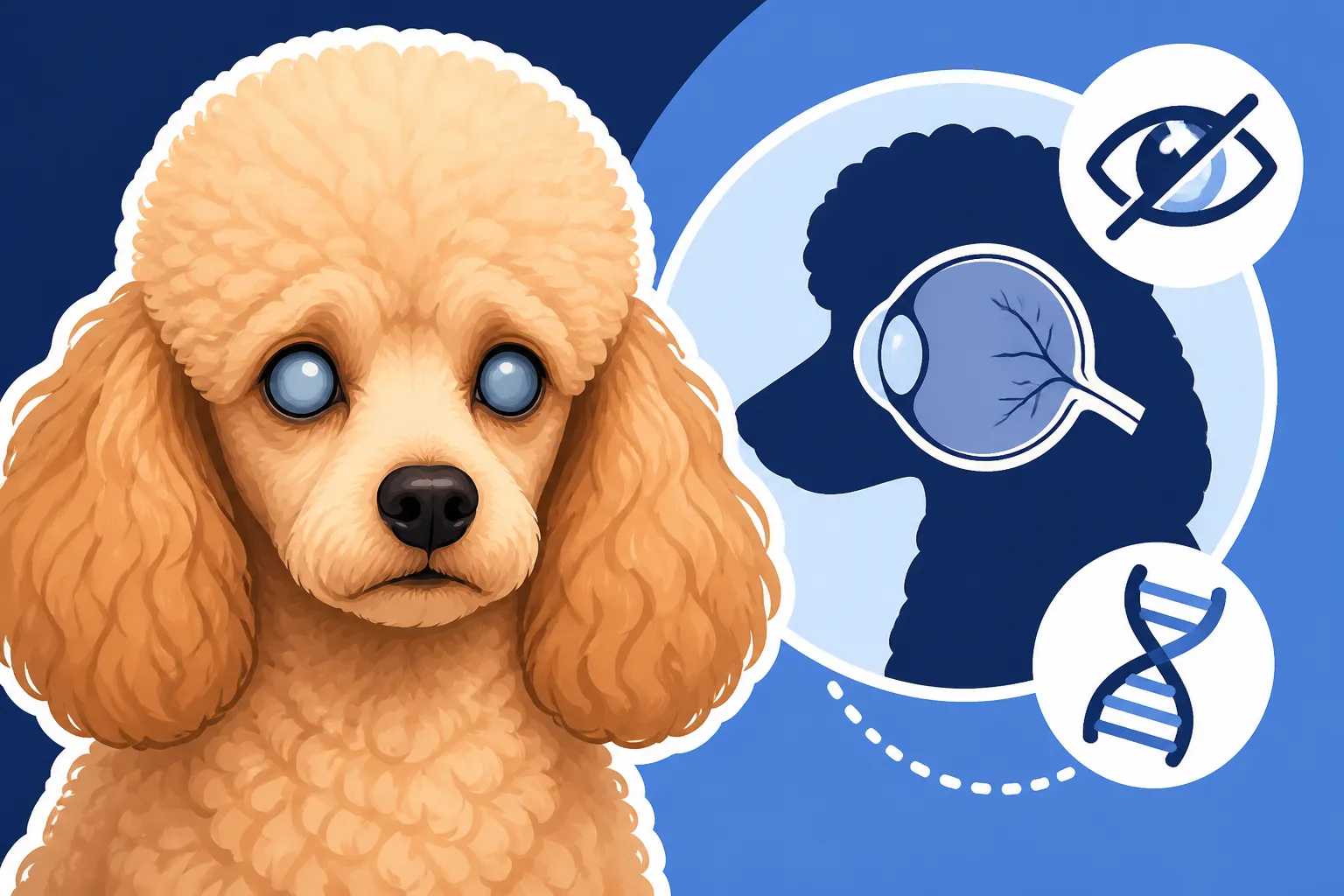
Progressive Retinal Atrophy, or PRA, is arguably the most well-known and devastating inherited eye disease in Poodles that leads to blindness. It's not a single disease but rather a group of genetic disorders that cause the photoreceptor cells in the retina (the light-sensitive tissue at the back of the eye) to gradually degenerate. Think of the retina as the film in a camera; PRA is like that film slowly losing its ability to capture light.
There are different forms of PRA, but they generally follow a similar pattern:
- Night Blindness First: Often, the earliest sign of PRA is night blindness. Your Poodle might become hesitant to go out in the dark, bump into things in dim light, or struggle to find toys in shadowed areas. This is because the rod cells, which are responsible for low-light vision, degenerate first.
- Progressive Day Blindness: As the disease advances, the cone cells, which handle bright light and color vision, also start to break down. This leads to generalized vision loss, eventually culminating in complete blindness even in daylight. The onset and progression can vary widely. Some Poodles might show signs in early adulthood, while others might not be affected until their senior years.
- No Pain Involved: The saving grace, if there is one, is that PRA itself is not painful. The Poodle isn't experiencing discomfort directly from the retinal degeneration, though their disorientation can certainly cause stress.
- Genetic Testing is Key: The good news is that for many forms of PRA in Poodles, there are now DNA tests available. Responsible breeders use these tests, such as those from reputable labs like OptiGen, to identify carriers and affected dogs, aiming to breed out the disease. If you're considering a Poodle, always ask for proof of parental DNA testing for PRA. This is vital. For Miniature Poodles, specifically, there's a good deal of information available, and you might find it useful to read more about Progressive Retinal Atrophy in Miniature Poodles.
Cataracts in Poodles
Cataracts are another significant cause of vision impairment and blindness in Poodles. Unlike PRA, which affects the retina, cataracts affect the lens of the eye. The lens, normally clear, becomes cloudy, opaque, and hardens over time, preventing light from reaching the retina. Imagine looking through a frosted window – that's what a Poodle with cataracts might experience.
Here’s what you should know about Poodle cataracts:
- Inherited vs. Acquired: While cataracts can be caused by injury, inflammation, or metabolic diseases like diabetes (in which case they are called diabetic cataracts – you can learn more about Cataracts in a Diabetic Poodle), Poodles are particularly prone to inherited forms. These can be congenital (present at birth), juvenile (developing in young dogs), or senile (appearing in older dogs).
- Appearance: You'll typically notice a bluish, whitish, or grayish opacity in the pupil, the black center of your Poodle's eye. This can start as a tiny spot and gradually enlarge until it covers the entire lens.
- Impact on Vision: The extent of vision loss depends on the size and density of the cataract. A small, peripheral cataract might not bother your Poodle much, but a mature cataract that covers the entire lens will render the eye effectively blind.
- Surgical Correction: The good news is that cataracts are often treatable with surgery. A veterinary ophthalmologist can remove the cloudy lens and sometimes replace it with an artificial one, restoring vision. The success rate is generally high, but it's a specialized procedure requiring careful pre-operative assessment and post-operative care. Early detection can improve surgical outcomes.
Glaucoma and Its Poodle Predisposition
Glaucoma is a painful and potentially blinding condition that can affect Poodles. It’s not as widely known as PRA or cataracts in the Poodle world, but it’s devastating because of its rapid progression and the intense pain it causes. Glaucoma is characterized by an increase in intraocular pressure (IOP) within the eye, which damages the optic nerve and retina. Think of it like a tire overinflating – the pressure builds up and starts to damage the delicate structures inside.
Key aspects of glaucoma in Poodles:
- Primary vs. Secondary: Poodles can develop primary glaucoma, which is inherited and occurs without any other underlying eye disease. This type is often bilateral (affects both eyes, though one may onset before the other) and can be particularly aggressive. Secondary glaucoma occurs as a result of another eye condition, such as inflammation, trauma, or advanced cataracts that block fluid drainage.
- Painful and Rapid Onset: Unlike PRA, glaucoma is often extremely painful. Signs might include a red, swollen, cloudy, or dilated eye, excessive tearing, squinting, sensitivity to light, and behavioral changes due to discomfort, such as rubbing the eye or becoming withdrawn. The pressure can rise very quickly, leading to rapid and irreversible vision loss if not addressed immediately.
- Emergency Situation: If you suspect glaucoma, it is a veterinary emergency. Every hour counts in saving your Poodle's vision. Prompt treatment, often involving medication to reduce pressure and sometimes surgery, is critical. Even with treatment, many dogs with primary glaucoma eventually lose vision in the affected eye(s), but managing pain and preserving comfort becomes paramount.
- Monitoring is Key: For Poodles at risk, regular eye pressure checks during routine vet visits are a good idea, especially as they age.
| Inherited Eye Condition | Primary Cause | Typical Onset Age | Key Symptoms | Treatment Options | Pain Factor |
|---|---|---|---|---|---|
| Progressive Retinal Atrophy (PRA) | Degeneration of photoreceptor cells in retina (genetic) | Early adulthood to senior years | Night blindness, then progressive day blindness; dilated pupils; difficulty seeing in dim or bright light | No cure; supportive care; genetic testing for prevention | No pain |
| Cataracts | Clouding of the eye's lens (genetic, diabetes, injury) | Juvenile to senior years | Bluish/whitish opacity in pupil; hazy vision; bumping into objects; sometimes associated with diabetes | Surgical removal of lens; artificial lens implant (for suitable cases) | No pain from cataract itself |
| Primary Glaucoma | Increased intraocular pressure (genetic, poor fluid drainage) | Middle to senior years | Red, swollen, cloudy eye; dilated pupil; squinting; pain; sudden vision loss; rubbing eye | Emergency medications to lower pressure; surgical options (laser, shunt) | High pain |
Recognizing the Early Signs of Vision Loss
One of the challenges with inherited progressive eye diseases is that our Poodles are masters of adaptation. They learn to navigate their environment using their other senses, often masking their declining vision until it’s quite advanced. This makes it crucial for us, as their owners, to be vigilant and aware of even subtle changes.
Subtle Behavioral Changes to Watch For
Your Poodle communicates with you in so many ways, and when their vision starts to falter, their behavior often gives the first clues. They might not seem to be in pain, but their confidence can take a hit. Here are some of the subtle behavioral shifts you might notice:
- Hesitation and Uncertainty: Your once-daring Poodle might become hesitant to jump onto the sofa, go up or down stairs, or walk into a dimly lit room. They might pause more before stepping off a curb or entering an unfamiliar space. This isn't stubbornness; it's caution.
- Clumsiness or Bumping: This is often the most overt sign. They might start bumping into furniture that’s always been there, misjudging steps, or having trouble catching a tossed toy. These aren't just one-off accidents; they become a recurring pattern.
- Changes in Play: A Poodle who loved to chase a ball might lose interest, especially if the ball isn't making noise. They might struggle to find toys or become less engaged in games that rely heavily on sight.
- Increased Startle Response: If their vision is diminishing, sudden movements or sounds they can’t see might startle them more easily. They might also seem less aware of you approaching until you're very close.
- Reluctance to Go Out at Night: For conditions like PRA, night blindness is often the first symptom. Your Poodle might refuse to go outside after dark, or be extremely slow and wary if they do. They might stick closer to you or the house lights.
- "Sticky" Behavior: Sometimes, Poodles experiencing vision loss become more clingy or "velcro" dogs. They might follow you more closely, seeming to rely on your presence as a guide, or seeking more physical contact. This can be particularly true if they typically enjoy their independence.
- Sleeping More / Less Active: A Poodle struggling with vision may find their world more exhausting. The mental effort to navigate and process their surroundings without full sight can lead to them sleeping more or being generally less active. Conversely, some might seem restless if they are disoriented.
- Changes in Eye Contact: While a Poodle's gaze is often about communication, you might notice their eyes seeming to wander more, or they might not meet your gaze as directly as before. Their pupils might also appear more dilated, even in normal light, as their eyes try to gather more light.
Physical Indicators and Eye Appearance
Beyond behavior, there are often physical signs that can point to vision problems. These usually require a closer look, sometimes in good light.
- Cloudiness in the Eye: As mentioned with cataracts, a noticeable cloudiness or opacity in the lens (the dark center of the eye) is a key indicator. It can be white, gray, or bluish. This is usually visible without special equipment.
- Dilated Pupils: For Poodles with PRA, their pupils may appear permanently dilated, or larger than normal, even in bright light. This is their eye's attempt to let in as much light as possible to compensate for the failing retina.
- Eye Discharge or Redness: While not direct signs of inherited blindness, conditions like glaucoma can cause significant redness, swelling, and sometimes discharge, indicating pain or inflammation. If you see this, it’s an urgent vet visit.
- Bumping and Bruising: If your Poodle is consistently bumping into things, you might start to see minor bruises or scuffs around their head or legs, which is a definite red flag that they aren't seeing obstacles.
- Uneven Pupils: In some cases of glaucoma, one pupil might appear larger or react differently to light than the other, especially if one eye is more severely affected.
Navigating Changes in Familiar Environments
The Poodle’s ability to navigate their home turf, even as their vision declines, is truly amazing. They memorize the layout, the feel of the floor, the sound of your footsteps. This is why changes in their familiar environment can be so telling and often cause considerable stress.
- New Furniture or Rearrangements: Even a slight rearrangement of furniture that has always been there can throw a visually impaired Poodle off balance. They might bump into the moved chair, or hesitate to cross a newly open space. This is a very strong indicator that their reliance on visual cues for navigation is reduced.
- Stair Challenges: Stairs are often one of the first major hurdles. Poodles might start to miss a step, hesitate at the top or bottom, or refuse to use them altogether. The lack of visual depth perception makes stairs incredibly dangerous.
- Outdoor Confusion: In the backyard, they might walk into fences, misjudge the edge of a flowerbed, or become disoriented if a new object (like a child's toy or a garden gnome) is introduced. Even something as simple as a new planter can become an obstacle they can't see.
- The Power of Scent and Sound: To compensate, your Poodle will increasingly rely on their nose and ears. You might notice them sniffing the ground more intensely to get scent cues, or orienting themselves more towards sounds. This is their adaptive mechanism kicking in.
- Difficulty Locating Food/Water Bowls: While they might eventually find them by scent, a Poodle with failing eyesight might initially struggle to locate their food or water bowls if they've been moved even slightly. Keeping these items in consistent, easily accessible locations becomes incredibly important.
Recognizing these signs isn't about panicking; it's about being observant and proactive. The sooner you notice, the sooner you can get a diagnosis and start implementing strategies to help your Poodle maintain their quality of life.
Veterinary Diagnosis and Screening
Once you suspect your Poodle might be experiencing vision issues, the next crucial step is a professional veterinary evaluation. This isn't something to guess at; a proper diagnosis is essential for understanding the condition, its prognosis, and any potential treatments. Early detection can make a significant difference in managing some conditions, or at least in preparing you and your Poodle for what's to come.
Comprehensive Ophthalmic Examinations
When you bring your Poodle in for suspected vision problems, your regular veterinarian will likely start with a general physical exam and then focus on the eyes. However, to get a definitive diagnosis for inherited eye conditions, a referral to a board-certified veterinary ophthalmologist is usually necessary. These specialists have advanced training and equipment to examine the intricate structures of the eye.
Here's what a comprehensive ophthalmic exam might involve:
- Basic Vision Tests: The vet will check your Poodle's menace response (flinching when an object approaches the eye), dazzle reflex (blinking at a bright light), and pupillary light reflexes (pupil constriction). They might also do an obstacle course in both light and dim conditions to assess your Poodle's navigation.
- Ophthalmoscopy: Using an ophthalmoscope, the vet examines the retina, optic nerve, and blood vessels at the back of the eye. This is where PRA is diagnosed by observing retinal degeneration.
- Slit-Lamp Biomicroscopy: This tool allows for a magnified, detailed view of the front structures of the eye, including the eyelids, conjunctiva, cornea, iris, and lens. Cataracts are clearly identified with this method.
- Tonometry: This involves measuring the intraocular pressure (IOP) of the eye, which is critical for diagnosing glaucoma. It's usually a quick, painless test using a special probe that gently touches the cornea.
- Gonioscopy: For suspected glaucoma, this test allows the ophthalmologist to examine the drainage angle of the eye, determining if fluid outflow is impaired, which is common in primary glaucoma.
- Electroretinography (ERG): This advanced test measures the electrical activity of the retina in response to light. It's a definitive diagnostic tool for PRA, even before clinical signs are obvious. It helps differentiate between various forms of PRA and other causes of blindness. Your Poodle will typically be sedated for this procedure.
Genetic Testing and Breeder Responsibility
For many inherited eye conditions, especially PRA, DNA tests are available. This is where breeder responsibility truly comes into play. A reputable Poodle breeder will routinely screen their breeding stock for known genetic conditions, including those affecting the eyes. This helps them make informed breeding decisions to avoid producing affected puppies.
- DNA Tests: These tests usually require a simple cheek swab or blood sample. They can identify if a Poodle is "clear" (no copies of the mutation), a "carrier" (one copy, usually unaffected but can pass it on), or "affected" (two copies, likely to develop the disease). Learning about DNA Testing a Poodle for PRA is vital for prospective owners.
- OFA Eye Certification: The Orthopedic Foundation for Animals (OFA) maintains a registry of dogs screened for various genetic health issues, including eye diseases. They work with the American College of Veterinary Ophthalmologists (ACVO) to certify dogs free of observable hereditary eye disease. Breeders should provide OFA eye certifications for their breeding dogs. These exams need to be done annually, as some conditions can develop later in life.
- Choosing a Breeder: When looking for a Poodle puppy, ask detailed questions about the health testing of both parents, not just a general statement. Ask to see the actual certificates. A breeder who cannot provide these, or claims testing isn't necessary, should raise a red flag. This commitment to health is a significant factor in the long-term well-being and lifespan of a Poodle.
Regular Check-ups for At-Risk Poodles
Even if your Poodle comes from impeccably tested lines, regular veterinary check-ups are still crucial. Some conditions can appear later in life, and not all genetic predispositions have a current DNA test.
- Annual Wellness Exams: Your general vet will always include a basic eye check during annual visits. This can sometimes catch early signs of cataracts or other visible abnormalities.
- Senior Poodle Care: As Poodles age, just like people, they can develop age-related eye issues. For senior Poodles, more frequent or detailed eye exams might be recommended. Early detection of conditions like glaucoma can literally save an eye, or at least manage pain.
- Monitoring for Changes: If your Poodle belongs to a line known to have had a specific eye condition, or if you've already noticed subtle changes at home, discuss this with your vet. They might recommend more frequent ophthalmic check-ups or preventative measures. Remember, Whether Poodle Eyes Need Yearly Checks is often a good idea, especially as they get older.
By being proactive with veterinary care, especially involving specialized ophthalmic exams and utilizing genetic testing, you're giving your Poodle the best chance at a life with clear vision, or at least the earliest possible support if vision loss occurs.
Managing and Supporting a Blind Poodle
Discovering your Poodle is losing its sight, or has already lost it, can be overwhelming. But it doesn’t mean the end of a happy, fulfilling life for them. Poodles are incredibly resilient and adaptable. With a bit of patience, understanding, and some practical adjustments, your blind Poodle can continue to thrive. It’s all about creating a world where their other heightened senses can guide them.
Creating a Safe and Predictable Home Environment
The single most important thing you can do for a blind Poodle is to provide a consistent, predictable, and safe environment. Their world shrinks to what they can map out in their minds, and any sudden changes can cause immense anxiety.
- Maintain Consistency: This is paramount. Do not rearrange furniture. Keep food and water bowls, their bed, and their favorite toys in the exact same spots. If you must move something, guide your Poodle around it gently many times to help them remap their mental layout.
- Clear Pathways: Keep floors clear of clutter. No shoes, bags, or unexpected obstacles that weren't there before. This includes cords, rugs that can bunch up, or anything that could trip them or be bumped into.
- Stair Safety: Stairs become a significant hazard. Consider blocking off staircases with baby gates or physical barriers. If your Poodle still needs to use stairs, teach them how to navigate them slowly with clear verbal cues, always supervised. You might even consider ramps for easier access to elevated areas like beds or sofas.
- Sensory Markers: Use different textures of mats or rugs to indicate important locations, like the approach to their food bowl or the door. Scent can also be a powerful marker. A drop of essential oil (like vanilla or lavender, heavily diluted and safe for pets) on specific furniture legs can help them identify objects, as long as it's not overpowering or irritating to their sensitive noses.
- Outdoor Security: Secure your yard meticulously. Check for any gaps in fences. Make sure there are no hazardous objects like sharp tools, garden chemicals, or poisonous plants. Supervise outdoor time closely, especially if your yard has varied terrain or steps.
- Protective Gear: For Poodles who are still learning to navigate or are prone to bumping their heads, a "halo" device (like a Muffin's Halo or a similar product) can be a godsend. These lightweight rings fit around their head, extending outwards, to bump into objects before their face does, protecting them from injury and building confidence.
- Sound Cues for Location: Consider adding small bells to your shoes so your Poodle can always locate you. If you have other pets, a bell on their collar can also help your blind Poodle know where they are.
Training and Communication Adaptations
While vision loss changes how you interact, it doesn’t stop your Poodle from being trainable or responsive. In fact, training becomes even more important to build their confidence and safety. Poodles, being the intelligent dogs they are, will pick up new cues quickly.
- Verbal Cues are Key: Rely heavily on clear, consistent verbal cues. Commands like "step up," "step down," "stop," "left," "right," "wait," and "careful" become invaluable. Use a calm, reassuring tone.
- Sound and Scent-Based Toys: Invest in toys that make noise (crinkle balls, squeaky toys, bells inside) or can hold treats (puzzle feeders, KONGs) to engage their other senses. These will keep their brilliant Poodle minds occupied and provide much-needed enrichment.
- Leash Training: Leash walks remain vital for exercise and mental stimulation. Use a harness rather than a collar to protect their neck and give you better control. Walk slowly and deliberately, verbally guiding them over curbs, through doorways, and around obstacles. Be their eyes. You can find more information on Guiding a Poodle Blinded by Retinal Atrophy.
- "Touch" Commands: Teach a "touch" command where your Poodle touches your hand with their nose. This is useful for guiding them into position or confirming where you are.
- Consistent Routines: Stick to a daily routine for feeding, potty breaks, walks, and playtime. Predictability is comforting and helps them learn the sequence of events without needing to see.
- Praise and Reassurance: Lavish praise and reassurance on your Poodle. They are sensitive dogs, and vision loss can be unsettling. Your calm voice and comforting touch will be their anchor.
- Socialization: Don't isolate your blind Poodle. Continue controlled, supervised interactions with familiar, calm dogs and people. Let others know your Poodle is blind so they can approach gently and verbally identify themselves. This helps maintain their social skills and prevents them from becoming fearful.
Maintaining Quality of Life and Mental Stimulation
A blind Poodle still needs a rich, stimulating life. Their intelligence and zest for life don't disappear with their vision. Mental exercise is just as important as physical exercise.
- Nose Work Games: Poodles have excellent noses. Scent games are fantastic for mental stimulation. Hide treats or their favorite toys around the house and let them use their nose to find them. Start easy and gradually increase the difficulty. This taps into their natural instincts and builds confidence.
- Auditory Enrichment: Play soft music or ambient sounds. Talk to them often. Describe what's happening around them. This helps them feel connected and aware of their surroundings.
- Massage and Grooming: Regular grooming (which is essential for a Poodle coat anyway) and gentle massages are not just good for their physical health but also for strengthening your bond and providing comforting tactile stimulation. It’s a great way to bond without relying on sight.
- Safe Exploration: Periodically, introduce them to new, safe, and confined areas. Perhaps a friend's securely fenced yard or a quiet, grassy park. Allow them to explore slowly on a long leash, using your verbal cues. New smells and sounds can be incredibly enriching.
- Maintain Independence (Where Safe): While you need to protect them, try not to do everything for them. Let them figure things out where it's safe. This empowers them and prevents them from becoming overly dependent or losing confidence.
- Consider a Companion: For some Poodles, a calm, well-adjusted sighted dog companion can act as a "guide dog." This isn't for everyone, but if you already have another dog, or are considering one, observe how they interact. A good companion can boost confidence.
- Professional Help: Don’t be afraid to seek advice from a veterinary behaviorist or a dog trainer experienced with blind dogs. They can offer tailored strategies and support to enhance your Poodle’s quality of life. This can be especially helpful if you find your Poodle struggling with anxiety or fear due to their vision loss.
Remember that a diagnosis of inherited blindness isn't a death sentence for your Poodle's happiness. It's a shift in perspective for both of you, a journey where you become their trusted guide, and they, in turn, teach you about resilience and the power of love beyond sight.
Treatment Options and Preventive Measures
While some forms of inherited blindness have no cure, others do offer medical or surgical interventions that can restore or preserve vision. Furthermore, proactive and responsible breeding practices are the most powerful tools we have for preventing these conditions from being passed down to future generations of Poodles.
Medical and Surgical Interventions for Specific Conditions
The treatment approach for inherited blindness in Poodles depends entirely on the specific diagnosis.
- For Cataracts: If your Poodle develops cataracts, especially if they significantly impair vision, surgical intervention is often the best course of action.
- Phacoemulsification: This is the most common technique, similar to human cataract surgery. A small incision is made, the cloudy lens is emulsified (broken up) with ultrasonic waves, and the pieces are suctioned out. In many cases, an artificial intraocular lens (IOL) is then implanted to restore focus.
- Success Rates: Cataract surgery generally has a good success rate, especially when performed by an experienced veterinary ophthalmologist. Post-operative care is crucial, involving eye drops and careful monitoring. Not all Poodles are candidates for surgery, particularly if they have other underlying eye conditions or health issues.
- For Glaucoma: This is an emergency condition requiring rapid intervention to save vision and alleviate pain.
- Medical Management: Initial treatment often involves a combination of eye drops and oral medications to rapidly decrease intraocular pressure. These might include prostaglandin analogs (e.g., latanoprost), carbonic anhydrase inhibitors (e.g., dorzolamide, methazolamide), and beta-blockers (e.g., timolol). The goal is to reduce fluid production and increase fluid drainage.
- Surgical Options: If medical management isn't sufficient, or for long-term control, surgical options may be considered. These include laser cyclophotocoagulation (to destroy cells that produce fluid), gonioimplantation (placing a shunt to drain fluid), or enucleation (removal of the eye) if the eye is permanently blind and painful. Early, aggressive treatment is key to preserving vision, but for primary glaucoma, long-term success can be challenging, and lifelong medication is often required.
- For Progressive Retinal Atrophy (PRA): Unfortunately, there is currently no effective medical or surgical treatment to halt or reverse the progression of PRA. The retinal cells, once degenerated, cannot be regenerated.
- Supportive Care: Management focuses on supporting the Poodle as their vision declines and providing a safe, predictable environment, as detailed earlier.
- Antioxidants/Nutritional Support: While not a cure, some veterinary ophthalmologists might recommend antioxidant supplements (like vitamins C and E, lutein, zeaxanthin, omega-3 fatty acids) or specialized diets. The theory is that these might help slow cellular damage, but scientific evidence specifically proving this for PRA progression is limited. They are generally considered safe and may support overall eye health.
Nutritional Support and Antioxidants
Beyond specific medical interventions, a healthy diet plays a crucial role in overall health, including eye health. While nutrition cannot cure inherited blindness, it can support ocular health and potentially mitigate some secondary issues.
- Antioxidant-Rich Diet: A diet rich in antioxidants helps combat oxidative stress, which can contribute to cellular damage throughout the body, including the eyes. Look for foods that are high in vitamins C and E, beta-carotene (precursor to Vitamin A), lutein, and zeaxanthin.
- Omega-3 Fatty Acids: DHA and EPA, types of omega-3 fatty acids found in fish oil, are important components of retinal cell membranes and have anti-inflammatory properties. Supplementation with high-quality fish oil is often recommended for general eye health.
- Consult Your Vet: Always discuss any dietary changes or supplements with your veterinarian or a veterinary nutritionist. They can recommend appropriate dosages and ensure any supplements won't interact with other medications or existing health conditions. For a Poodle living with a chronic condition, like Addison's Disease, for example, which is common in Standards, you'd want to be extra careful about interactions; you can learn more about When a Poodle's Addison's Stops Responding to treatments.
- Commercial Diets: Many high-quality commercial dog foods are formulated with antioxidants and essential fatty acids. Some brands offer "senior" or "vision support" formulas, but always check the ingredients and discuss with your vet if they're suitable for your Poodle's specific needs.
The Role of Responsible Breeding in Prevention
The most impactful "preventive measure" against inherited blindness is through responsible breeding practices. This is where the long-term health of the entire breed is safeguarded.
- Genetic Health Testing: As discussed, reputable breeders meticulously test their breeding stock for known genetic eye diseases. For Poodles, this specifically includes DNA tests for PRA (such as prcd-PRA) and annual eye examinations by a board-certified veterinary ophthalmologist (ACVO exams) to screen for cataracts, glaucoma, and other observable conditions.
- Transparency: A responsible breeder will be transparent about their testing results, willing to discuss the health history of their lines, and provide verifiable documentation. They use these results not to eliminate every carrier, but to make informed decisions that avoid producing affected puppies. For instance, a carrier might be bred to a clear dog, ensuring no affected offspring, while preventing the loss of valuable genetic diversity.
- Pedigree Research: Knowledgeable breeders research pedigrees to understand the prevalence of inherited eye diseases in the lineage of potential breeding partners. They avoid breeding dogs from lines known to produce a high incidence of these conditions.
- Education for Buyers: Reputable breeders educate prospective puppy buyers about the inherited health concerns in Poodles and what to expect regarding ongoing health care. They often provide health guarantees within their contracts, especially against severe genetic conditions.
- Impact of Doodle Crosses: It's worth noting that the popularity of "Doodles" (Poodle mixes) has, in some cases, led to less responsible breeding practices in Poodles themselves, as some breeders prioritize color or speed of production over health testing. This can inadvertently increase the prevalence of inherited conditions in the general Poodle population if standards are lowered.
By focusing on responsible breeding, we can collectively work towards a future where inherited blindness in Poodles becomes a rare and preventable tragedy, ensuring that these wonderful dogs continue to enjoy long, healthy, and happy lives with clear vision.
The Emotional Toll on Poodle Owners
While we focus on the practical aspects of caring for a blind Poodle, it's absolutely vital to acknowledge the profound emotional impact this journey has on us, their human companions. Watching your cherished Poodle lose their sight can be a deeply distressing experience, bringing with it feelings of sadness, guilt, fear, and even anger. It’s okay to feel all of these emotions.
Coping with a Poodle's Declining Vision
The process of adjusting to a Poodle's declining vision is a journey for both of you. It's not a switch that flips; it's a gradual adaptation, and that slow decline can be particularly challenging.
- Grief and Anticipatory Grief: It’s completely normal to grieve the loss of your Poodle’s sight, even while they are still physically with you. You might miss the way they used to greet you with bright, alert eyes, or the joy they had chasing a ball. This is often called "anticipatory grief" – grieving a loss that is still unfolding. Allow yourself to feel these emotions without judgment.
- Guilt and "What Ifs": You might find yourself questioning if you missed early signs, or if there was something you could have done differently. You might wonder if you should have chosen a different breeder or if you pushed them too hard during certain activities. This "what if" cycle is common but remember, inherited conditions are often beyond your control. Focus on what you can do now.
- Frustration and Impatience: There will be moments of frustration. Your Poodle might bump into you repeatedly, or hesitate when you're in a hurry, or struggle to learn a new verbal cue. It's easy to get impatient, but quickly remind yourself that they are doing their best to navigate a world that has become much harder for them. Take a deep breath, and remember their perspective.
- Fear for the Future: Naturally, you'll worry about their safety, their happiness, and how independent they can truly be. You might fear a decreased lifespan or an inability to enjoy life. While these fears are valid, Poodles are incredibly resilient. Many blind Poodles lead joyful, active lives. Focusing on adapting, rather than dwelling on limitations, is key.
- The Power of Touch and Voice: As their vision fades, your touch and voice become even more important. A gentle stroke, a reassuring word, the familiar sound of your voice – these are their new windows to the world and critical for maintaining their emotional security. This can also be a time to understand Reading Pain in a Sensitive Poodle, as they may express discomfort or anxiety in different ways.
Support Systems and Resources
You don't have to go through this alone. Connecting with others who understand can make a world of difference.
- Veterinary Team: Your vet and veterinary ophthalmologist are invaluable resources. They can provide medical advice, help manage pain, and often offer practical tips for living with a blind dog. They can also reassure you about your Poodle's overall health and discuss potential future concerns, which can alleviate some anxiety about the Poodle Lifespan Across the Three Sizes.
- Online Communities and Forums: There are numerous online groups, forums, and social media communities dedicated to owners of blind or visually impaired dogs. Sharing experiences, asking questions, and offering support to others can be incredibly validating and provide practical solutions you might not have considered. Websites like Blind Dog Support Group on Facebook or forums related to specific eye conditions can be very helpful.
- Local Pet Owner Groups: Check if there are local dog clubs or rescue groups in your area. They might host meet-ups or have members with experience in caring for blind dogs.
- Friends and Family: Lean on your trusted friends and family. Let them know what you're going through and how they can best interact with your Poodle. Educate them on verbal cues and gentle approaches.
- Professional Counseling: If you find yourself overwhelmed by grief, anxiety, or depression, don't hesitate to seek support from a mental health professional. Grieving a pet is real and valid, and it’s okay to need help processing it.
- Pet Insurance: While it doesn't solve the emotional toll, having pet insurance like Healthy Paws can certainly alleviate the financial burden of managing ongoing care, specialized vet visits, or potential surgeries for your Poodle's eye conditions. This allows you to focus more on their comfort and less on the rising costs. It can be a huge relief, especially with conditions that require frequent medication or specialist intervention.
Looking Ahead: Life with a Blind Poodle
Life with a blind Poodle is certainly different, but it can be just as rich, loving, and fulfilling as before. It's a testament to the incredible resilience of dogs and the deep bond we share with them.
- Focus on Abilities, Not Disabilities: Your Poodle still has a keen sense of smell, excellent hearing, and an incredible ability to learn and adapt. Emphasize these strengths. Engage them in nose work, auditory games, and comforting tactile experiences.
- Deepened Bond: Many owners find that the bond with their Poodle deepens considerably after vision loss. You become their trusted guide, their eyes to the world, and this reliance often fosters an even more profound connection.
- Resilience and Joy: Poodles, with their intelligent and often joyful temperaments, quickly adapt. They don't dwell on what they've lost; they live in the present, finding joy in familiar scents, sounds, and your comforting presence. Seeing their resilience can be a powerful lesson for us all.
- Advocacy: You might become an advocate for responsible breeding, sharing your story to help prevent other Poodles and their owners from facing similar challenges. Supporting organizations like the Poodle Club of America's health initiatives can contribute to the breed's overall well-being.
- Embrace the Journey: It’s a journey of adjustments, learning, and immense love. Your blind Poodle will continue to bring immeasurable joy into your life, perhaps even teaching you new ways to appreciate the world around you. Even with vision challenges, a well-cared-for Poodle can truly thrive.
Disclaimer
The information provided in this guide is intended for general informational purposes only and does not constitute veterinary medical advice. Always consult with a qualified veterinarian or veterinary ophthalmologist for any health concerns or before making any decisions about your Poodle's care.