Whether a Parti Poodle Has Different Health Risks
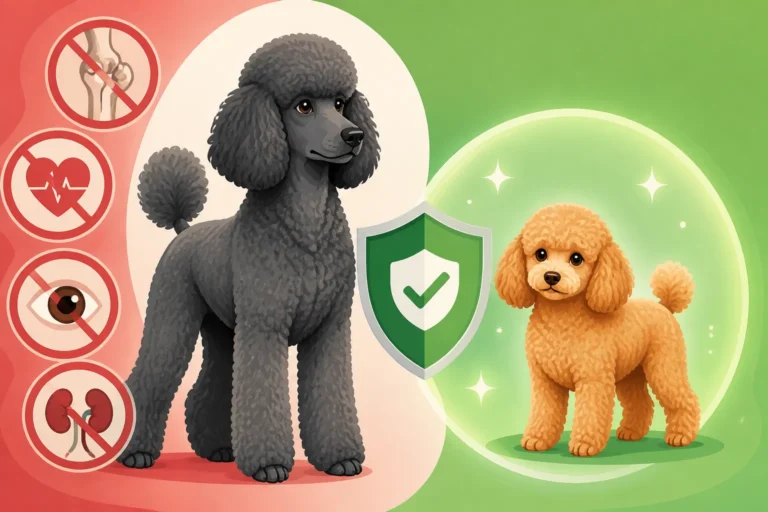
Many prospective Poodle owners find themselves captivated by the striking beauty of a Parti Poodle, those lovely dogs with a white base coat splashed with patches of another color. However, a common worry often creeps in: does this unique coat pattern mean they're prone to different or more severe health issues than their solid-colored cousins? It's a completely understandable concern given the myriad of genetic discussions surrounding purebred dogs. This guide is here to unravel that mystery, providing a clear, empathetic, and factual look at whether a Parti Poodle's health risks truly differ from any other Poodle variety.
Understanding Parti Poodles Beyond Their Coat Color
It’s easy to get caught up in the visual appeal of a Parti Poodle, imagining they might be a distinct "type" of Poodle. But the truth is much simpler and, in many ways, reassuring for potential owners.
What Defines a Parti Poodle?
First and foremost, a Parti Poodle is just that – a Poodle. The term "parti" refers exclusively to their coat pattern, which features a base color of white with distinct, irregular patches of another solid color. These patches can be black, brown, apricot, red, silver, or blue, among others. It’s not about a different breed, or even a different size variety; you can find Parti Standard Poodles, Parti Miniature Poodles, and Parti Toy Poodles.
The genetic basis for this beautiful coloration is a recessive gene, often referred to as the "S-locus" or "spotting" gene (specifically the S allele, with spspl being the variant for Irish spotting, though often discussed as spsp for parti/piebald). When a Poodle inherits two copies of this recessive gene (one from each parent), they express the parti pattern. It’s a completely natural part of the Poodle gene pool, present for centuries, and historically valued for hunting dogs as the white patches made them easier to spot in water or dense undergrowth. Think of it like eye color in humans – just a variation in appearance, not an indicator of underlying health.
The Purebred Poodle Standard and Parti Coloration
This is where some of the confusion often originates. The American Kennel Club (AKC) and many other international kennel clubs, while recognizing Parti Poodles as purebred Poodles, have historically excluded them from conformation dog shows if their patches are not considered a "solid" color or if they have more than one color (excluding the main patch color and white). The AKC standard, for example, states "Color is an important consideration. The coat is an even and solid color at the skin." This led to a perception that parti was somehow "less pure" or "faulty," when in reality, it's just a different aesthetic preference for the show ring.
However, this exclusion from certain show types does not in any way diminish their purebred status or their suitability as companions. In many European countries, the "Moyen" or "Klein" Poodle, which often includes parti coloration, has long been recognized. It’s important to understand that the Poodle's standard, while defining an ideal for judges, doesn't dictate overall health or temperament. A Parti Poodle comes from the same lineage, possesses the same intelligence, and shares the same charming personality as a solid-colored Poodle. They are simply dressed in a more flamboyant coat! They participate and excel in performance events like agility, obedience, and rally, where their coat pattern is irrelevant.
If you are considering a parti-colored dog, you might also be interested in Whether a Parti Poodle Can Be Registered or Whether a Parti Poodle Can Compete at All for more details on registration and show eligibility.
Are Parti Poodles Genetically Different? Exploring Health and Inheritance
When we talk about health risks, it's crucial to distinguish between genes that dictate appearance and genes that influence physiological function and disease susceptibility.
The Genetics of Coat Color Versus Health Genes
The genes responsible for a Poodle's coat color or pattern, such as the parti gene, are generally distinct from the genes that predispose them to specific health conditions. In simple terms, a gene that tells a pigment cell whether to produce color in a specific spot on the coat doesn't also tell a joint to develop hip dysplasia or an endocrine gland to malfunction.
The parti gene is located on a specific locus (a position on a chromosome) and primarily affects pigment distribution. It doesn't magically link to genes that control organ development, immune system function, or neurological health. Therefore, inheriting the parti gene does not inherently mean a Poodle is more or less likely to develop any of the common Poodle health issues. Their health risks are determined by the overall genetic makeup of their Poodle ancestors, which is shared across all colors and patterns within the breed.
This is a fundamental concept in genetics: pleiotropy, where one gene affects multiple traits, is not typically at play with simple coat pattern genes and complex health conditions. For example, some coat colors are linked to certain health issues (like the merle gene in some breeds being linked to eye and ear defects, especially when two merle parents are bred), but the parti gene in Poodles is not one of them. Its influence is primarily cosmetic.
Common Poodle Health Concerns Across All Colors
Poodles, regardless of their captivating coat color, are susceptible to a range of genetic and acquired health conditions, just like any purebred dog. These are widely documented and apply to Standard, Miniature, and Toy Poodles alike. It's these breed-specific predispositions that owners should be aware of, rather than getting sidetracked by coat patterns.
Here are some of the more prevalent health concerns common to all Poodles:
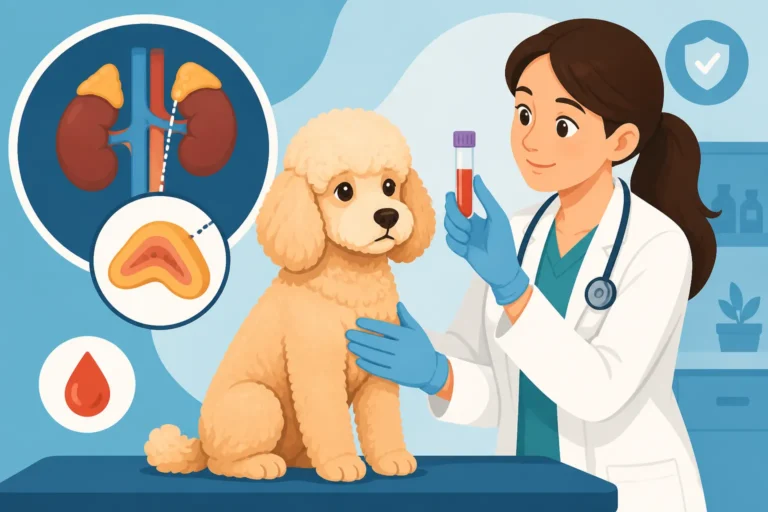
- Addison's Disease (Hypoadrenocorticism): This is a serious autoimmune disorder particularly common in Standard Poodles, where the adrenal glands don't produce enough hormones. Symptoms can be vague, often leading to it being called "the great pretender." You can learn more about Addison's Disease in Standard Poodles and Poodle Addison's Mistaken for Sulking.
- Gastric Dilatation-Volvulus (GDV), or Bloat: A life-threatening condition where the stomach fills with gas and twists. While more common in deep-chested breeds like the Standard Poodle, it can affect any Poodle size. Bloat and the Deep Standard Poodle Chest provides detailed information.
- Sebaceous Adenitis (SA): Another autoimmune skin condition, particularly affecting Standard Poodles, leading to inflammation and destruction of the sebaceous glands, resulting in dry, flaky skin and hair loss. Sebaceous Adenitis and the Poodle Coat offers in-depth insight.
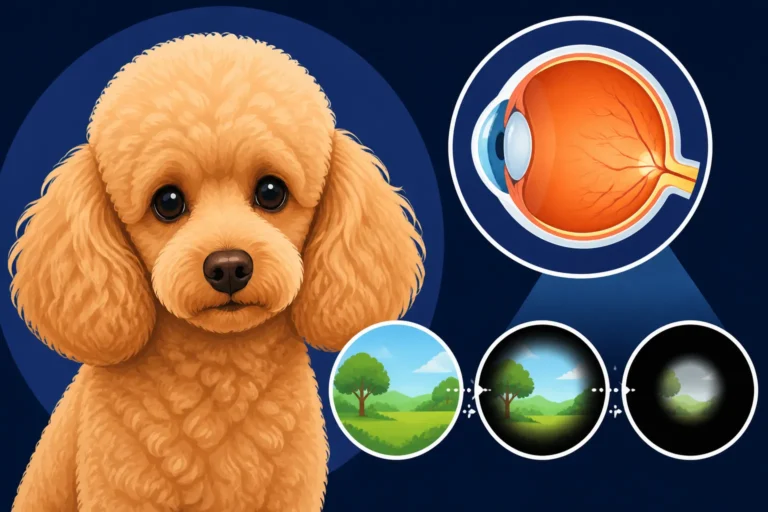
- Progressive Retinal Atrophy (PRA): A group of degenerative eye diseases that can lead to blindness. This condition is a concern across all Poodle sizes, particularly Miniature Poodles. Inherited Blindness in Poodles and Progressive Retinal Atrophy in Miniature Poodles are good resources.
- Hip Dysplasia: While often associated with larger breeds, hip dysplasia can affect Standard Poodles, leading to joint pain and arthritis. Poodle Hip Dysplasia by Size details this concern.
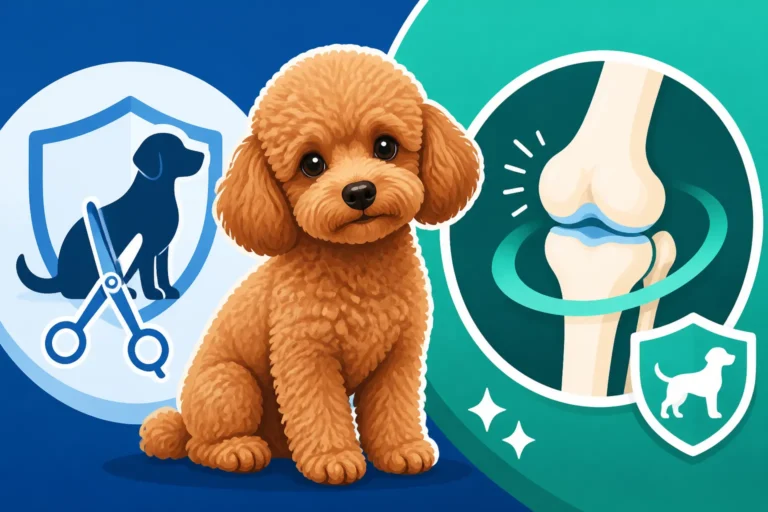
- Luxating Patella: More common in smaller Poodle varieties like Toys and Miniatures, this is when the kneecap slips out of place. Toy Poodle Kneecaps and Windpipes and Luxating Patella in Toy and Miniature Poodles delve into this issue.
- Thyroid Disease: Hypothyroidism, where the thyroid gland doesn't produce enough hormones, is also seen in Poodles. Thyroid Disease in Poodles covers this condition.
- Epilepsy: Idiopathic epilepsy, characterized by recurring seizures, is seen in some Poodle lines. Idiopathic Epilepsy in Miniature Poodles explains more about this condition.
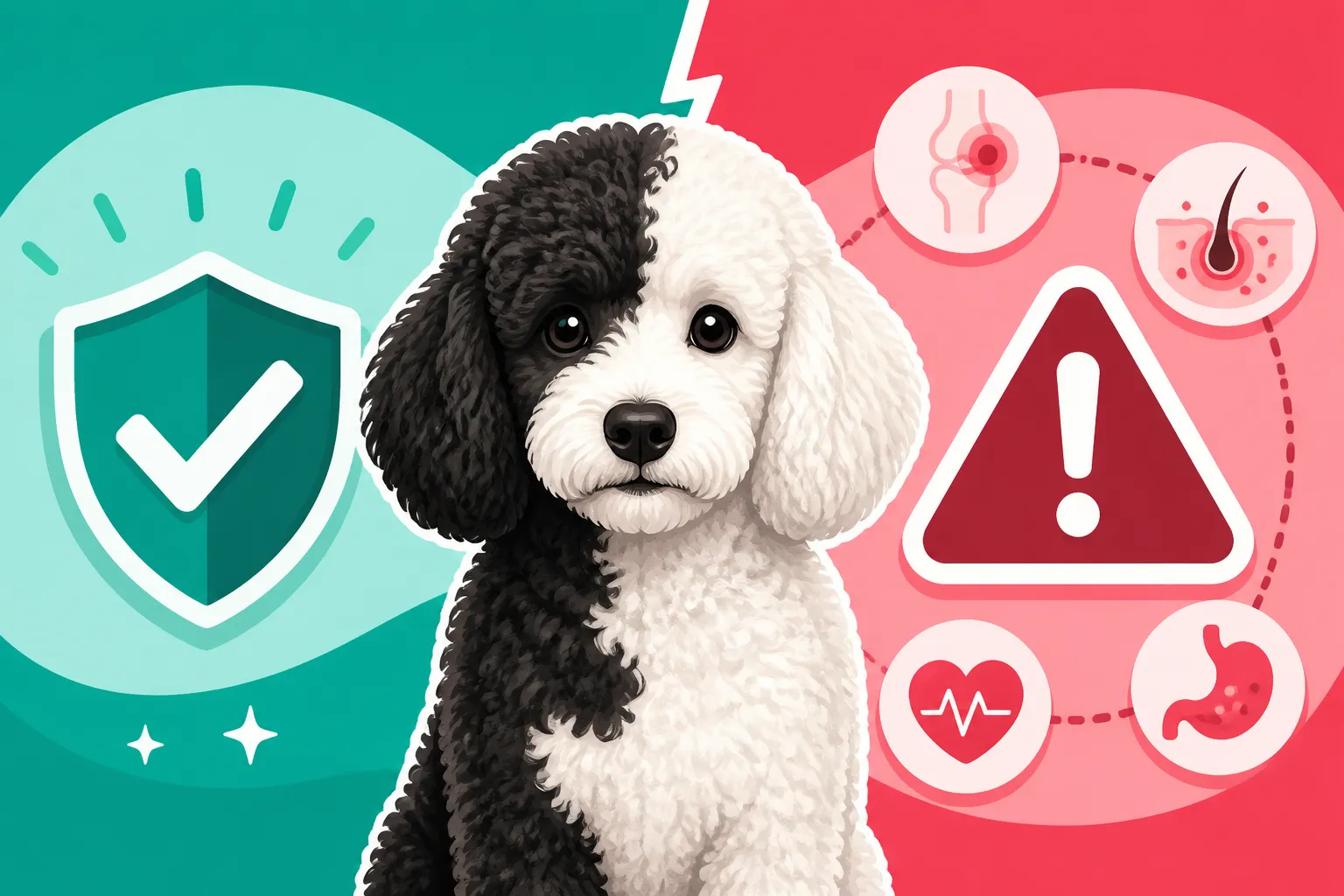
The key takeaway here is that these are Poodle health concerns, not Parti Poodle health concerns. A Parti Poodle is just as susceptible, or not susceptible, to these conditions as a solid black, white, red, or apricot Poodle, depending on their specific genetic lineage. The coat color itself offers no protective or detrimental health advantage.
To illustrate, consider the following table:
| Poodle Health Condition | Primarily Affects (Size) | Is it linked to Parti Coloration? |
|---|---|---|
| Addison's Disease | Standard | No |
| Bloat (GDV) | Standard | No |
| Sebaceous Adenitis | Standard | No |
| Progressive Retinal Atrophy (PRA) | All, esp. Miniature | No |
| Hip Dysplasia | Standard, sometimes Miniature | No |
| Luxating Patella | Toy, Miniature | No |
| Thyroid Disease | All sizes | No |
| Idiopathic Epilepsy | Miniature | No |
| Von Willebrand Disease (vWD) | Standard, Miniature | No |
| Legg-Calve-Perthes Disease | Toy, Miniature | No |
As you can see, the answer remains "No" across the board. The health risks are tied to the breed as a whole and specific genetic lines, not to the aesthetic of a parti coat.
The Importance of Reputable Breeding for All Poodles, Including Parti
Since the parti coat itself doesn't confer special health risks, the real determinant of a Parti Poodle's health, like any Poodle, comes down to the breeding practices of their ancestors.
Health Testing for Parti Poodles: No Different from Solids
This cannot be stressed enough: a reputable breeder of Parti Poodles performs the exact same rigorous health testing as a reputable breeder of solid-colored Poodles. There is no "parti-specific" health test, because there are no parti-specific health problems. What a good breeder does is test their breeding stock for the health conditions prevalent in the Poodle breed, regardless of their coat pattern.
When you're looking for a puppy, whether parti or solid, you should expect breeders to provide proof of health clearances for the parent dogs. These usually include:
- Orthopedic Foundation for Animals (OFA) evaluations: For hips, elbows (especially in Standard Poodles), and patellas (kneecaps, especially for Toys and Miniatures).
- Canine Eye Registry Foundation (CERF) or OFA Eye exams: Annually to check for inherited eye diseases like PRA and cataracts. DNA tests are also available for specific PRA types.
- Thyroid panels: To screen for autoimmune thyroiditis.
- Von Willebrand Disease (vWD) DNA test: A bleeding disorder.
- Neonatal Encephalopathy (NE) DNA test: A neurological condition found in Standard Poodles.
- Degenerative Myelopathy (DM) DNA test: Another neurological condition.
- Addison's Disease screening: While there isn't a definitive DNA test for Addison's yet, breeders should track incidence in their lines and avoid breeding affected or closely related carriers.
A responsible breeder understands that the overall genetic health of their Poodles is paramount, not just the color. They will openly discuss their health testing protocols and happily share the results, often through public databases like OFA. This diligence in health testing is what truly mitigates the risk of passing on genetic diseases, not the presence or absence of a parti coat. You can learn more about What a Poodle Breeder Must Test For and Genetic Panels for the Three Poodle Sizes to guide your questions to potential breeders.
Don't forget that even with the best breeding practices, unforeseen health issues can arise, making pet insurance a valuable consideration. Providers like Healthy Paws offer comprehensive coverage that can help manage unexpected veterinary costs, providing peace of mind whether your Poodle is solid or parti-colored.
Avoiding "Rare Color" Scams and Unethical Breeding
This is a critical point when considering Parti Poodles. Because parti coloration was historically not favored in the conformation ring, some less reputable breeders have tried to capitalize on its "rarity" or unique appearance by charging exorbitant prices or making misleading claims about their health. They might imply that parti is a "special" or "designer" Poodle that is somehow healthier or more unique. This is almost always a red flag.
Responsible breeders of parti-colored Poodles focus on health, temperament, and adherence to the breed standard in all other aspects, just like any other Poodle breeder. They do not use the coat pattern as a justification for inflated prices or, worse, as an excuse to skip essential health testing. The price of a well-bred Parti Poodle should be comparable to a well-bred solid Poodle of the same size, reflecting the breeder's investment in health testing, quality care, and ethical practices, not the novelty of the coat.
Be extremely wary of any breeder who:
- Claims their parti Poodles are "rare" and thus command a much higher price without clear, verifiable reasons (like exceptional show titles in performance, not conformation). You might be interested in Whether Parti and Phantom Poodles Cost More for more context on pricing.
- Cannot provide health clearances for both parent dogs, or makes excuses for why they don't test.
- Is vague about their breeding program or does not allow you to visit their facility (or meet the puppy's parents if virtual).
- Breeds solely for color or pattern without considering overall health, structure, and temperament.
Remember, a cheap Poodle, whether parti or solid, often comes with hidden costs later on due to neglected health testing. As the saying goes, "you can pay the breeder or you can pay the vet." A breeder who skips testing to produce a certain color is putting puppies at risk. For a detailed look at this, read Why a Cheap Poodle Usually Means No Testing.
Living with a Parti Poodle: Expectations and Care
Bringing a Parti Poodle into your home should be approached with the same considerations as bringing home any other Poodle. Their stunning coat is just one aspect of their wonderful personality and needs.
Grooming and General Care for Parti Poodles
The curly, non-shedding (but continuously growing) Poodle coat is the same whether it's solid or parti. This means that a Parti Poodle requires the exact same dedicated grooming regimen. This includes:
- Regular Brushing: Daily or every other day brushing to prevent mats and tangles, especially where the different colors meet, as the coat texture can sometimes vary subtly.
- Professional Grooming: A professional groomer should be visited every 4-6 weeks for bathing, trimming, and ear cleaning.
- Ear Care: Their drop ears trap moisture, making them prone to ear infections. Regular cleaning and hair plucking (if recommended by your vet) are essential.
- Dental Care: Poodles, particularly the smaller varieties, are prone to dental disease. Regular brushing at home and professional dental cleanings are crucial.
The beauty of a Parti Poodle's coat truly shines when it's well-maintained. Don't let the visual appeal overshadow the practical reality of Poodle coat care. It's a significant commitment, but a healthy, well-groomed Poodle is a happy Poodle.
The Peace of Mind with Proper Insurance and Vet Care
Just like with any Poodle, a Parti Poodle benefits immensely from routine veterinary care and a proactive approach to their health. Regular check-ups allow your vet to monitor their overall well-being, catch potential issues early, and keep their vaccinations and parasite preventives up to date.
Given the potential for genetic health issues common to the breed, even with the most careful breeding, investing in pet insurance is a wise decision. Companies like Healthy Paws offer policies that can significantly offset the cost of unexpected illnesses, accidents, and even some breed-specific conditions. Having that safety net allows you to make medical decisions based on what's best for your beloved Poodle, rather than being constrained by financial concerns. It's a thoughtful way to prepare for the unexpected and ensure your Parti Poodle receives the best possible care throughout their life. Considering Insuring a Poodle Against Addison's and Bloat can help you understand the benefits of such a plan.
Ultimately, a Parti Poodle is a Poodle in every sense of the word – intelligent, elegant, loving, and deserving of the same care and attention as any other. Their unique coat pattern is a delightful aesthetic bonus, not a harbinger of different health destinies. Focus on finding a reputable breeder who prioritizes health testing and temperament, and you'll bring home a wonderful companion, regardless of their captivating color.
Disclaimer
This article is intended for informational purposes only and does not constitute veterinary advice. Always consult with a qualified veterinarian for any health concerns or before making any decisions about your Poodle's health or treatment plan.