Why a Trained Poodle Backslides in Winter
It’s incredibly frustrating when your Poodle, a dog renowned for its intelligence and often impeccable manners, suddenly seems to forget all its training the moment the temperature drops. You’ve put in the work, celebrated those "aha!" moments, and then winter hits, turning your once-reliable companion into a seemingly rebellious teenager. This guide will delve into the common reasons why a trained Poodle might backslide in winter and offer practical, empathetic strategies to help you navigate these seasonal behavioral changes, ensuring both you and your Poodle can enjoy the colder months without losing your minds (or your patience!).
The Winter Backslide Phenomenon: Why It Happens to Even the Best Poodles
The change in seasons can profoundly affect our Poodles, much more than we sometimes realize. It’s not a willful act of defiance, but rather a complex interplay of physical discomfort, reduced opportunities, and even biological shifts that can lead to a regression in learned behaviors. Understanding these root causes is the first step toward effective intervention.
How Cold Weather Impacts Poodle Comfort and Motivation
Imagine yourself having to perform complex tasks in freezing temperatures, perhaps with your fingers aching and your nose running. You'd probably be less enthusiastic, right? Poodles, especially the smaller varieties, are sensitive to cold, and even larger Standard Poodles can become quite uncomfortable when exposed to biting winds or icy pavements. Their beautiful coats, while providing insulation, don't always protect sensitive paws from ice and salt, or their ears from a sharp chill.
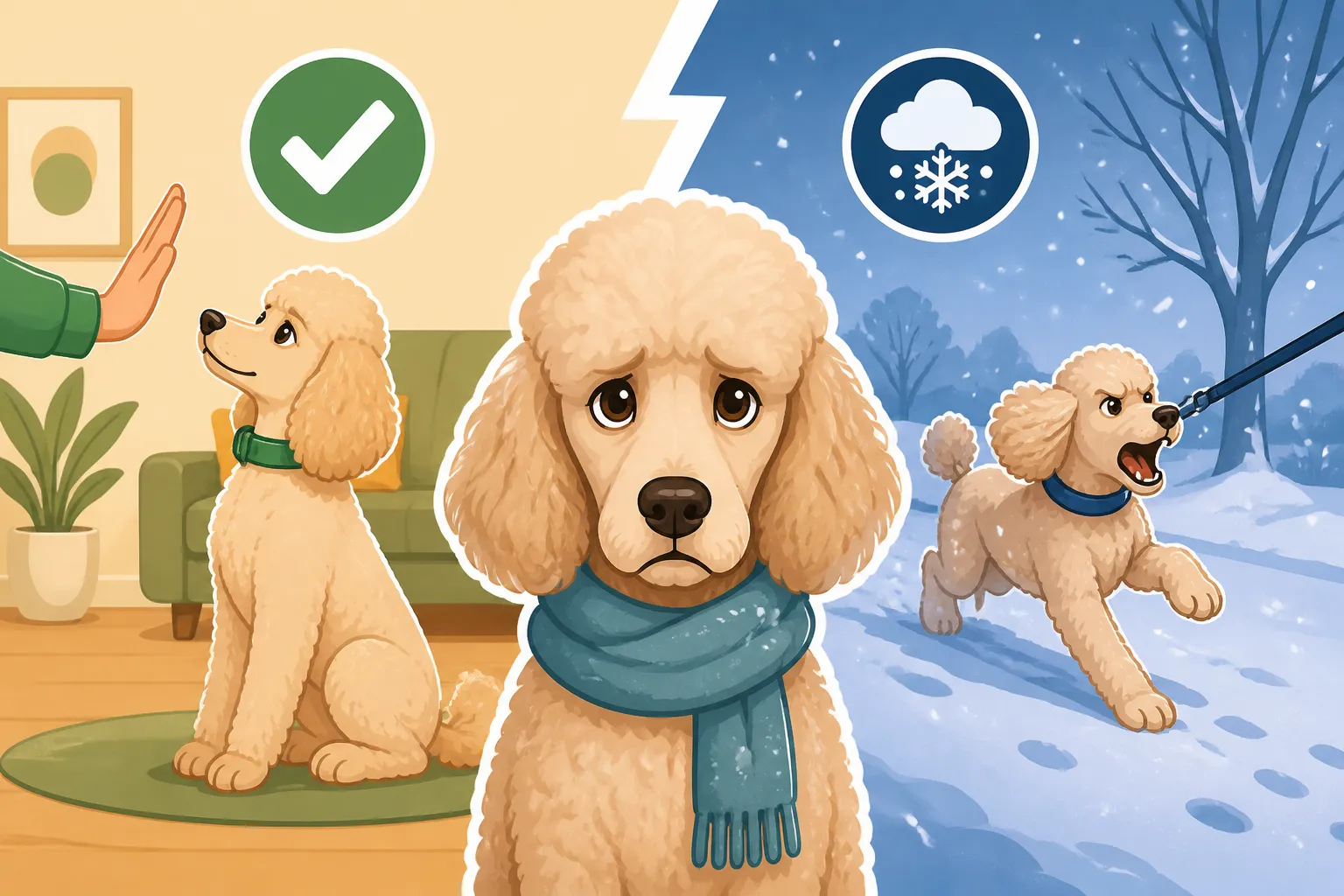
A Poodle who is cold, wet, or uncomfortable simply won't be as motivated to perform. That quick "sit" or "stay" that comes so easily in a warm, sunny park might be met with a hesitant glance or a slow, reluctant compliance when there's a frosty breeze and their paws are stinging. This discomfort can manifest as a general lack of enthusiasm for training, a reluctance to go outside, or even a grumpy disposition. It's not that they've forgotten the cue; it's that the reward system is now competing with a powerful disincentive: feeling miserable. This is especially true for Toy Poodles whose small bodies lose heat quickly. You might notice them shivering or trying to lift their paws off the cold ground, even during a quick potty break. For some Poodles, the very act of being outside in winter becomes an unpleasant experience they want to minimize, leading to rushed potty breaks and a disinterest in sniffing or exploring.
The Silent Battle: Reduced Exercise and Mental Stimulation
One of the biggest culprits behind winter backsliding is the drastic reduction in both physical exercise and mental stimulation. When it's cold, dark, and slippery, those long walks and energetic park visits often get cut short or skipped entirely. A Standard Poodle, for example, needs a significant amount of daily activity to stay balanced, and even a Toy Poodle requires more than a quick dash around the block. Daily Exercise for a Standard Poodle is crucial, and when that goes missing, the energy has to go somewhere.
This pent-up energy, combined with a lack of mental engagement, is a recipe for disaster. Poodles are incredibly intelligent, ranking high on intelligence scales, and their brains need a workout just as much as their bodies. Why a Poodle Needs a Job Rather Than a Walk is a concept many Poodle owners understand implicitly. If their intelligent minds aren't given appropriate tasks or puzzles, they will invent their own entertainment – and that entertainment rarely aligns with our household rules. This can manifest as increased barking, destructive chewing, counter-surfing, or even just a general restlessness that makes them less attentive to commands. They might start Why a Poodle Invents Its Own Shortcuts, finding faster ways to get what they want that bypass your carefully trained cues. Without regular outlets for their physical and mental energy, their focus and impulse control can quickly deteriorate, making them seem as if they've forgotten everything you taught them.
Specific Winter Backslides: What to Watch Out For
Once you understand why winter can be such a challenge, it's easier to anticipate what behaviors might regress. Knowing these common pitfalls allows you to implement proactive strategies before they become ingrained habits.
House Training Hurdles and Unexpected Accidents
This is perhaps the most common and frustrating winter backslide. A Poodle who has been perfectly house-trained for years might suddenly start having accidents indoors. The reasons are multi-faceted. Firstly, if they are uncomfortable outside, they might rush their business, only partially emptying their bladder or bowels, leading to an accident a short while later inside. They might also try to "hold it" for longer, hoping you'll give up on the cold outdoor excursion, only to find they can't hold it any longer once they're back in the warmth. For smaller Poodles, the issue is often even more pronounced. Getting a Toy Poodle Outside in the Cold can be a huge battle, and their smaller bladder size, especially for puppies, means they simply cannot hold it as long. Bladder Size in a Toy Poodle Puppy is tiny, and even adult Toy Poodles have limits.
Secondly, you, the owner, might also inadvertently contribute. You might be less willing to go out as frequently or stay out as long, especially late at night or first thing in the morning. This reduces the opportunities for your Poodle to eliminate outside, increasing the chances of an indoor accident. The convenience of a quick dash might override the thoroughness needed for a complete potty break. Sometimes, a Poodle might even start associating going outside with discomfort, leading them to actively seek indoor spots, particularly if they're older and perhaps have some arthritis that the cold exacerbates. This can be devastating for a previously reliable Poodle. You might consider Indoor Potty Options for a Toy Poodle if outdoor conditions are consistently harsh for your tiny companion, but remember this should be a last resort or temporary measure to avoid fully undoing outdoor training.
Leash Reactivity and Pent-Up Energy in the Cold
Another common regression manifests on walks. Your Poodle, who normally walks politely on a loose leash, might start pulling, lunging at other dogs or people, or becoming overly reactive to squirrels and other stimuli. This is almost always a direct consequence of insufficient exercise and mental stimulation. That pent-up energy, which would normally be burned off during longer, more engaging walks, now explodes during shorter, less satisfying outings.
A bored, under-exercised Poodle has a much shorter fuse and less impulse control. What might have been a minor distraction on a long summer walk becomes an overwhelming trigger when their system is brimming with unused energy. They might be so desperate for stimulation that any movement or sound becomes highly exciting, leading to excessive barking or pulling. This can make walks stressful for both of you, creating a vicious cycle where you dread going out, leading to even less exercise, and more reactivity. It’s also common to see a regression in their ability to focus on you, making recall or "leave it" commands feel like they've never been taught. This isn't stubbornness; it's an overflow of unchanneled energy and a mind that hasn't been adequately engaged.
Regression in Basic Obedience and Focus
Beyond house training and leash manners, you might notice a general decline in your Poodle’s response to basic obedience cues. They might take longer to respond, offer sloppy behaviors, or simply ignore you entirely, particularly in distracting environments. This isn’t a sign that your Poodle has become stupid; it’s usually a symptom of boredom, a lack of consistent practice, and possibly a decrease in perceived value of the rewards.
During warmer months, training sessions might be longer, more frequent, and incorporate exciting outdoor elements. In winter, these often dwindle. Short, indoor sessions might feel repetitive, and if your Poodle isn’t getting enough mental enrichment elsewhere, they might become less engaged. Remember, Poodles are incredibly smart and can get bored easily. Training a Poodle That Outthinks You means you need to keep things fresh and challenging. If the mental games aren't stimulating enough, or if the rewards aren't high-value enough to compete with their internal desire for more excitement, their focus will wane. This can lead to them seeming "stubborn" or "disobedient" when in reality, their environment isn't meeting their needs, and their brilliant brain is finding other things to occupy itself with.
Proactive Strategies for a Smooth Winter Training Season
The good news is that winter backsliding isn't inevitable, and even if it's already started, it's completely reversible. By understanding the causes, you can implement proactive and consistent strategies to keep your Poodle happy, engaged, and well-behaved all season long.
Elevating Indoor Enrichment and Brain Games
Since outdoor exercise might be limited, it’s absolutely critical to ramp up indoor mental and physical enrichment. This means turning your home into a stimulating playground for your Poodle’s clever mind and body. Puzzle toys are your best friend here. Brands like Kong and Nina Ottosson offer a fantastic range of options, easily found on Amazon, that require your Poodle to problem-solve to get their treats. Start with easier puzzles and gradually increase the difficulty to keep them challenged and prevent frustration.
Beyond puzzles, engage in regular indoor training sessions. These don't have to be formal; short bursts of 5-10 minutes several times a day are often more effective than one long, tedious session for a Poodle. Teach new tricks, refine existing cues, or practice scent work games. Hiding treats around the house and encouraging your Poodle to sniff them out is a fantastic way to engage their natural instincts and provide mental exercise. This kind of "nose work" is surprisingly tiring for dogs and a wonderful way to burn energy when a walk isn't possible. Remember, Mental Work That Tires a Poodle is just as important as physical exertion. Even a simple game of fetch up and down a hallway can provide a good burst of physical activity for a Toy or Miniature Poodle.
Mastering the Winter Potty Routine
To combat house training backslides, consistency and preparation are key. First, invest in appropriate winter gear for your Poodle. A warm coat, especially for smaller Poodles or those with shorter clips, can make a huge difference in their comfort level. Look for options with good coverage and easy on-off features. Booties can protect their paws from ice, snow, and irritating de-icing salts. You can find a wide variety of these items on Amazon. Get your Poodle used to wearing them indoors before venturing out.
Maintain your regular potty schedule, or even increase the frequency, especially if your Poodle is reluctant to stay out long. Take them out every few hours, just like you would a puppy. Make these trips as quick and efficient as possible, but ensure they have fully emptied their bladder and bowels before coming back inside. Reward immediately and enthusiastically with high-value treats the moment they finish their business outside. This reinforces that outdoor elimination is the most rewarding choice, even in the cold. Consider designated potty spots that are sheltered or cleared of snow. If you live in an area with extremely harsh winters, or if your Poodle is particularly sensitive, setting up an indoor potty area (like a patch of real or artificial grass) as a temporary option might prevent accidents, though be mindful not to let it replace outdoor training entirely.
| Winter Backslide | Common Causes | Proactive Strategies |
|---|---|---|
| House Training Accidents | Cold discomfort, reduced outdoor frequency, rushing business | Winter gear (coat, booties), increased potty breaks, high-value rewards for outdoor success, designated clear potty spot |
| Leash Pulling & Reactivity | Pent-up energy, lack of mental stimulation, boredom | Increased indoor enrichment (puzzles, training), shorter but more frequent structured walks, focus games on leash |
| Regression in Obedience/Focus | Boredom, lack of consistent practice, reduced value of rewards | Daily short, engaging indoor training sessions (new tricks, scent work), varied rewards, consistency with cues |
| Destructive Chewing/Barking | Unchanneled energy, anxiety, boredom | Interactive toys, chew items, enforced quiet time, dedicated mental games, structured daily routine |
Maintaining Training Momentum with Consistency
The foundation of any good training program is consistency, and winter is no exception. Even if your formal training classes are on hold, you can still maintain momentum at home. Keep your Poodle’s brain active with short, fun training sessions throughout the day. Instead of one long session, aim for three to five five-minute bursts. This keeps it fresh and engaging.
Integrate training into your daily life. Ask for a "sit" before putting down their food bowl, a "stay" before opening the door, or a "down" during cuddle time. This reinforces their understanding of cues in real-world scenarios. Make sure you're still using clear, consistent cues and rewarding desired behaviors generously. If you’re struggling with ideas or need a refresher, online training platforms can be a lifesaver. Companies like BAXTER & Bella offer virtual resources that allow you to continue training from the comfort and warmth of your home, providing structured lessons and support that can be invaluable during the colder months. Remember, Teaching a Poodle to Wait Rather Than Guess is an ongoing process, and consistency reinforces those boundaries. This continuity prevents your Poodle from feeling like the rules have changed just because the weather has.
Beyond the Basics: When to Dig Deeper into Winter Behavior
While most winter backslides are easily explained by environmental factors and can be managed with proactive strategies, sometimes there's more at play. It's important to differentiate between typical seasonal regression and something that might warrant a closer look.
Recognizing Health or Behavioral Issues Beyond Winter Blues
Sometimes, what appears to be a training backslide might actually be an indicator of an underlying health issue. For instance, increased indoor accidents, especially in an older Poodle, could signal a urinary tract infection, kidney issues, or even cognitive decline. A sudden increase in anxiety, destructive behavior, or reactivity might point to pain or discomfort that's exacerbated by the cold, such as arthritis. Poodles are famously sensitive and can hide pain, so Reading Pain in a Sensitive Poodle is a skill every owner needs. Any significant or sudden change in behavior warrants a call to your veterinarian to rule out medical causes.
Similarly, persistent anxiety or fear, especially around going outside, could be more than just cold aversion. It might be a developing behavioral issue that needs specific attention. If your Poodle is exhibiting signs of extreme distress when left alone more often due to bad weather, you might be dealing with separation anxiety, which requires a targeted approach beyond simple enrichment. Don't dismiss these signs as mere winter grumpiness; a quick check-up can either reassure you or catch a problem early.
Seeking Expert Guidance for Persistent Challenges
If you've implemented all the strategies and your Poodle's behavior isn't improving, or if the backsliding is severe and causing significant stress, it might be time to bring in a professional. A certified professional dog trainer or a veterinary behaviorist can provide personalized guidance. They can observe your Poodle's behavior in your home environment, identify specific triggers, and help you develop a tailored training plan.
When choosing a professional, look for someone who uses positive reinforcement methods. Poodles are intelligent and sensitive, and Why Harsh Handling Breaks a Poodle is a critical lesson for any trainer or owner. Aversive methods can damage their trust and lead to further behavioral issues. A good trainer will understand the Poodle temperament and help you find creative ways to engage their mind and manage their energy, even when the weather isn't cooperating. They can also help you differentiate between normal winter woes and more serious behavioral patterns that require a deeper dive. Don't be afraid to ask for help; it's a sign of a responsible owner who wants the best for their Poodle.
Disclaimer
This article is for general informational purposes only and does not constitute professional advice. Laws, prices and regulations vary by location and change over time. Consult a qualified professional for guidance on your specific situation.