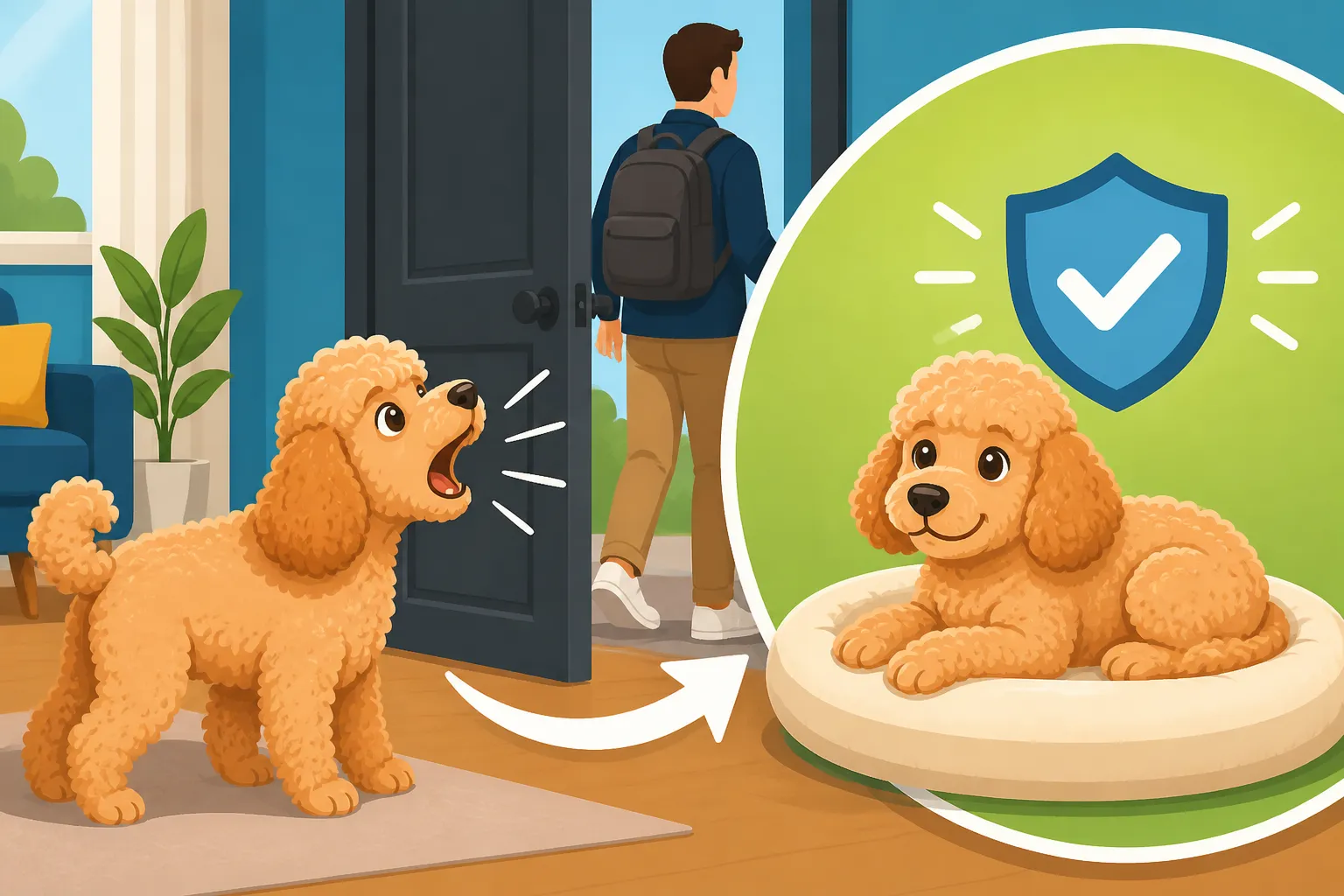
Stopping a Poodle Barking the Moment You Leave
It's one of the most disheartening sounds a Poodle owner can hear: the frantic barking that erupts the instant you close the door behind you. You might just be popping out for a quick errand, but to your Poodle, it can feel like the world is ending. This guide is here to walk you through why your beloved companion might be reacting this way and, more importantly, equip you with practical, empathetic strategies to help them feel more secure and less vocal when you step out.
Understanding Why Your Poodle Barks When You Leave
When your Poodle starts barking the moment you're gone, it's easy to jump to conclusions, often feeling guilty or frustrated. But the truth is, this behavior stems from a complex mix of emotions and learned responses. Poodles are incredibly intelligent and sensitive dogs, and their vocalizations are always a form of communication. Unpacking the "why" is the first critical step toward finding a lasting solution.
The Difference Between Alert Barking and Separation Anxiety
First, let's distinguish between a Poodle's natural alertness and something more concerning like separation anxiety. Poodles, by their very nature, are excellent watchdogs. They're quick to pick up on unusual sounds or movements, and a few barks to signal a delivery person or a squirrel on the fence is perfectly normal for a Poodle. They're often quite tuned into their surroundings and want to make sure you're aware, too. This is their way of participating in the household's security. Poodle Barking and Alertness
However, the barking we're talking about here is different. If your Poodle barks only when you leave, and it's a persistent, often desperate sound that doesn't cease until you return, it's less about alerting you to an external threat and more about their internal distress. This isn't just a "hello, someone's here" bark; it's a "where are you, I'm alone!" cry. It’s crucial to observe the context and duration to tell the difference.
True separation anxiety involves panic and profound distress when left alone. Your Poodle isn't being "naughty"; they're genuinely suffering. Other signs might include destructive chewing (especially around entry and exit points), inappropriate urination or defecation, pacing, panting, or even self-harm. These behaviors happen because their emotional state is completely overwhelmed, and they're not trying to punish you; they're trying to cope with intense fear.
Boredom and Unexercised Minds
Poodles are celebrated for their intelligence, often ranking high on lists of canine smarts. This brainpower is a double-edged sword: it makes them highly trainable and a joy to interact with, but it also means they require significant mental stimulation. A bored Poodle is a creative Poodle, and their creativity can manifest in ways we don't always appreciate, like excessive barking. What a Poodle Does When Its Brain Is Idle
If your Poodle hasn't had enough physical or mental exercise before you leave, they're going to have a lot of pent-up energy and an active mind with nothing productive to do. Barking, for them, can become a self-rewarding activity. It's something to do. It releases energy, and sometimes, if you come back quickly in response to it, they might inadvertently link their barking to your return, reinforcing the behavior further.
Imagine being stuck in a room with nothing to do for hours – you'd probably find ways to entertain yourself, even if it's just talking to the walls. For a Poodle, barking serves a similar function. It's a way to expend energy, seek attention (even if you're not there to give it directly, they might hope you'll reappear), and simply alleviate the monotony of being alone without stimulation. Addressing this means giving their brilliant minds a proper workout.
Reinforcement and Learned Behavior
It's a tough pill to swallow, but sometimes, we inadvertently reinforce the very barking we're trying to stop. Think about it: you leave, your Poodle starts barking, and your immediate reaction might be to rush back in, open the door, and reassure them. While your intentions are pure – you don't want them to be upset – what your Poodle learns is, "If I bark, my human comes back!" This creates a powerful, if unintentional, positive reinforcement loop.
This cycle can be incredibly frustrating because it feels like a no-win situation. You're torn between wanting to stop the noise and not wanting your Poodle to suffer. Even if you don't come back inside, perhaps a neighbor complains, and you return, or you shout through the door. Any form of acknowledgment, whether positive or negative, can be perceived by your Poodle as a response to their vocalization. They connect their barking directly to your presence, even if it's fleeting.
Another common scenario involves making a big fuss when you leave or return. Long, drawn-out goodbyes or overly enthusiastic greetings can heighten your Poodle's emotional state, making your departure feel like a significant event rather than a routine part of the day. This emotional charge then translates into anxiety and barking when you're gone. The key is to make departures and arrivals as low-key as possible to normalize the experience.
Strategies to Prevent Immediate Departure Barking
Now that we understand some of the underlying reasons, let's talk about proactive strategies to help your Poodle feel more secure and less compelled to bark when you leave. These methods focus on gradual training, positive associations, and setting your Poodle up for success.
Desensitization to Departure Cues
Our Poodles are incredibly observant, and they pick up on all our little pre-departure rituals. Grabbing your keys, picking up your bag, putting on your shoes, or even just heading towards the door – these actions become "cues" that signal your imminent departure. For an anxious Poodle, these cues can trigger an immediate rise in anxiety, leading to barking before you've even stepped out.
The goal of desensitization is to break this association. Start by performing these departure cues without actually leaving. Pick up your keys, jingle them, then put them back down and sit on the sofa. Put on your shoes, walk around for a bit, then take them off. Open the door, then close it again. Do this multiple times a day, varying the order and combination of actions. The idea is to make these cues meaningless; they no longer predict your exit. Teaching a Poodle That Leaving Is Ordinary
Once your Poodle barely reacts to these individual cues, start combining them. Pick up your keys, put on your coat, then go make a cup of coffee. The more you "fake out" your Poodle by doing these actions without leaving, the less significance they'll attach to them. This gradual exposure helps to lower their baseline anxiety around your departure, making the actual act of leaving much less stressful for them.
Short, Gradual Absences
This is perhaps the most critical step in addressing barking upon departure. You can't just leave for an hour and expect your Poodle to be okay if they're currently barking the second you're gone. You need to start small, really small, and build up very slowly. The idea is to leave for a duration before your Poodle starts to get anxious and bark. This could mean leaving for literally 5 seconds.
Here's how it works:
- Perform your desensitization cues (keys, coat, etc.) until your Poodle is calm.
- Give them a high-value, long-lasting chew or puzzle toy (more on this later).
- Calmly walk out the door, close it, and immediately come back in before any barking starts. If your Poodle does bark, you've stayed too long. Wait for a moment of quiet, then re-enter.
- Do not make a fuss when you return. No excited greetings, just a calm acknowledgment.
- Repeat this multiple times a day, gradually increasing the duration of your absence by a few seconds at a time. Go from 5 seconds to 10, then 15, then 30, then a minute.
This method teaches your Poodle that your departures are always temporary and that you always return. It builds their confidence in your return. It's a slow process, but it's incredibly effective because it targets the root of the anxiety. If you push too fast, you risk reinforcing the fear, so patience is truly key here. The goal is for them to associate your leaving with the arrival of a special treat, not with panic.
Mental and Physical Pre-Departure Exercise
A tired Poodle is often a quieter, happier Poodle. Given their intelligence and energy levels, ensuring your Poodle has had adequate physical and mental stimulation before you leave is paramount. This isn't just about a quick potty break; it's about genuinely tiring them out, both body and mind.
For a Standard Poodle, this might mean a brisk, long walk, a good game of fetch in the park, or even a session of off-leash running in a safe area. Aim for at least 30-60 minutes of vigorous activity. For a Toy or Miniature Poodle, a lively walk, some high-energy indoor play, or even a short burst of retrieving can be enough to get their physical energy out. Daily Exercise for a Standard Poodle
Beyond physical exertion, engage their incredible Poodle brains! A 15-minute training session right before you leave can be more tiring than a 30-minute walk. Work on new tricks, practice obedience commands, or engage them in some scent work. Hide treats around the house and let them sniff them out. This kind of mental engagement burns mental energy, leaving them more ready to settle down when you depart. Mental Work That Tires a Poodle A truly satisfied Poodle, one who has had their body and mind thoroughly engaged, is far more likely to relax and even nap while you're gone, rather than resort to anxious barking.
| Activity Type | Examples for Poodles | Benefits for Departure Barking |
|---|---|---|
| Physical | Brisk walk, fetch, running, swimming, dog park | Burns off excess energy, promotes relaxation, reduces restlessness. |
| Mental | Puzzle toys, training session, scent games, KONG | Engages their intelligence, creates positive distraction, mental fatigue. |
| Calming | Cuddle time, gentle massage, quiet chew time | Reduces baseline anxiety, creates a sense of security, wind-down. |
Tools and Techniques for a Quieter Departure
Beyond the behavioral strategies, there are several practical tools and techniques you can employ to make your Poodle's solo time more comfortable and reduce their impulse to bark. These are designed to provide distraction, comfort, and security.
Creating a "Safe Haven" or Crate Training
A designated safe space can work wonders for a Poodle who struggles with being left alone. This could be a crate, a cozy dog bed in a quiet room, or a small area gated off just for them. The key is that this space is associated with positive experiences and feelings of security, not punishment. It should be a place where they can retreat and feel protected.
If you choose crate training, ensure the crate is appropriately sized – large enough for them to stand, turn around, and lie down comfortably. Fill it with soft bedding and maybe a favorite blanket. Never use the crate as a place of punishment. Instead, feed meals in the crate, offer special treats only when they are in the crate, and praise them for quiet time spent inside. This builds a strong, positive association with their den. Crate Training a Poodle That Wants Company
For some Poodles, simply having a dedicated, comfortable spot outside a crate, perhaps with a dog bed and their toys, works well. Adding a familiar scent (like an old t-shirt of yours), playing classical music or white noise, or using a dog-appeasing pheromone diffuser can further enhance the calming atmosphere. The idea is to create an environment that feels predictable, secure, and comforting, reducing the urge to bark out of insecurity.
Enrichment Toys and Puzzle Feeders
This is where you can truly give your Poodle a "job" to do while you're away. High-value, long-lasting enrichment toys and puzzle feeders are invaluable tools. These items require your Poodle to actively engage their brain and paws to extract a treat, keeping them occupied and distracted from your absence.
Think about a classic KONG toy, stuffed with peanut butter (xylitol-free!), plain yogurt, wet dog food, or a mix of kibble and cheese, then frozen. This can keep a Poodle busy for a good 20-30 minutes, sometimes longer, depending on how tightly packed it is. Lick mats are another excellent option, providing a similar mental engagement and calming effect through licking. You can find a wide variety of these on platforms like Amazon, offering different levels of challenge to suit your Poodle's persistence.
The trick is to offer these special toys only when you're leaving. This makes your departure a positive event, as it signals the arrival of a highly coveted item. Your Poodle will begin to associate your going away with this exciting, rewarding activity rather than anxiety. Over time, this positive association can significantly reduce departure-related barking. Make sure the treats are appropriate for your Poodle's size and caloric intake.
Monitoring and Intervention Technology
In today's world, technology can be a helpful ally in understanding and addressing your Poodle's departure barking. Pet cameras allow you to observe your Poodle's behavior when you're not home, giving you crucial insights into when the barking starts, how long it lasts, and if there are other accompanying behaviors.
Many pet cameras offer two-way audio, allowing you to speak to your Poodle remotely. However, use this feature with caution. While a brief, calm reassurance might work for some Poodles, others might become more agitated, believing you're nearby but just out of reach, or they might learn that barking makes your voice appear. The goal is to encourage independence, not dependence on your remote presence.
Some cameras also have treat dispensers, which can be fantastic for positive reinforcement if timed correctly. You could dispense a treat when your Poodle is calm and quiet, reinforcing the desired behavior. Products that play calming music or white noise can also be integrated into your monitoring setup. Websites like BAXTER & Bella, while focused on training, often discuss the practical uses of such tools in managing common behavioral issues, providing guidance on how to use them effectively without creating new problems.
When Professional Help Might Be Needed
Sometimes, despite your best efforts, your Poodle's barking behavior can be persistent and debilitating for both of you. It's important to recognize when the situation might be beyond what home-based training can resolve and when it's time to call in the experts.
Recognizing True Separation Anxiety
We touched on this earlier, but it bears repeating: true separation anxiety is a serious behavioral disorder that goes beyond simple distress or boredom. If your Poodle exhibits a combination of these behaviors, especially consistently when left alone, it's a strong indicator of a deeper issue:
- Persistent, frantic barking or howling the entire time you're gone.
- Destructive behavior, particularly targeting exits (doors, windows) or items that smell like you.
- Inappropriate urination or defecation, even if house-trained, specifically occurring only when left alone.
- Pacing, panting, drooling excessively, or trembling.
- Self-mutilation, such as excessive licking or chewing their paws to the point of injury.
- Refusal to eat high-value treats or engage with toys you've left for them.
If you're seeing these signs, your Poodle isn't being stubborn or naughty; they are experiencing a genuine panic attack. Trying to punish these behaviors will only increase their anxiety and worsen the problem. What a Panicking Poodle Does to the Door A Poodle experiencing this level of distress needs a compassionate, multi-faceted approach, often involving a professional. Separation Anxiety in a Velcro Poodle
Consulting a Certified Professional Dog Trainer or Behaviorist
When the barking is persistent, severe, or accompanied by other signs of distress, it's time to seek specialized help. A certified professional dog trainer with experience in separation anxiety, or a veterinary behaviorist, can offer invaluable guidance. They will conduct a thorough assessment, often asking you to videotape your Poodle when you leave, to truly understand the scope and triggers of the behavior.
These professionals can help you craft a tailored plan that addresses your Poodle's specific needs, which might include systematic desensitization protocols, counter-conditioning techniques, and management strategies you hadn't considered. They can also provide support and troubleshoot challenges as you progress. Resources like the BAXTER & Bella online puppy school, while often focused on puppies, can give you a taste of positive reinforcement principles. However, for severe cases, a direct, one-on-one consultation with a local certified professional is usually the most effective route. They can help you understand how long a Poodle can reasonably cope with an empty house and identify stressors. Hours a Poodle Copes With an Empty House
They'll help you focus on building your Poodle's independence and confidence, teaching them that being alone is not something to fear but a normal, safe part of their day. They understand the nuances of canine communication, like why a Poodle might shadow its owner, which can sometimes be an early indicator of separation anxiety tendencies. Why a Poodle Shadows Its Owner
Veterinary Consultation for Underlying Issues
Before diving deep into behavioral modification, it's always a good idea to rule out any underlying medical conditions that could be contributing to your Poodle's anxiety or excessive vocalization. Pain, discomfort, hormonal imbalances, or even declining cognitive function in older Poodles can manifest as increased anxiety and barking.
Your veterinarian can perform a thorough physical examination and potentially recommend blood tests or other diagnostics to ensure there are no hidden health problems exacerbating the issue. For instance, some thyroid conditions can impact a dog's emotional state, making them more prone to anxiety. In cases of severe separation anxiety, a vet might also discuss medication options as an adjunct to behavioral therapy. These medications aren't a "cure-all" but can help reduce your Poodle's anxiety to a level where they are more receptive to training and behavior modification.
Working in conjunction with a veterinary professional ensures that you're addressing all potential facets of the problem, from physical health to emotional well-being. This holistic approach provides the best chance for your Poodle to overcome their departure barking and enjoy a calmer, more confident life when left alone.
Disclaimer
This article is for general informational purposes only and does not constitute professional advice. Laws, prices and regulations vary by location and change over time. Consult a qualified professional for guidance on your specific situation.