Where a Poodle Falls Short of the Standard
We all dream of that perfectly poised, intelligent Poodle, a dog that looks like it stepped right out of a show ring or a classic painting. But the reality is, even the most beloved Poodles, the ones we adore and cherish, might not perfectly align with every single nuance of the breed standard. This guide is here to shed light on the breed standard for Poodles and explore the common, completely normal ways a Poodle might "fall short" of that ideal, helping you understand what these deviations mean for a pet owner versus a breeder or show enthusiast.
Understanding the Poodle Breed Standard
The Poodle breed standard is essentially the blueprint for what an ideal Poodle should look, act, and be like. It's a detailed document created by kennel clubs to define the perfect specimen of the breed, covering everything from coat texture and color to body proportions, movement, and even temperament. For those of us who just want a wonderful companion, it might seem like an overly formal document, but it plays a crucial role in maintaining the breed's integrity and health.
What the Standard Aims For
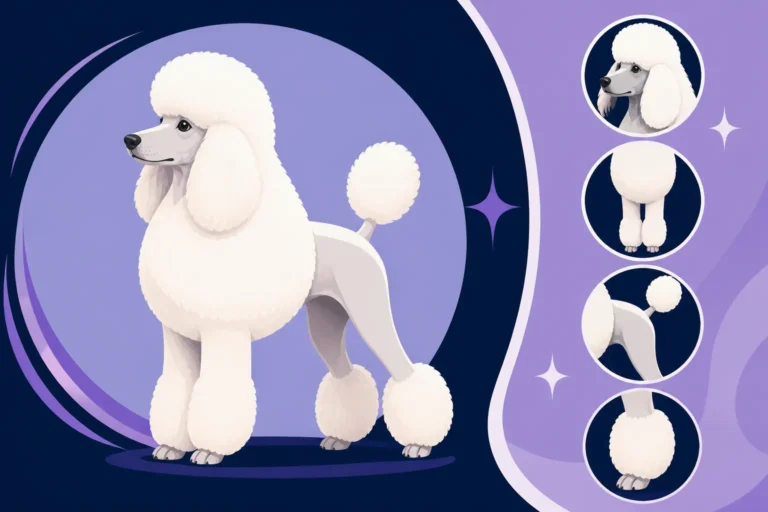
At its heart, the Poodle breed standard aims to describe a dog that is elegant, proud, and intelligent, with a distinctive curly coat and an athletic build. Think of it as a set of guidelines that breeders strive for to ensure consistency in the breed. It details the head's shape, the length of the muzzle, the darkness of the eyes, the set of the ears, and even the arch of the neck. It specifies the ideal topline – that's the line from behind the shoulder to the tail – and the angulation of the front and rear legs, all contributing to the Poodle's characteristic gait and overall balance. For example, a "square" body proportion, where the length of the body is roughly equal to the height at the shoulder, is a key aspect for all three Poodle sizes.
The standard also describes the texture and curl of the coat, which should be dense, harsh (not soft or cottony), and uniformly curly. This isn't just about aesthetics; it's rooted in the Poodle's history as a water retriever, where such a coat provided protection from cold water. Even temperament is outlined, emphasizing intelligence, eagerness to please, and an active, proud bearing. It's not just a beauty contest; it's about preserving the original purpose and inherent qualities of the breed.
Why the Standard Matters
So why all the fuss about a piece of paper, especially if your Poodle is a cherished family member and not destined for the show ring? The breed standard serves several vital purposes. Firstly, it guides responsible breeders in their efforts to produce healthy, sound Poodles that conform to predictable breed type. Without a standard, breeders might make choices that lead to extreme features, health issues, or a dilution of the Poodle's distinct characteristics. It's a safeguard against straying too far from the ideal, helping to preserve the unique traits that make a Poodle a Poodle.
Secondly, it provides a consistent framework for judging in conformation shows, ensuring that Poodles are evaluated fairly against a universal ideal. This helps identify the breeding stock that best embodies the breed, guiding future generations. Even for pet owners, understanding the standard can deepen appreciation for your Poodle's heritage and the thoughtful breeding practices that bring these wonderful dogs into our lives. While your pet Poodle might not be "show perfect," the standard helps ensure they have the underlying structure and temperament that contributes to a long, healthy, and happy life. The Poodle the Standard Describes is a good read if you want to dive deeper into these specifics.
Common Structural Deviations
When we talk about a Poodle "falling short" of the standard, often it's in the subtle nuances of their physical structure. These aren't typically things that impact a pet Poodle's quality of life, but they are points that a show judge would notice immediately. It's about proportion, angle, and the overall silhouette.
Head and Muzzle Proportions
The Poodle standard calls for a long, straight, fine muzzle, with a skull that is moderately rounded. The eyes should be dark, oval, and set fairly close together, giving that intelligent, alert expression. What might deviate from this? Sometimes, a Poodle might have a muzzle that is too short or too blocky, losing that elegant, refined look. This is often referred to as a "snipy" or "coarse" muzzle. On the other hand, some might have a skull that's too domed or too flat.
Similarly, eye color can be an issue. The standard prefers dark eyes (dark brown or black) as they contribute to the Poodle's soft, intelligent expression. Lighter eyes, often seen in Poodles with lighter coat colors, can sometimes give a "hard" or less expressive look, which is considered a fault. Even eye shape and placement are specified; eyes that are too round or too wide-set can change the entire character of the face. For instance, a Standard Poodle might have a beautifully proportioned body, but a slightly too-short muzzle or lighter eye color might mean it doesn't achieve that "perfect" score in the show ring. The Long Muzzle and Dark Poodle Eye goes into more detail about these specific features.
Topline and Tail Set
The Poodle's topline, which is the line of the back from the withers (shoulders) to the tail, should be level. The tail itself should be set high and carried up, not tucked or drooping. This contributes to the breed's proud and elegant stance. Deviations here can include a "roach back" (an upward arch over the loins) or a "sway back" (a dip in the mid-back). Both of these alter the classic, balanced silhouette.
A low tail set is another common deviation. Instead of springing proudly from the topline, the tail might appear to come out lower, often giving the dog a less confident or less elegant appearance. While these structural elements rarely affect a pet Poodle's ability to run, play, or live a full life, they are significant in the world of conformation. A strong, level topline and high-set tail are indicators of sound structure that allow for efficient movement, crucial for a dog originally bred for active work. The Poodle Topline and Why It Matters explains why these features are so important.
Angulation and Movement
The angulation refers to the angles of the bones in a dog's shoulders, hips, and knees. For Poodles, the standard dictates specific angulation that allows for a "light, springy, effortless" gait. This means the dog should move with grace and power, covering ground efficiently without exaggerated motion. Common faults include "straight shoulders" (meaning insufficient angulation in the front assembly) or "straight stifles" (lack of angulation in the rear).
These issues can lead to a choppier gait, where the dog doesn't extend its legs far enough or propel itself effectively. Instead of a powerful rear drive and a smooth, reaching front stride, a Poodle with poor angulation might have a short, mincing step, or appear to bounce rather than flow. You might observe a dog that just doesn't move with the same fluid ease as a well-angulated Poodle. For a pet owner, this might simply mean their Poodle isn't as fast or agile, but for a show dog, it's a major disqualifier as it impacts the very essence of the breed's functional design. Judging movement is a critical part of a conformation show, as outlined in What a Ring Judge Checks on a Poodle.
Pasterns and Feet
Let's talk about those dainty Poodle feet! The standard calls for small, oval "cat feet," with well-arched toes and thick, firm pads. The pasterns (the part of the leg just above the foot) should be strong and straight. These features are vital for endurance and agility, supporting the dog's weight during active movement. However, deviations are common. You might see "splayed feet," where the toes spread out rather than remaining tightly knit, resembling a duck's foot more than a cat's. This can make the feet less resilient and more prone to injury.
Another common fault is "hare feet," which are longer and narrower than the desired oval shape. Weak pasterns are also seen, where the pastern joint appears soft or deviates from a straight line, sometimes causing the dog's weight to roll inward or outward on their feet. These issues can lead to uneven wear on the nails or pads and might predispose a dog to minor lameness or discomfort over time, especially if they are very active. While not life-threatening, strong feet and pasterns are foundational to a Poodle's athletic ability and longevity.
Coat and Color Imperfections
Ah, the Poodle coat! It's one of their most iconic features, but it's also an area where many Poodles, even otherwise lovely ones, can fall short of the breed standard. The standard for coat and color is quite specific, focusing on texture, density, and uniformity.
Coat Texture and Density
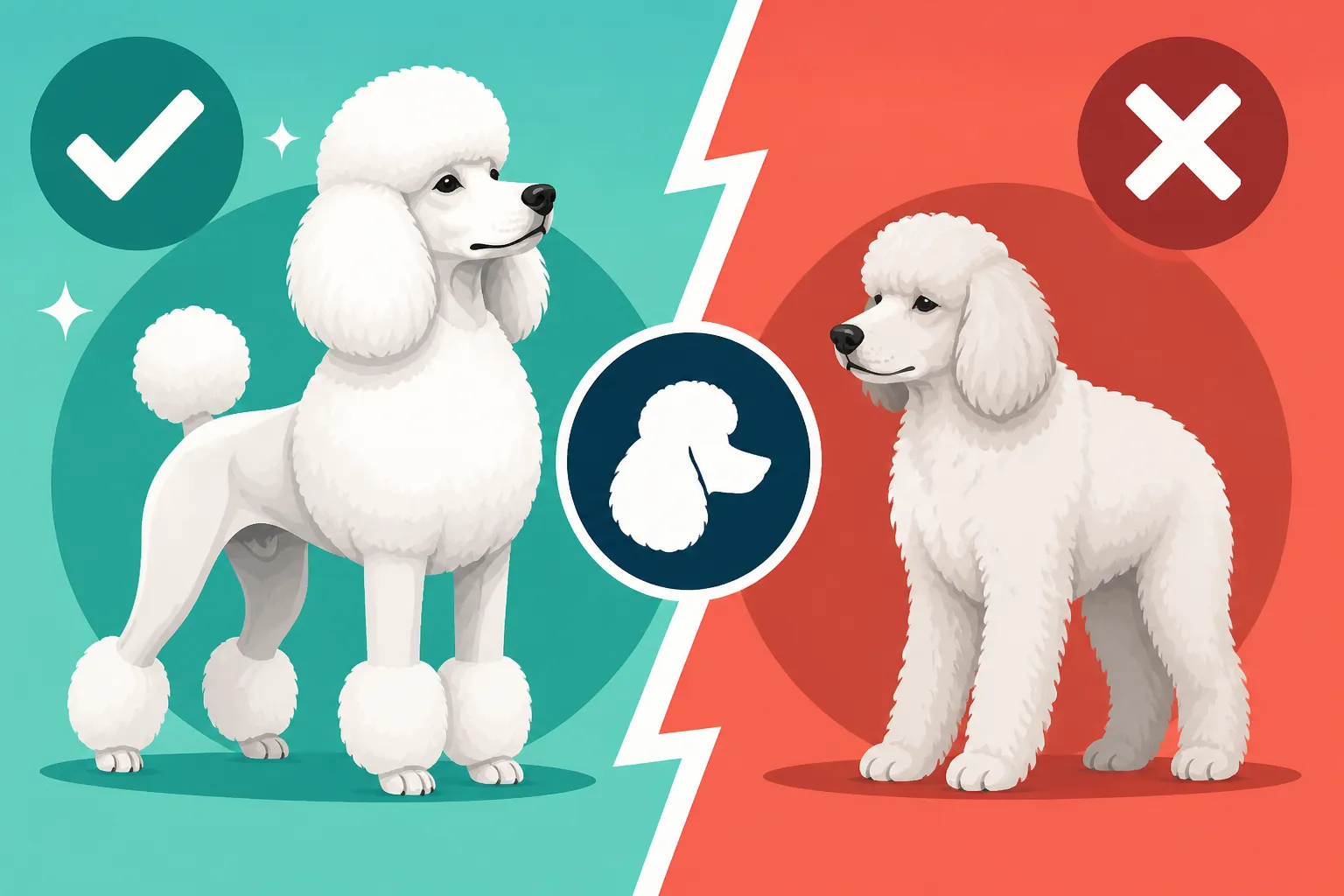
The ideal Poodle coat should be dense, harsh in texture, and curly. It should feel somewhat like wool, not soft like cotton or silky like human hair. This unique texture is what gives the Poodle its non-shedding, hypoallergenic qualities and historically protected them in water. However, it's not uncommon to find Poodles with coats that are "soft" or "cottony." These coats tend to mat much more easily, soak up water, and often don't hold their shape as well after grooming. They might feel wonderfully soft to the touch, but they are a nightmare to maintain without constant vigilance and top-notch grooming tools.
Another deviation can be a lack of density, meaning the hair is sparse rather than thick and full. This can make it harder to achieve those voluminous, classic Poodle clips. Sometimes, you'll also see coats that are more wavy than tightly curled. While still beautiful, these variations don't quite meet the standard's description and can pose challenges for groomers trying to create a picture-perfect Poodle profile. Getting a good quality slicker brush and a greyhound comb from a reputable source like Chewy can help manage even the most challenging coats. The Poodle Coat in the Standard offers a deep dive into what's expected.
Fading Colors and Off-Colors
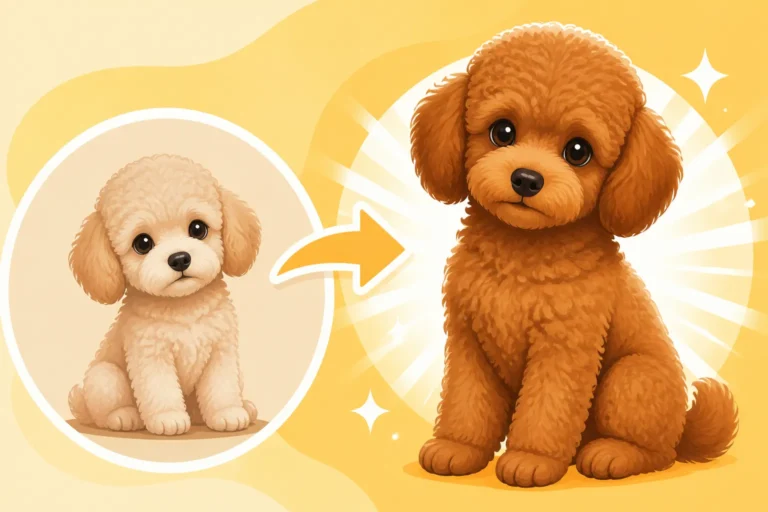
The Poodle standard recognizes a number of solid colors: black, white, silver, blue, brown, apricot, and red. The key here is "solid" and "even." A Poodle's color should be rich and consistent throughout its entire coat, without lighter or darker patches. A common issue is "fading." For instance, a beautiful black Poodle puppy might "blue out" as an adult, developing a charcoal or greyish hue, or an apricot Poodle might lighten to cream. Even reds, a newer and highly desired color, can fade significantly over time, sometimes called "apricot creep."
"Off-colors" or "mismarks" are another aspect. While some colors like cream are accepted (often classified under white or apricot depending on pigment), colors like sable (a black-tipped fawn or silver) or brindle (striped pattern) are not standard. While these Poodles can be stunningly unique, they cannot be shown in conformation. The standard is strict because it aims for purity and predictability in appearance. Understanding How a Poodle Puppy's Color Fades can help new owners prepare for potential changes in their dog's hue.
Non-Standard Markings
The Poodle breed standard specifically calls for solid-colored Poodles. This means the entire coat should be one single, unbroken color. Therefore, any Poodle with patterns like "parti" (two or more distinct colors in patches, typically white with another solid color) or "phantom" (a solid base color with lighter markings on the muzzle, chest, legs, and under the tail, similar to a Rottweiler's pattern) is considered a deviation from the standard.
While these multi-colored Poodles are purebred Poodles and cherished by their owners, they are not eligible to compete in conformation shows where the solid color rule is strictly enforced. It's a point of contention for some, as parti and phantom Poodles have a long history within the breed, but the current major kennel club standards prioritize uniformity. For pet owners, a parti Poodle is just as wonderful and intelligent as a solid-colored one, but it's important to be aware of how these markings are viewed within the formal breed community, as discussed in Parti Poodles and the Show Ring.
Temperament and Performance Nuances
Beyond physical appearance, the Poodle breed standard also outlines expected temperament. Poodles are renowned for their intelligence, eagerness to please, and proud, dignified demeanor. However, individual personalities can vary, and some traits, while not necessarily "bad," might not perfectly align with the ideal described in the standard.
Shyness or Hyper-Vigilance
The Poodle standard describes a dog that is intelligent, keen, and active, with a dignified air. It should be friendly without being overly boisterous, and generally good-natured. What's considered a deviation here is excessive shyness or timidity, especially around strangers or in new environments. A Poodle that cowers, shies away, or acts overly anxious is not exhibiting the proud confidence the standard calls for. While sensitivity is a Poodle trait, extreme fearfulness goes beyond that.
On the other hand, a Poodle that is excessively hyper-vigilant, constantly barking at every little sound or movement, might also deviate from the composed demeanor. While Poodles are excellent watchdogs due to their alertness, incessant, nervous barking can indicate an imbalance in their temperament. These traits, while sometimes rooted in genetics, can also be influenced by early socialization (or lack thereof). Ensuring your Poodle meets various people and experiences new sights and sounds from a young age can help them develop into the confident, well-adjusted companion they're meant to be. How Reserved a Poodle Is With Visitors touches on these aspects.
Over-Excitability or Lack of Focus
Poodles are undeniably intelligent, often ranked as one of the smartest dog breeds. This intelligence, combined with their active nature, means they need mental stimulation as much as physical exercise. The standard implies a dog that is trainable and focused. However, some Poodles, particularly in their younger years, can be prone to over-excitability, appearing "bouncy" or easily distracted. This isn't necessarily a fault, as it can be channeled into enthusiasm for training, but an inability to settle or focus can be seen as a deviation from the ideal composed and cooperative nature.
Conversely, a Poodle that lacks the typical "spark" or eagerness to engage in training might also be seen as falling short. While rare, a Poodle that is dull or difficult to motivate doesn't embody the breed's renowned intelligence and trainability. Finding ways to keep their sharp minds occupied, perhaps with puzzle toys or regular training sessions that use positive reinforcement, is key to nurturing their natural brilliance. As highlighted in Why a Bright Poodle Gets Bored, a Poodle without sufficient mental engagement can become destructive or develop unwanted behaviors.
Retrieving Instinct Variability
Historically, Poodles were bred as water retrievers, and this instinct is a fundamental part of their heritage. The standard implicitly values a dog that can perform this function. Many Poodles still possess a strong desire to fetch, carry, and retrieve, often bringing toys, slippers, or even mail to their owners. However, not every Poodle will exhibit this retrieving instinct to the same degree. Some might be enthusiastic fetchers, while others might prefer a good cuddle on the sofa.
While a strong retrieving drive is considered a hallmark of the breed's working past and a desirable trait, a Poodle that shows little interest in fetching is not necessarily a bad dog. It simply means that particular individual might have a different set of priorities. For a hunter or someone looking to compete in retrieving sports, this might be a deviation from their personal ideal. For the average pet owner, it simply means finding other activities that your Poodle enjoys, whether it's agility, trick training, or long walks. The presence and strength of The Poodle's Retrieving Instinct can vary quite a bit.
Health and Genetic Concerns Not Addressed by Standard
It's a common misconception that adhering to a breed standard guarantees health. While responsible breeding practices often include health testing, the breed standard itself primarily focuses on physical appearance and temperament, not specific genetic health predispositions. This means a Poodle can meet every physical criteria of the standard and still be prone to certain health issues.
The Standard's Silence on Health
The formal breed standard, as written by kennel clubs, details what a Poodle should look like and how it should act. It outlines desirable traits for conformation, movement, and coat. However, it doesn't typically list specific genetic health conditions that Poodles are prone to, nor does it mandate health testing. This is where the standard can "fall short" in a different sense – by not directly addressing the underlying health challenges that conscientious breeders and owners must contend with.
For instance, the standard might describe the ideal gait, but it won't explicitly warn about Poodle Hip Dysplasia by Size or Luxating Patella in Toy and Miniature Poodles, conditions that can impact a dog's movement. It doesn't mention Addison's Disease in Standard Poodles or Sebaceous Adenitis and the Poodle Coat, which are significant health concerns in the breed. This silence means that while a Poodle might be "standard perfect" in appearance, a responsible breeder goes far beyond the written standard to ensure the health of their lines. For more on what breeders should test for, see What a Poodle Breeder Must Test For.
Genetic Predispositions
Poodles, like many purebred dogs, have certain genetic predispositions to health conditions. These conditions are not typically visible conformational faults, meaning a dog could look perfectly "standard" and still carry genes for various diseases. This is where responsible breeding steps in, using genetic testing and careful pedigree research to minimize the risk of passing on these conditions.
Consider conditions like Progressive Retinal Atrophy (PRA), which can lead to blindness, or Von Willebrand Disease (vWD), a bleeding disorder. These are serious health issues, yet a Poodle could have perfect eyes and a sound structure and still be genetically at risk or a carrier. The standard doesn't mention Inherited Blindness in Poodles or Von Willebrand Disease in Poodles because these are internal, genetic issues, not external conformation faults. This highlights a crucial point: "falling short of the standard" in terms of health is an entirely different discussion from conformation. A Poodle that deviates slightly in ear set but is free of genetic diseases is arguably a healthier dog than one that is conformationally perfect but carries multiple health risks. It's a complex topic, further explored in Why Poodle Health Splits by Size, as different sizes have different predispositions.
The Difference Between "Falling Short" and "Unsuitable"
It's really important to distinguish between a Poodle not perfectly matching every line of the breed standard and a Poodle being somehow "unsuitable" as a pet. For the vast majority of Poodle owners, those subtle deviations from the standard mean absolutely nothing in terms of daily companionship and love.
Pet Versus Show Quality
When a breeder talks about a Poodle "falling short" of the standard, they are almost always referring to its suitability for the conformation show ring. A Poodle might have a slightly too-short muzzle, a softer coat, or a lower tail set – these are all minor faults that would cause it to be overlooked by a show judge. Such a dog is often referred to as "pet quality." Does this mean it's a lesser dog? Absolutely not!
A pet quality Poodle is still a purebred Poodle, with all the intelligence, charm, and unique personality traits that make the breed so beloved. It's healthy, well-socialized, and fully capable of being an incredible family companion. In fact, many people specifically seek out pet quality Poodles from reputable breeders because they are often more accessible and affordable than show quality puppies, yet still come from health-tested parents. The standard is a highly specific, aspirational ideal for breeding and showing; it's not a pass/fail grade for being a good dog.
Impact on a Poodle's Life
For a pet Poodle, most deviations from the breed standard have virtually no impact on their daily life or well-being. A slightly roached back isn't going to stop them from enjoying a long walk or chasing a ball. A softer coat might require a bit more diligent brushing to prevent mats, but it doesn't change their personality or their love for you. Even a slightly shy temperament, if managed with good socialization and patient training, can still result in a wonderful, albeit sensitive, companion.
The exceptions would be structural faults so severe that they impede movement or cause pain (e.g., severe hip dysplasia that also happens to be a structural deviation), or temperament issues that make a dog genuinely dangerous or impossible to live with (e.g., extreme aggression or fear, though these are rarely found in well-bred Poodles). These are usually considered disqualifying faults in the standard and would also make a dog unsuitable for pet homes. For the typical deviations we've discussed, it's really just a matter of aesthetics or show ring potential. Your Poodle's happiness and health as a companion are paramount, far outweighing any minor technical "faults" compared to a piece of paper. The unconditional love and companionship they offer are what truly matter.
| Feature | Ideal Standard (Show Quality) | Common Deviations (Pet Quality) | Impact on Pet Poodle |
|---|---|---|---|
| Muzzle | Long, straight, fine, proportionate to skull | Too short, blocky, "snipy" (pinched), or coarse | Minimal to none; purely aesthetic |
| Eyes | Dark, oval, intelligent expression | Lighter color, too round, too wide-set | Minimal to none; purely aesthetic (unless severe vision impairment, which is a health issue, not a standard deviation) |
| Topline | Level, from withers to tail set | Roach back (arched), sway back (dipped) | Minimal to none; may affect grace of movement slightly but rarely causes pain or restricts activity |
| Tail Set | High, carried up | Low-set, carried tucked or too low | Minimal to none; purely aesthetic |
| Angulation | Moderate angulation, balanced front and rear, effortless gait | Straight shoulders, straight stifles, choppy or exaggerated movement | Minimal to none; may affect endurance in high-level sports but generally not for a companion dog |
| Coat Texture | Dense, harsh, uniformly curly (like wool) | Soft, cottony, sparse, wavy rather than curly | Requires more diligent grooming to prevent mats; purely aesthetic |
| Color | Solid, even, rich color (e.g., black, white, silver, brown, apricot, red) | Fading colors, mismarks, non-standard patterns (parti, phantom, sable) | Minimal to none; purely aesthetic; not eligible for conformation showing |
| Temperament | Intelligent, keen, active, dignified, eager to please | Shyness, hyper-vigilance, over-excitability, lack of focus | Can require more dedicated training and socialization; generally manageable for a companion |
Disclaimer
This article is for general informational purposes only and does not constitute professional advice. Laws, prices and regulations vary by location and change over time. Consult a qualified professional for guidance on your specific situation.