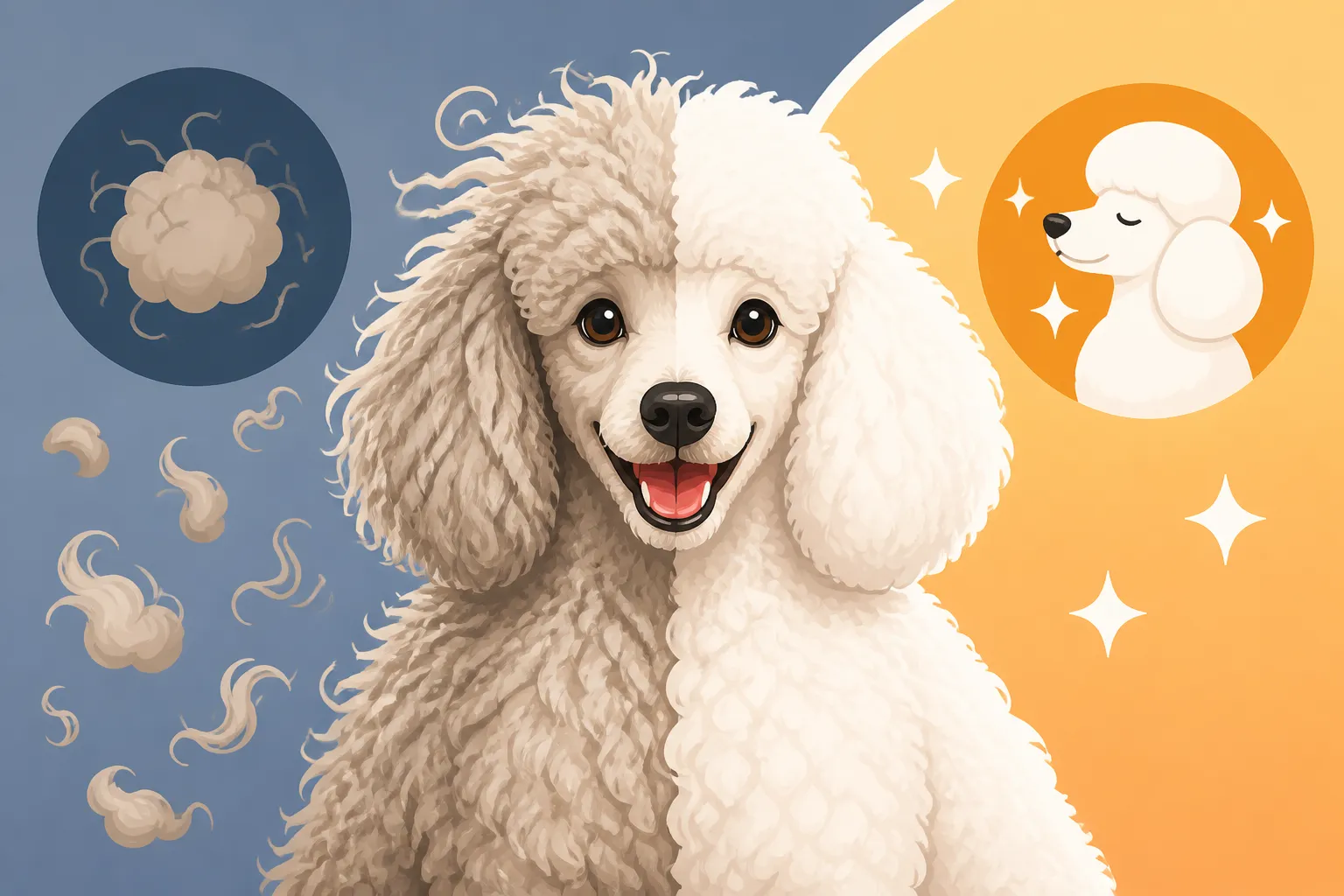
Getting Through a Poodle’s Coat Change
Oh, the Poodle coat change! If you're currently wrestling with what feels like a sentient mat factory attached to your otherwise delightful Poodle, you are absolutely not alone. This guide is here to walk you through that confusing and often frustrating period when your fluffy puppy coat transforms into the dense, adult Poodle hair you'll be managing for years to come.
Understanding the Poodle Coat Transition
That soft, wispy puppy fluff your Poodle arrived with is utterly charming, isn't it? It's so easy to brush, feels like a cloud, and you think, "Ah, this grooming thing isn't so bad!" Then, almost overnight, it feels like a switch flips. Suddenly, every stroke of the brush hits a snag, and those cute little curls start to bind together, forming tenacious knots that seem to appear out of thin air. This isn't your imagination, nor is your Poodle secretly trying to sabotage your efforts; it's the inevitable, and sometimes quite challenging, process of their coat changing from puppy to adult.
The Puppy Coat's Soft Beginnings
When your Poodle is a young pup, typically up to about six months of age, their coat is predominantly soft, fine, and relatively easy to manage. It's often thinner, with a more open curl structure, making it less prone to serious matting, especially with regular, but not necessarily intensive, brushing. You might even find yourself enjoying those quick brush-outs, thinking you've got the hang of this Poodle grooming thing. This early coat is lovely, requires minimal effort, and often lulls new owners into a false sense of security about what's to come. It’s a wonderful, low-maintenance phase that sets the stage for future challenges.
Think of it like a human baby's fine hair versus a teenager's thick, adult locks. The texture is completely different. The puppy coat simply hasn't developed the density and robust curl pattern that will characterize their adult coat. This means tangles, while they can still happen, are usually surface-level and easily brushed out with a simple pin brush or soft slicker. It's a joyful, carefree time for both you and your Poodle's hair, a phase to cherish before the real work begins.
When the Adult Coat Starts to Emerge
The transition usually begins anywhere from around six months to a year old, though it can vary greatly between individual Poodles, sometimes starting a little earlier or later. This is when the coarser, denser, and more tightly curled adult hair starts to grow in underneath and intermingle with the fading puppy fluff. Imagine two different types of hair trying to occupy the same space and growing at different rates – it's a recipe for entanglement. When a Poodle Puppy Coat Changes is a critical period that requires a dedicated approach.
You'll notice the texture changing first. The coat might feel less silky and more woolly or cottony. The curls will become tighter, and the overall density will increase. What was once easy to comb through now feels like pulling through resistance, even after a thorough brushing session. This emerging adult coat is stronger and more resilient, but its aggressive curl means it's also far more prone to matting. This isn't just a shedding process like many other breeds experience; rather, it's a growing in of new hair that doesn't fall out easily, combined with the lingering puppy coat.
The "Matting Nightmare" Phase
This is where the real struggle begins for many Poodle owners. The "matting nightmare" phase is when the old puppy coat, which is still attached and trying to shed, becomes hopelessly woven and twisted with the new, stronger adult coat coming in. Because Poodles don't shed their hair in the way double-coated breeds do – their hair simply continues to grow – the dead puppy hair gets trapped within the dense adult coat. This creates incredible tangles and solid mats that can be incredibly difficult, and sometimes painful, to remove. Why a Poodle Coat Mats Instead of Shedding is something every Poodle owner quickly learns.
These mats often form quickly and deceptively. One day, you might feel a small knot, and a few days later, it's a solid, felted patch that covers a wide area. Common trouble spots include behind the ears, under the armpits, inside the legs, around the collar area, and near the tail. If left unchecked, these mats can pull on the skin, causing discomfort, irritation, and even skin infections. It's a frustrating period that demands diligence and consistency, but understanding why it happens is the first step to conquering it.
Essential Grooming Strategies During Coat Change
Navigating your Poodle's coat change successfully hinges on a proactive and consistent grooming routine. This isn't the time to slack off or hope for the best; it's the moment to double down on your efforts. Without the right approach, you risk your Poodle developing severe matting that can only be resolved with a complete shave-down, which is stressful for both of you.
Stepping Up Your Brushing Routine
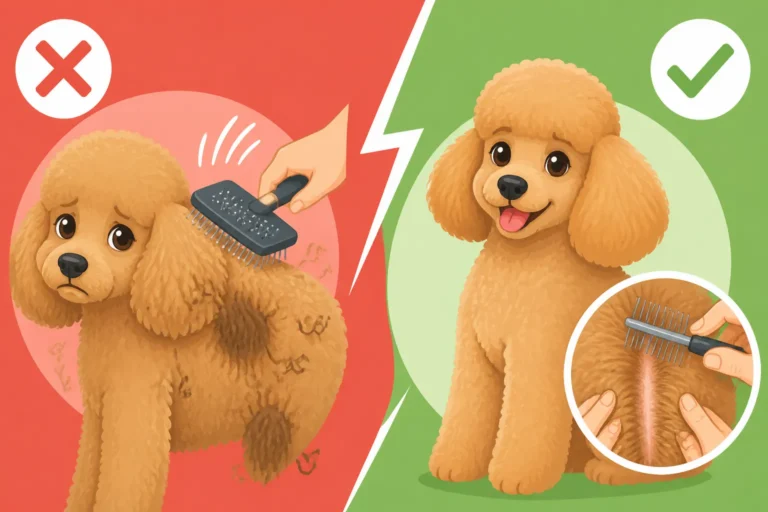
During the coat change, your brushing frequency needs to increase dramatically. What might have been a few times a week for the puppy coat now becomes a daily, sometimes even twice-daily, ritual. And it's not just about running a brush over the top! You need to master the art of "line brushing" to ensure you're getting down to the skin and separating every strand. Line Brushing a Poodle Explained is a technique that involves systematically working through small sections of your Poodle's coat, holding the hair above the section you're currently working on, and brushing from the skin outwards. This ensures no mats are forming underneath the surface layer.
Imagine dividing your Poodle's body into small, manageable squares. Start at the bottom of a leg, or the flank, and work your way up. With one hand, hold a section of hair up and out of the way, exposing the skin below. With your other hand, use a slicker brush and then a comb to brush through the exposed hair, making sure the comb glides smoothly from root to tip. Only once that section is completely clear of tangles do you drop a little more hair from above and repeat the process. This meticulous approach is the only way to effectively tackle the intertwining puppy and adult coats. This daily commitment, while time-consuming, is essential for maintaining comfort and health for your dog.
The Right Tools for the Job
Having the correct grooming tools makes a world of difference during this challenging phase. You can't just rely on a single brush; you'll need a small arsenal to truly be effective.
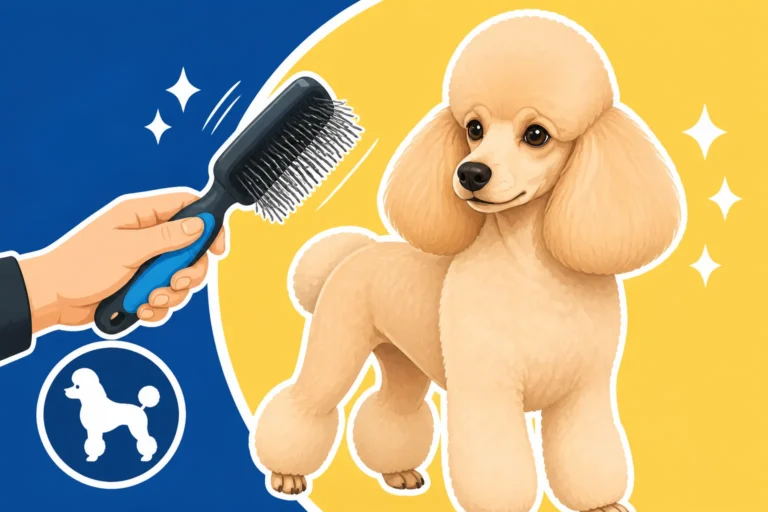
- Slicker Brush: This is your primary tool for detangling and removing loose hair. Look for a good quality slicker brush with firm pins that can penetrate the dense Poodle coat. Brands like Chris Christensen or Activet make excellent slickers that professionals swear by, available on platforms like Amazon or Chewy.
- Metal Greyhound Comb: A sturdy metal comb with both wide and fine-toothed sections is absolutely indispensable. You must be able to comb through the entire coat, from skin to tip, with this comb after using the slicker. If the comb snags, you still have mats. Tools That Reach a Poodle's Undercoat are crucial, and the comb is your mat detector.
- Detangling Spray: A good quality detangling spray can save you a lot of grief. Spritzing the coat lightly before brushing helps to lubricate the hair, making it easier to work through knots and reducing static. There are many excellent detangling sprays specifically formulated for Poodle coats that you can find at pet stores or online.
- Mat Splitter (Optional, Use with Caution): For particularly stubborn mats, a mat splitter can be used, but only with extreme caution and ideally after watching a professional demonstrate its use. These tools are designed to cut through mats without removing too much surrounding hair, but improper use can easily injure your Poodle's skin.
Investing in high-quality tools is worth every penny. Cheap brushes can be ineffective and even damage the coat or irritate the skin. How Often a Poodle Must Be Brushed will depend on the severity of the coat change, but with the right tools, the task becomes much less daunting.
Bathing and Drying Best Practices
Bathing during a coat change can be a minefield if not done correctly. Water can tighten mats, turning small tangles into solid felt. Therefore, it is absolutely paramount that your Poodle's coat is 100% tangle-free before you even think about putting them in the tub. If you bath a matted Poodle, you are almost guaranteed to end up with a coat that requires a full shave-down.
Once thoroughly brushed, use a high-quality shampoo and conditioner specifically designed for dog coats. Lather gently, focusing on thoroughly rinsing all product out, as residue can also contribute to matting. After rinsing, gently squeeze excess water from the coat with your hands or a towel – do not rub, as rubbing will cause instant tangles.
The drying process is just as critical as the bathing. A high-velocity (HV) dryer is an absolute game-changer and, frankly, a necessity for Poodles, especially during coat change. Using a High Velocity Dryer on a Poodle effectively helps to straighten the curls, making it easier to brush and preventing mats from forming as the coat dries. As you dry, continuously brush through the coat with your slicker brush and then comb, ensuring it dries straight and tangle-free. Air drying a Poodle will result in a matted mess every single time. Take your time, work in sections, and ensure every part of the coat is completely dry and brushed out before your Poodle is allowed to run free.
Navigating Challenges and Preventing Disaster
Even with the best intentions and the right tools, the Poodle coat change can feel like an uphill battle. Mats can appear stealthily, and sometimes, despite your best efforts, you might find yourself facing a challenge that feels beyond your home grooming skills. It’s important to know when to push through and when to call in the cavalry.
Identifying and Tackling Early Mats
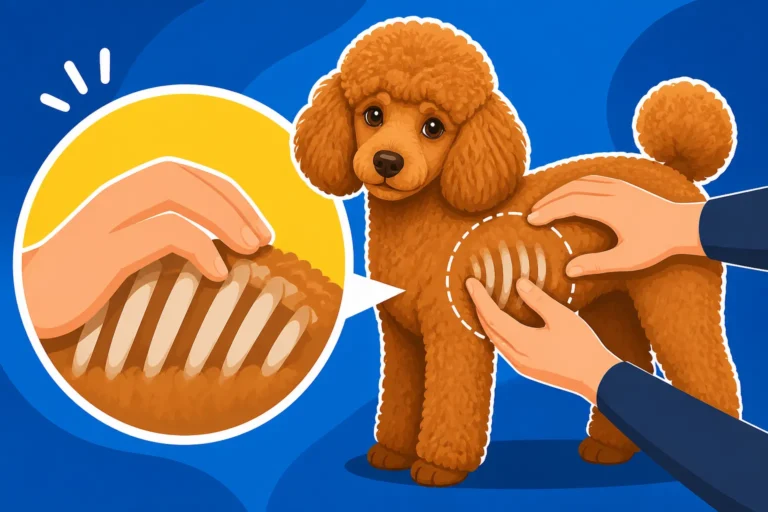
The key to preventing a "matting disaster" is early detection. Make it a habit to run your fingers through your Poodle's coat daily, feeling for any knots or clumps. Pay particular attention to the "hot spots" mentioned earlier: behind the ears, in the armpits, between the legs, and around the tail. These areas move a lot and are prone to friction, making them prime real estate for mats. The Spots Mats Form First on a Poodle are usually the most hidden ones.
If you find a small mat, don't panic. Gently separate the mat from the surrounding hair with your fingers, working from the outside edges inwards. Apply a liberal amount of detangling spray or even a bit of cornstarch to the mat itself. Using the fine-toothed side of your metal comb, or even just the very tip of a slicker brush, gently tease out the individual strands from the outermost edge of the mat. Never pull directly from the skin. It’s a painstaking process that requires patience and a very light touch. If your Poodle shows signs of pain or discomfort, stop immediately. It’s better to get professional help than to traumatize your dog or cause skin irritation. Checking a Poodle's Armpits and Ears for Mats should be part of your daily routine.
When to Seek Professional Help
There comes a point when a mat is too large, too tight, or too close to the skin for you to safely remove at home. This is not a failure on your part; it's a recognition of the limits of home grooming. Severely matted coats can be incredibly painful for your Poodle, pulling on their skin with every movement. Attempting to remove such mats at home can cause clipper burn, skin tears, or even behavioral aversion to grooming.
A professional groomer has the expertise, specialized tools, and knowledge to handle severe matting safely and efficiently. Be prepared for the groomer to recommend a "shave-down" if the matting is extensive. While it might be heartbreaking to see your fluffy Poodle lose their coat, it is often the kindest and safest option for the dog. Why Groomers Shave a Matted Poodle is almost always because the mats are too tight to humanely brush out. A shave-down allows the skin underneath to breathe, heals any potential irritation, and gives you a fresh start with the regrowth. Understand that groomers will often charge a "matting fee" or a "surcharge" for the extra time and effort required for such work, and some may even refuse the dog if the matting is too severe due to welfare concerns. Surcharges Groomers Add for a Matted Poodle are common.
Patience, Persistence, and Positive Reinforcement
The coat change phase can test the patience of even the most devoted Poodle owner. There will be days when you feel like you've brushed for hours only to find new mats appear moments later. It's mentally taxing for you, and it can be physically uncomfortable for your Poodle. Remember that your Poodle isn't being difficult on purpose; they're simply undergoing a natural, albeit challenging, biological process.
Approach grooming sessions with a calm and positive attitude. Keep them relatively short, especially when your Poodle is young or new to the experience. Use plenty of high-value treats and praise to make grooming a positive experience. If your Poodle starts to fuss, take a short break, then try again. If you get frustrated, your Poodle will pick up on that energy, making future sessions even harder. Building a positive association with grooming now will pay dividends for the rest of their life. Think of it as a bonding experience, even if it's a tough one, that will ultimately lead to a comfortable and healthy Poodle.
Long-Term Coat Care After the Transition
Once your Poodle successfully navigates the coat change, you can breathe a sigh of relief. While the intensity of daily mat warfare will subside, the need for consistent grooming certainly doesn't disappear. Poodles have a non-shedding, continuously growing coat that demands ongoing attention to remain healthy and beautiful.
Maintaining the Adult Poodle Coat
The adult Poodle coat, while denser and more prone to matting than the puppy coat, is generally more predictable once the transition is complete. You’ll still need a regular brushing routine, typically every other day or every few days, depending on the length of their clip and their activity level. The line brushing technique remains essential, as mats can still form quickly in areas of friction or neglect.
Many pet Poodle owners opt for shorter, easier-to-manage clips like a kennel clip or lamb clip, which reduces the frequency and duration of at-home grooming required. Regardless of the clip, regular professional grooming every 4-8 weeks is highly recommended. This ensures your Poodle's coat is properly washed, dried, clipped, and checked for any emerging issues that you might miss at home. It's a partnership between your at-home efforts and the groomer's professional care that keeps an adult Poodle looking and feeling great.
Nutritional Support for Coat Health
While grooming is paramount, diet also plays a significant role in the overall health and quality of your Poodle's coat. A healthy coat starts from within. Look for high-quality dog foods that list real meat as the first ingredient and contain essential fatty acids like Omega-3 and Omega-6. These fatty acids are crucial for skin health, which directly impacts coat quality, shine, and even resilience against matting.
Many premium dog food brands, available on platforms like Chewy or through specialized pet stores, focus on providing a balanced nutritional profile for optimal coat and skin health. Some owners even add supplements like fish oil, with veterinary guidance, to boost their Poodle's Omega intake. For those interested in fresh food options, services like Ollie offer pre-portioned, human-grade meals that can contribute to a lustrous coat. A dull, dry, or brittle coat can sometimes be an indicator of nutritional deficiencies, so always discuss your Poodle's diet with your veterinarian if you have concerns.
Recognizing Other Coat Concerns
Once the coat change is over, it's important to differentiate between typical matting and other potential coat and skin issues. While the adult coat is more robust, Poodles are prone to certain dermatological conditions that can manifest as coat problems.
- Allergies: Poodles can suffer from environmental or food allergies, leading to excessive itching, scratching, skin inflammation, and secondary skin infections. This irritation can make them scratch or chew at their coat, leading to mats and hot spots. Environmental Allergies in a Poodle are common.
- Sebaceous Adenitis: This is an inherited autoimmune skin disease common in Standard Poodles, which affects the sebaceous glands, leading to dry, flaky skin, hair loss, and dull, brittle hair that mats easily. It can often be mistaken for simple matting or dry skin initially.
- Other Skin Infections: Bacteria, yeast, or fungal infections can also cause skin irritation, greasy or flaky skin, and changes in coat texture that make it more prone to matting.
If you notice persistent itching, redness, sores, unusual hair loss, or a foul odor coming from your Poodle's coat or skin, it's crucial to consult your veterinarian. These symptoms are not part of a normal coat change and require veterinary diagnosis and treatment. Regular grooming allows you to closely inspect your Poodle's skin and coat, helping you catch any potential issues early.
| Coat Type | Age Range (Approx.) | Texture | Matting Tendency | Brushing Frequency (Home) | Professional Grooming |
|---|---|---|---|---|---|
| Puppy Coat | 8 weeks – 6-12 months | Soft, fine, wispy, open curl | Low | 2-3 times/week | Every 6-8 weeks |
| Transitioning | 6-18 months | Mix of soft puppy and coarse adult | Very High | Daily (1-2 times) | Every 4-6 weeks |
| Adult Coat | 18 months + | Dense, coarse, tightly curled, woolly | Moderate to High | Every 2-3 days | Every 4-8 weeks |
Disclaimer
This article is for general informational purposes only and does not constitute professional advice. Laws, prices and regulations vary by location and change over time. Consult a qualified professional for guidance on your specific situation.