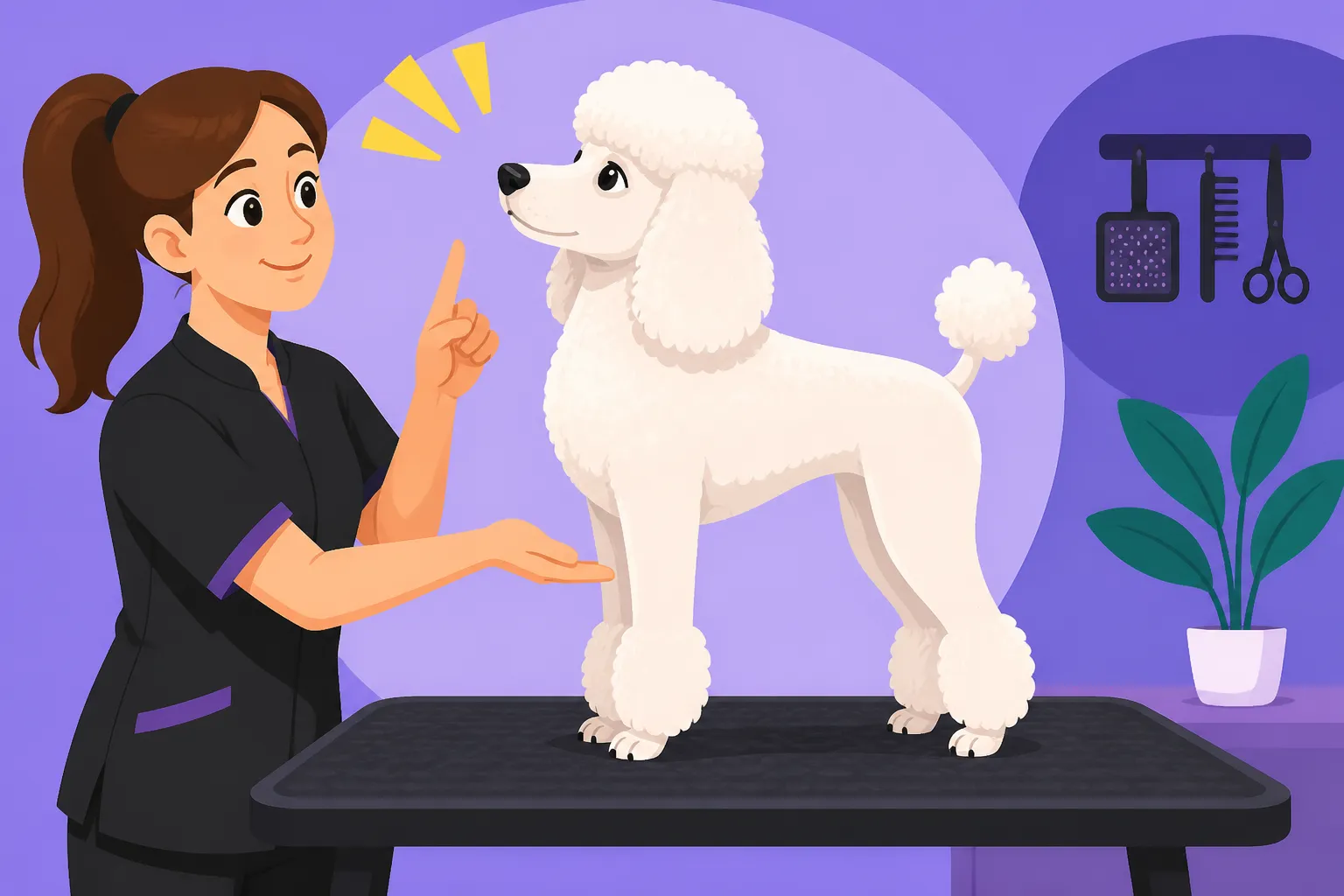
Teaching a Poodle to Stand for the Groomer
It's a familiar scene: you've got your beautiful Poodle on the grooming table, ready to tackle that ever-growing coat, and all they want to do is sit, spin, or try to leap off. This struggle isn't just frustrating for you; it's often a source of stress and anxiety for your Poodle and their groomer. This comprehensive guide will walk you through effective, positive reinforcement techniques to teach your Poodle to stand calmly and confidently for grooming, turning what can be a wrestling match into a much more cooperative experience.
Why Standing Still Is So Hard for Poodles
Before we dive into training, it’s important to understand why standing still on a grooming table can feel like an impossible task for many Poodles. It's not usually defiance; it's often a mix of natural instincts, learned behaviors, and environmental stressors.
The Poodle's Natural Inclination to Move
Poodles are intelligent, active dogs, originally bred as water retrievers. They're quick-thinking and often have a keen sense of their surroundings. This means they are naturally inclined to investigate, move, and respond to stimuli. Being asked to stand perfectly still, often for extended periods, goes against their inherent nature. Imagine a human trying to stand perfectly still for an hour in a confined space – it's tough, right? For a dog whose primary way of interacting with the world is through movement and sniffing, it's even more so. Their energy, especially as puppies, can make them seem like a coiled spring just waiting for an excuse to bounce. This isn't them being "bad"; it's just them being a Poodle!
Fear, Anxiety, and Negative Associations
For many Poodles, grooming can become a source of fear or anxiety. Perhaps a past experience was unpleasant—a painful mat being brushed out, an unfamiliar sound startling them, or even just the initial awkwardness of being restrained. They might associate the grooming table with uncomfortable sensations, the whir of clippers, or the blast of a high-velocity dryer. When a dog is fearful, their natural response is often to try to escape, which manifests as wiggling, pulling, or trying to jump down. It's a survival instinct kicking in, not a deliberate act of disobedience. Understanding Reading a Poodle's Body Language can help you spot these early signs of discomfort.
The Grooming Table: A Unique Environment
Think about it: the grooming table is an elevated, often slippery, and sometimes wobbly surface. It’s not like the floor where they have solid ground under their paws. This unstable footing can make even a confident dog feel a bit uneasy, let alone one already prone to anxiety. Plus, there are strange tools, loud noises, and hands moving all over their body. The restraint loop, while a safety measure, can also feel constricting and alarming to a dog not accustomed to it. For some Poodles, being on a table can feel isolated, removed from their human's reassuring presence on the floor, amplifying any existing fears.
Starting Early: Puppy Foundations for Grooming Co-operation
The single best thing you can do to ensure your Poodle grows up to be a cooperative grooming client is to start early. Puppyhood is a critical window for socialization and conditioning, setting the stage for a lifetime of positive experiences.
Early Handling and Touch Conditioning
From the moment you bring your Poodle puppy home, make handling a normal, pleasant part of their day. Gently touch their paws, ears, tail, and muzzle. Lift their lips to check their teeth, and run your fingers through their coat. Don't just do this when you're grooming; do it during playtime, while they're relaxing, or when they're getting cuddles. Pair these touches with high-value treats and praise. The goal is for your puppy to associate human touch, especially in potentially sensitive areas, with good things. This foundational work is crucial for building trust and tolerance. A structured puppy program, like those offered by BAXTER & Bella, often includes guidance on this essential early handling. For more in-depth advice on getting your puppy used to being touched, check out Getting a Poodle Puppy Used to Being Handled.
Positive Reinforcement for Calmness
Throughout all your early handling and training, focus exclusively on positive reinforcement. Reward any moment of stillness or calm acceptance. Even if it’s just a second of not wiggling, mark that moment with a "yes!" or a click, and follow it immediately with a super tasty treat. Avoid scolding or punishing your Poodle for wiggling, as this will only increase their anxiety and create negative associations with grooming. Remember, Why Harsh Handling Breaks a Poodle is a real concern, especially for sensitive breeds like Poodles. You want them to want to be on the table, not to fear it. Keep sessions short, fun, and always end on a positive note.
Introducing the Grooming Table or Elevated Surface
Once your puppy is comfortable with general handling, introduce them to an elevated surface that mimics a grooming table. This could be a sturdy coffee table, a workbench, or an actual small grooming table. Start by simply placing them on the surface for a second, giving them a treat, and taking them off. Gradually increase the duration. Again, use high-value treats and praise for any calm standing. Practice luring them into a stand with a treat, and reward them for staying there, even if it's just for a few seconds initially. Make the table a "happy place" where good things happen, not just where stressful grooming tasks occur.
Essential Tools and Setup for Home Grooming Training
Having the right tools and a safe, comfortable setup is half the battle when teaching your Poodle to stand for grooming. It’s not just about the clippers; it’s about creating an environment that minimizes stress and maximizes safety.
Choosing the Right Grooming Table or Surface
You don't necessarily need a professional grooming table to start, but an elevated, stable surface is essential. A sturdy table with a non-slip mat (like a bath mat or yoga mat) can work initially. As your Poodle grows, investing in a proper grooming table is highly recommended. Look for one with adjustable height and a non-slip surface. Brands like Master Equipment or Flying Pig offer durable options, often available on Amazon. The stable surface gives your Poodle confidence, preventing them from feeling wobbly or insecure, which can lead to anxiety and wiggling. Ensure the table is appropriate for your Poodle's size – a tiny Toy Poodle won't feel secure on a massive Standard Poodle table, and vice-versa.
Grooming Restraints and Safety
A grooming loop (or noose) is vital for safety, but it must be introduced correctly. Never use it to yank or punish your dog. Its purpose is to gently keep them in place and prevent falls, not to force compliance. Introduce the loop gradually:
- Let your Poodle sniff it, then treat.
- Gently place it around their neck for a second, treat, and remove.
- Attach it to the table, and let them stand with it loosely for a few moments, treating frequently.
The goal is for them to see it as a normal, non-threatening part of the grooming process. Always stay with your Poodle when they are on the table with a restraint, as leaving them unsupervised can lead to injury if they try to jump off. For more general guidance on the gear you'll need, check out Grooming Tools a Poodle Owner Must Buy.
Treats, Toys, and Distractions
High-value treats are your best friend during grooming training. These are treats your Poodle absolutely loves – think small pieces of cooked chicken, cheese, or specialized training treats. Have a plentiful supply ready. Sometimes, a long-lasting chew or a LickiMat smeared with peanut butter (xylitol-free!) can serve as a fantastic distraction, keeping your Poodle occupied while you work. Interactive toys, especially those that dispense treats slowly, can also be useful for short intervals. Remember that for a clever Poodle, novelty and high reward are key to maintaining engagement.
Step-by-Step Training: The "Stand" Cue for Grooming
Once you have your setup and tools, it's time to systematically teach your Poodle to stand calmly. Break down the process into tiny, achievable steps, always using positive reinforcement.
The "Stand" Cue: Luring and Shaping
Start on the floor, where your Poodle is comfortable.
- Lure: Hold a treat at your Poodle's nose and move it slowly forward and slightly upward, encouraging them to stand up from a sit or lie down position. As soon as all four paws are on the ground and they are standing, say "Stand" and give them the treat. Repeat this several times.
- Fade the Lure: Once they reliably stand with the lure, start making the hand motion smaller and less reliant on the treat in your hand. Soon, you'll be able to use just your hand signal and verbal cue.
- Introduce the Table: Once they understand "Stand" on the floor, move to your grooming table. Lure them onto the table (or lift them if they are small) and immediately ask for a "Stand." Reward heavily for compliance. The BAXTER & Bella online puppy program offers excellent step-by-step video tutorials for luring and shaping commands, which can be easily adapted for this context.
Building Duration: Standing Longer and Longer
Getting them to stand is one thing; getting them to stay standing is another. This is where patience comes in.
- Start Small: Ask for a "Stand," reward immediately if they hold it for even one second. Release them with a "Free" or "Okay" cue.
- Gradual Increase: Slowly increase the duration. If they can stand for one second, try for two. If they break position, simply reset and try again. Don't punish.
- Add Distractions (Minor): Once they can stand for a short duration (e.g., 5-10 seconds), introduce very minor distractions. Gently touch their back. Run your hand over their side. These are preliminary steps to Training a Poodle to Enjoy Grooming. Always reward for maintaining the stand through the distraction. The key here is consistency; regular, short training sessions are far more effective than infrequent, long ones.
Desensitizing to Grooming Tools
This is where many Poodles become anxious. Introduce grooming tools slowly and positively.
- Introduce Clippers (Off): Let your Poodle sniff the clippers (turned off), then treat. Gently touch their body with the clippers (still off), then treat.
- Introduce Clippers (On, Away): Turn the clippers on in another room or far away so they hear the sound without feeling the vibration. Treat. Gradually move them closer over several sessions.
- Introduce Clippers (On, Touch): Once your Poodle is calm with the sound, turn them on and gently touch the back of the clippers (not the blade) to their body, in non-sensitive areas like their shoulder. Treat immediately. Build up to touching the actual clipper blade to the hair for a fraction of a second, then immediately reward. This detailed process is often referred to as Desensitizing a Poodle to Clippers.
- Repeat for other tools: Do the same for brushes, combs, and the dryer. For the dryer, start with it on a low setting, far away, and gradually bring it closer, always pairing it with treats. Refer to Teaching a Poodle to Accept the Dryer for more specifics.
| Training Stage | Goal | Example Activity | Key Reinforcement Strategy |
|---|---|---|---|
| Foundation | Positive association with touch & elevation | Gentle full-body handling, brief table placements | High-value treats, praise, play |
| "Stand" Cue | Understand and perform "stand" on cue | Luring into stand on floor & table | Timed treats for correct position |
| Duration | Maintain stand for increasing periods | Gradually extend time on table before treat/release | Frequent treats for stillness |
| Tool Desensitization | Calmness around grooming tools | Introduce tools (off/on) away then closer, touch | Treat after each calm interaction |
| Integration | Combine stand with grooming actions | Short bursts of brushing while Poodle stands | Continuous praise & intermittent treats |
Addressing Common Challenges and Reluctance
It's inevitable that you'll encounter some bumps along the road. Don't get discouraged! Understanding the challenge helps you overcome it.
Dealing with Wiggling and Resistance
Wiggling is usually a sign of discomfort, boredom, or an attempt to escape.
- Identify the Cause: Is your Poodle fearful (ears back, tail tucked)? Or are they just bored and restless?
- Fear-Based Wiggling: If it's fear, you've gone too fast. Scale back. Make the environment even more positive. Use higher-value treats, shorter sessions, and more breaks. Revisit desensitization to specific tools. Sometimes, a gentle body wrap or Thundershirt can help soothe an anxious Poodle.
- Boredom/Restlessness: If it's boredom, try a LickiMat or a stuffed Kong. Increase the frequency of rewards. Make grooming sessions more engaging with praise and varied tasks. Consider if your Poodle has had enough mental and physical exercise before the grooming session. A tired Poodle is a cooperative Poodle! Ensuring they have had their Daily Exercise for a Standard Poodle or Daily Exercise for a Toy Poodle before a grooming session can make a huge difference.
If your Poodle consistently tries to jump off, ensure your grooming loop is properly adjusted and secure (but not tight), preventing falls. Never tie them and walk away. If they struggle excessively, stop, reset, and try again when they are calmer.
Overcoming Fear of Specific Tools
Some Poodles develop a phobia of particular grooming tools – the nail grinder, the clippers, the dryer.
- Break It Down: If your Poodle fears the nail grinder, for instance, start by just showing it to them (off), treat. Touch their paw without the grinder, treat. Touch the back of the grinder (off) to their paw, treat. Turn it on in another room, treat. Gradually bring it closer. This is a classic desensitization process.
- Counter-Conditioning: Pair the feared item with something incredibly positive. Every time the clippers turn on, a delicious piece of chicken appears. The goal is to change their emotional response from fear to anticipation of a treat.
- Patience and Persistence: This isn't a quick fix. It can take weeks or even months of consistent, positive exposure to change a strong negative association. If you rush it, you risk setting back your progress.
When to Seek Professional Help
If your Poodle's fear or aggression around grooming is severe, don't hesitate to seek professional help.
- Certified Professional Dog Trainer (CPDT): A trainer specializing in positive reinforcement can provide hands-on guidance and tailor a plan for your specific Poodle. They can help you identify triggers and implement effective counter-conditioning techniques.
- Veterinary Behaviorist: For extreme anxiety, fear, or aggression, a veterinary behaviorist might be necessary. They are veterinarians with specialized training in behavior and can diagnose underlying medical or behavioral conditions that contribute to grooming issues, and in some cases, prescribe medication to help manage severe anxiety during the re-training process. Remember, a professional groomer may also offer "cooperative grooming" sessions that focus purely on positive experiences without attempting full grooms until your Poodle is ready.
Maintaining Grooming Manners Over a Poodle's Lifetime
Training your Poodle to stand for grooming isn't a one-and-done task. It's an ongoing commitment that requires consistency and reinforcement throughout their lives.
Consistency Is Key: Regular Practice
Poodles, being as smart as they are, thrive on routine and consistency. They learn quickly, but they can also pick up on inconsistencies. Even if your Poodle is a pro at the groomer, continue to practice at home between appointments. Short, daily "mini-grooming" sessions – a quick brush, a check of their ears and paws – will reinforce their good habits. This not only keeps them accustomed to the process but also allows you to catch any mats early. How Often a Poodle Must Be Brushed is a question that requires a consistent answer, regardless of their cooperation level. This regular practice makes the actual grooming appointments much smoother.
Making Grooming a Positive Routine
Always strive to make grooming a positive experience. This means:
- Rewards: Continue to use treats and praise, even for an adult Poodle who is generally cooperative. A small, high-value treat after a brushing session still reinforces the positive association.
- Breaks: Don't expect your Poodle to stand for an hour straight. Offer short breaks, especially during longer sessions. Let them hop down, stretch, get a drink, and then get back on the table.
- Comfort: Ensure your Poodle is comfortable throughout. Check the temperature of the dryer, avoid pulling their hair, and be gentle with sensitive areas. The experience should be as pleasant as possible. Remember, a Poodle's coat The Poodle Coat and Why It Never Stops Growing means regular grooming is not optional, so making it enjoyable is critical.
Transitioning to the Professional Groomer
When your Poodle is confidently standing and accepting handling and tools at home, it's time to introduce them to the professional groomer.
- Meet & Greet: Arrange a "meet and greet" session with the groomer where no actual grooming happens. Your Poodle just gets to visit, get treats from the groomer, and explore the salon.
- Short Sessions: Start with very short grooming sessions, perhaps just a bath and a face trim. Communicate with your groomer about your Poodle's progress and any sensitivities. A good groomer will appreciate your efforts and work with you.
- Positive Reinforcement at the Salon: Ask your groomer to continue using positive reinforcement, treats, and praise. A reputable groomer will always prioritize your dog's comfort and well-being.
- Consistency in Commands: Use the same verbal cues (e.g., "Stand," "Stay") that you use at home, so your Poodle understands what's expected.
Remember, the goal is not perfection, but cooperation. A Poodle who tolerates grooming calmly and without significant stress is a win for everyone involved. Your hard work in training will pay off in a happier, healthier Poodle and much less stressful grooming sessions for years to come.
Disclaimer
This article is for general informational purposes only and does not constitute professional advice. Laws, prices and regulations vary by location and change over time. Consult a qualified professional for guidance on your specific situation.