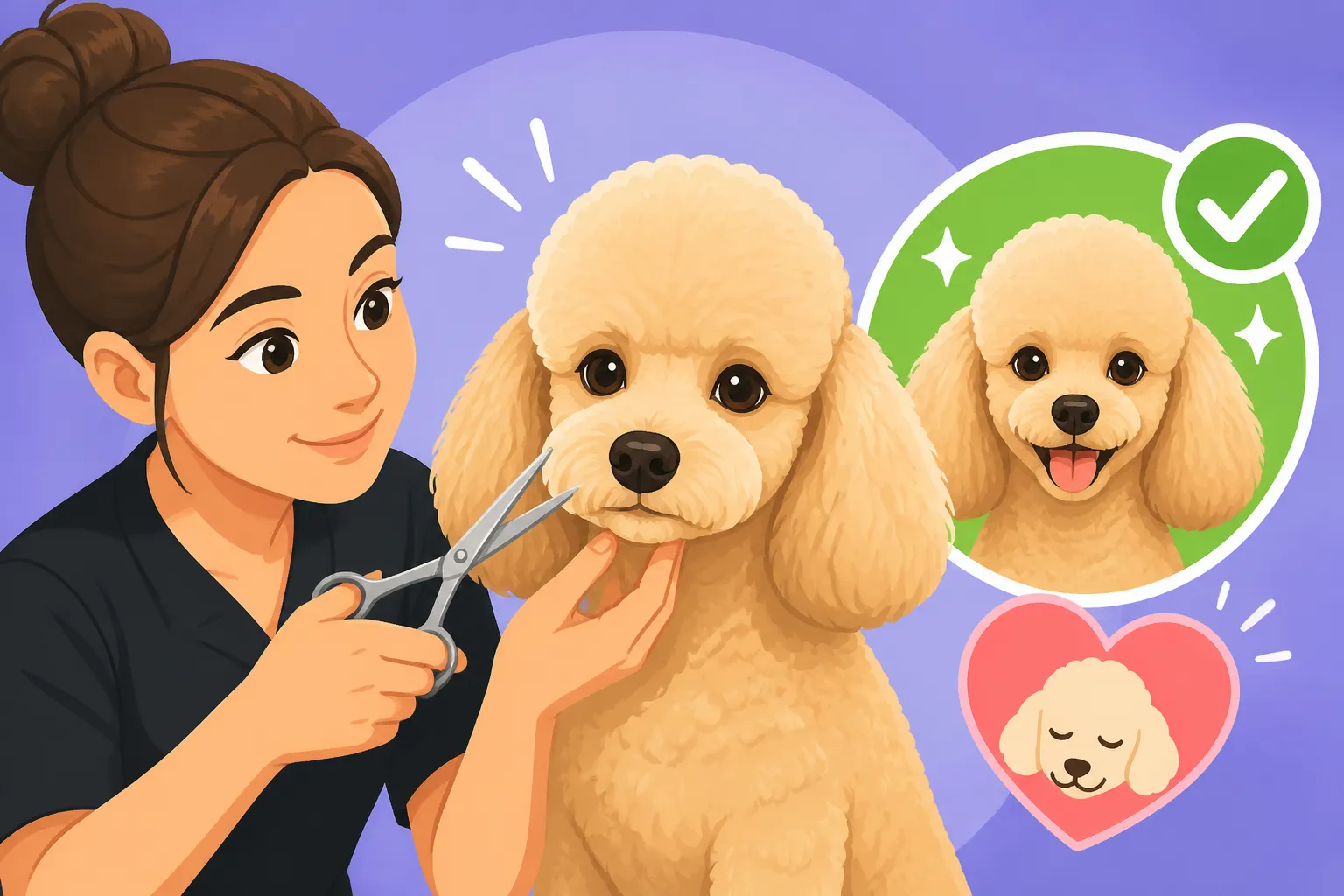
Teaching a Poodle to Tolerate Face Trimming
One of the most common frustrations for Poodle owners is the dreaded face trim. Our Poodles are such loving, intelligent creatures, but when that buzzing clipper or sharp pair of scissors comes near their delicate eyes and expressive muzzles, it can feel like you've suddenly transformed into a terrifying monster! It's not just your Poodle being "naughty"; they're often genuinely scared or uncomfortable, making grooming a stressful ordeal for everyone. This comprehensive guide will walk you through empathetic, step-by-step methods to help your Poodle not just tolerate, but perhaps even enjoy, their regular face trims.
Understanding Why Face Trimming Is Such a Challenge for Poodles
It's easy to feel like your Poodle is just being stubborn when they yank their head away, clamp their jaws shut, or even growl when the clippers come out. But from their perspective, there are very real, very legitimate reasons why face trimming can be a scary, uncomfortable experience. It's crucial to approach this with empathy, not frustration, to build trust and cooperation.
The Sensory Overload: Eyes, Ears, and Whiskers
Think about all the sensitive spots on a Poodle's face. Their eyes are incredibly vulnerable, and even a slight misstep with scissors or clippers can cause a serious injury. Naturally, they're going to be wary of anything sharp or buzzing coming close to them. Then there are their ears, which are already prone to issues due to their drop-ear structure. The sound of clippers, especially those high-pitched ones, can be amplified and feel quite jarring to their sensitive hearing. Imagine a loud, vibrating object inches from your ear – it's unsettling!
What about their whiskers? Many people don't realize how important whiskers are to a dog's sensory perception. They're tactile hairs, deeply rooted and connected to nerves, helping them navigate their environment, especially in low light or close quarters. While trimming whiskers is often part of a Poodle's show groom, repeatedly shaving them down can feel disorienting or even irritating to some pets. Even just the sensation of hair being pulled by a dull blade or a snagged comb can be enough to make a Poodle associate face trims with discomfort. It's a lot for their little (or big!) faces to process, and it's no wonder they often react with avoidance or fear.
Negative Past Experiences and Learned Fear
Poodles are incredibly smart. They remember things, both good and bad. If your Poodle has had even one negative experience with face trimming, that memory can stick around for a long time. Maybe a previous groomer was too rough, accidentally nicked them, or held their muzzle too tightly. Perhaps you, in a moment of exasperation, got a little too firm, or the clippers tugged at a knot. Even a loud unexpected noise during a trim can create a negative association. These aren't minor incidents to a Poodle; they can be genuinely traumatic.
Once a negative association is formed, it's not simply stubbornness; it's a learned fear response. Your Poodle isn't trying to be difficult; they're trying to protect themselves from what they perceive as a threat or discomfort. This is why a gentle, patient approach, focusing on positive reinforcement and rebuilding trust, is absolutely essential. Forcing the issue will only escalate their fear and make future grooming sessions even harder. Instead, we need to show them that face trimming can be a neutral, or even pleasant, experience. If you've ever wondered Why Harsh Handling Breaks a Poodle, this is a prime example: their sensitive nature makes them highly susceptible to developing fear responses from even slightly negative experiences.
Gathering Your Arsenal: Tools and Environment for Success
Before you even think about putting clippers or scissors near your Poodle's face, you need to set yourself up for success. This isn't just about having the right tools, it's about creating an atmosphere that makes your Poodle feel safe and secure. Think of it as preparing for a delicate operation, not just a quick trim.
Choosing the Right Grooming Tools
The tools you use can make a huge difference in your Poodle's comfort level. For face work, you'll generally be using either clippers or scissors, or a combination of both.
- Clippers: For most of the face, especially around the muzzle and cheeks, small, quiet clippers are usually preferred. Look for clippers that are specifically designed for delicate work or for pets, as they tend to be less noisy and vibrate less intensely. A cordless option can also be less intimidating without a wire dragging around. A #10 or #15 blade is common for Poodle faces, providing a clean, short look without being excessively close. If your Poodle is highly noise-sensitive, search on a site like Amazon for "low noise pet clippers" and read reviews carefully. Remember that dull blades pull hair, which is painful. Keep your blades sharp or have spares. Replacing Clippers and Blades for a Poodle is an ongoing cost, but it's crucial for comfort.
- Scissors: For around the eyes, ears, and for shaping a topknot or longer beard, blunt-nosed grooming scissors are safer. Never use regular household scissors, which can be too sharp and pointy for delicate areas. Thinning shears can also be useful for blending and softening lines. Always ensure your scissors are sharp enough to cut cleanly without bending or pulling the hair.
- Other Essentials: You'll also want a slicker brush and a metal comb for brushing out any tangles before trimming. A high-quality greyhound comb is fantastic for Poodle coats. Keep styptic powder or a styptic pencil on hand just in case of a tiny nick (it happens to even the pros!). And, of course, plenty of high-value treats – small, soft, and easy for your Poodle to swallow quickly without needing to chew much. Consider Treats Small Enough for a Toy Poodle even for larger Poodles, as you'll be giving many.
Setting the Scene: Calm and Secure
The environment where you groom your Poodle is just as important as the tools. A chaotic, noisy, or slippery space will only heighten their anxiety.
- Quiet Zone: Choose a quiet room where you won't be interrupted. Turn off the TV, silence your phone, and make sure other pets or children won't suddenly burst in. A calm atmosphere promotes a calm Poodle.
- Non-Slip Surface: Your Poodle needs to feel stable and secure. A grooming table with a non-slip surface and a grooming arm (even a small, portable one) is ideal. If you don't have a grooming table, use a sturdy, waist-high surface covered with a non-slip mat or towel. This prevents them from slipping, which can be scary and lead to injury. A kitchen counter with a good mat can work in a pinch for smaller Poodles.
- Good Lighting: You need to see clearly what you're doing, especially around the eyes and delicate areas. Position yourself and your Poodle so you have ample, bright light.
- Timing is Everything: Don't attempt a face trim when your Poodle is bursting with energy or feeling overly playful. A Poodle that has had a good walk or a stimulating play session beforehand, like some Scent Games That Stretch a Poodle's Mind, will be more relaxed and ready to cooperate. They should be tired but still alert enough to take treats and focus. Avoid times when they're overly sleepy or groggy, as they might be more irritable. Remember, the goal is a positive, calm experience, not a wrestling match.
The Gentle Art of Desensitization and Counter-Conditioning
This is where the real work begins, and it's a marathon, not a sprint. We're not just trying to get them to put up with face trimming; we're aiming for them to actively tolerate it, perhaps even finding it a pleasant interaction because of the rewards involved. This involves two key training principles: desensitization and counter-conditioning.
Starting Small: Touch and Treat
The foundation of success lies in breaking down the grooming process into tiny, non-threatening steps. Forget the clippers and scissors for now. We're just focusing on touch.
- Positive Touch: Start by simply touching your Poodle's face, muzzle, forehead, and around their eyes and ears with your hands. Do this gently, calmly, and for very short periods (just a few seconds). Immediately follow with a high-value treat and verbal praise ("Good boy!" or "Good girl!"). Repeat this many times a day, building up to longer durations. You're teaching them that hands near their face equal good things. This is a foundational step, much like Getting a Poodle Puppy Used to Being Handled.
- Introducing Tools (Sight & Sound): Once your Poodle is comfortable with your hands, introduce the sight of the grooming tools. Place the clippers (off) or scissors on the counter nearby while you're doing your touch-and-treat exercise. Let them see them, sniff them, but don't bring them close to their face yet. Reward for calm behavior.
- Sound Association: Next, introduce the sound of the clippers. Turn them on in another room, far away, so it's barely audible. As soon as you turn them on, immediately give your Poodle a treat. Turn them off, no treat. Repeat. Gradually, over days or weeks, move the clippers closer, always pairing the sound with treats. The goal is for them to hear the clippers and think, "Yay, treats!" rather than "Oh no, fear!" This process is essentially Desensitizing a Poodle to Clippers.
- Vibration Introduction: With the clippers off, gently touch the back of your Poodle's neck or shoulder with the side of the clippers. Reward. Then, with the clippers on (but still far from the face), touch their body (shoulder, back) for a split second, then treat. Build up the duration and gradually move closer to the face, always monitoring their comfort and retreating if they show signs of stress.
Gradual Introduction of Tools
Now that your Poodle is more comfortable with the presence and sound of the tools, it's time to bring them into contact with their face, but in the gentlest way possible.
- Clippers on the Muzzle: With the clippers on, start by gently touching the side of their muzzle, away from their eyes, for a split second. Treat immediately. If they stay calm, repeat. Slowly increase the duration of the touch and the area you cover. Work on one side, then the other. Keep sessions extremely short – literally 30 seconds to a minute – and always end on a positive note.
- Working Around the Eyes: This is often the trickiest part. Use small, blunt-nosed scissors. Start by holding the scissors near their eye (not touching), make a quiet "snip" sound away from them, and immediately give a treat. Gradually, bring the closed scissors closer to the eye. Then, gently hold the skin taut with one hand and make a tiny snip on a single strand of hair, far from the eye, rewarding immediately. You might only get one snip per session at first, and that's perfectly okay. Don't rush.
- Ear Work: For the hair on the ear flaps or around the ear canal, similar steps apply. Start with gentle touch, then introduce the clippers (off, then on far away), then gradually move to brief contact and short trims, always with positive reinforcement. For detailed guidance on specific areas, remember that resources for Teaching a Poodle to Stand for the Groomer will often cover handling sensitive areas as well.
Incorporating a Training Program or Resource
Sometimes, you need a little extra guidance, and that's perfectly normal! There are fantastic structured training programs out there that can walk you through cooperative care for grooming. For example, online puppy schools often include detailed sections on desensitization to grooming tools, even for adult dogs. Programs like BAXTER & Bella’s online puppy school often emphasize positive, fear-free methods, providing videos and step-by-step instructions that can be incredibly helpful for owners struggling with grooming. They teach you to approach grooming as a partnership, using techniques like "choice" and "start button behaviors" where your dog gives you a signal when they're ready for the next step.
These programs teach you to be systematic and patient, reinforcing that your Poodle’s comfort is paramount. They also provide frameworks for consistent practice, which is key. Remember, building these positive associations takes time, consistency, and a wealth of high-value rewards. Don't expect miracles overnight. Celebrate tiny victories – a split second of tolerance, a slightly less resistant head tilt. Every positive interaction builds trust and reduces fear.
Overcoming Obstacles and Maintaining a Positive Grooming Routine
Even with the best intentions and the most careful desensitization, you're bound to hit a few bumps in the road. It's how you navigate these obstacles that truly determines your long-term success. The goal is to build a foundation of trust and consistency so that face trimming becomes just another routine, low-stress part of your Poodle's life.
What to Do When Your Poodle Resists
Resistance is a sign that your Poodle is uncomfortable, scared, or perhaps just having an off day. The absolute worst thing you can do is force the issue. Forcing them will quickly undo all your hard work and reinforce their fear.
- Go Back a Step: If your Poodle shows signs of stress (pulling away, lip licking, yawning excessively, tense body, growling, snapping), immediately stop the current action. Revert to an easier step where they were comfortable. For example, if they flinch at the clippers near their eye, go back to touching their muzzle. If they resist that, go back to simply touching their face with your hand, rewarding heavily. The goal is to always stay below their threshold of fear.
- Identify Triggers: Try to pinpoint exactly what caused the resistance. Was it the sound? The vibration? The sensation of the blade? The proximity to their eye? Understanding the trigger helps you focus your desensitization efforts. Maybe your Poodle needs more work on Desensitizing a Poodle to Clippers sound before moving closer.
- Keep it Short: Sometimes, you're simply asking for too much, too soon. Even a brief, one-second touch or a single snip, followed by a reward, is a huge success. End the session there, on a positive note, even if you feel like you haven't "done enough." This builds confidence for the next time.
- Take a Break: If your Poodle is truly distressed, it's okay to put the tools away and try again later that day or the next. A calm you leads to a calm Poodle. If you're feeling frustrated, your Poodle will pick up on that energy.
| Resistance Sign | Possible Reason | Action to Take |
|---|---|---|
| Head pulls away quickly | Startled by movement or proximity | Slow down, use smoother motions, keep tools further away |
| Lip licking, yawning | Stress signal | Stop immediately, give space, revert to an easier step |
| Growling, snapping | Fear, feeling threatened (don't punish this!) | Stop all activity, reassess, consider professional help |
| Turning head completely | Avoidance, discomfort | Reduce pressure, shorten session, reward for any glance |
| Pawing at your hand | Discomfort, trying to push tool away | Observe where pawing occurs, try a different approach |
The Importance of Consistency and Regularity
You can't just practice face trimming once a month before their professional groom and expect perfect cooperation. Consistency is absolutely vital.
- Frequent, Short Sessions: It's far better to do three 1-minute sessions a week than one 15-minute session. Short, frequent exposures keep the positive association fresh and prevent your Poodle from building up anxiety between trims. These little practice moments reinforce that grooming isn't a big, scary event, but a normal, quick part of their life.
- Integrate into Daily Life: Work some facial touching into your daily cuddle time. While watching TV, gently rub their muzzle, touch their ears, or briefly hold a comb to their face, always offering praise and a small treat. This makes the sensations routine and non-threatening.
- Maintain the Positive Association: Even when your Poodle is doing well, never stop the treats and praise. They should always associate grooming with good things. This ongoing positive reinforcement ensures the routine stays pleasant. Remember, for a breed as smart and sensitive as a Poodle, consistency, especially with positive reinforcement, is key to their understanding and cooperation. This echoes principles found in articles like How Long a Poodle Training Session Should Run.
When to Call in Professional Help
Sometimes, despite your best efforts, the fear is too deeply ingrained, or you just can't seem to make progress. There is absolutely no shame in seeking professional help. In fact, it's often the most loving and responsible thing you can do for your Poodle.
- Positive Reinforcement Trainers: A qualified dog trainer who specializes in positive reinforcement and cooperative care can provide invaluable guidance. They can help you refine your techniques, read your Poodle's body language more accurately, and offer strategies tailored to your specific situation. They might also help you with Reading Pain in a Sensitive Poodle which can often be mistaken for simple defiance.
- Veterinary Behaviorists: If your Poodle's fear is extreme, leading to aggressive behaviors (snapping, biting), or if they become completely shut down, a veterinary behaviorist might be necessary. These are veterinarians with specialized training in animal behavior, who can assess if there are underlying medical causes for the fear or recommend medication to help manage severe anxiety while you work on behavior modification.
- Cooperative Groomers: Many professional groomers are now trained in cooperative grooming techniques. They can work with you and your Poodle, often over several short visits, to build positive associations with the grooming process. They understand that not every dog can be forced and will use gentle handling, treats, and patience to get the job done without causing undue stress. Finding a groomer who uses no force is paramount for a sensitive Poodle.
Don't let a difficult face trim become a source of ongoing stress for you or your beloved Poodle. With patience, consistent positive reinforcement, and a willingness to seek professional guidance when needed, you can transform this challenging task into a manageable and even pleasant part of their routine.
Disclaimer
This article is for general informational purposes only and does not constitute professional advice. Laws, prices and regulations vary by location and change over time. Consult a qualified professional for guidance on your specific situation.