What a Poodle Breeder Must Test For
Choosing to bring a Poodle into your home is an exciting journey, but the sheer volume of health information out there can make finding a healthy puppy feel like navigating a minefield. You might feel overwhelmed by all the acronyms and wonder what truly matters when it comes to a Poodle’s long-term well-being. This comprehensive guide is here to cut through the noise, detailing the non-negotiable health tests and screenings every responsible Poodle breeder must conduct to ensure their puppies have the best possible start and a lifetime of health.
The Imperative for Health Testing in Poodle Breeding
When you're looking at a fluffy, adorable Poodle puppy, it's easy to get swept away by their charm. But beneath that beautiful coat lies a complex genetic blueprint. Unfortunately, Poodles, like many purebred dogs, are predisposed to certain inherited health conditions. Ignoring these predispositions during breeding is not only irresponsible but can lead to heartbreaking and costly health battles for unsuspecting families.
Why Genetic Predispositions Demand Diligence
Poodles, whether Standard, Miniature, or Toy, carry genetic legacies that can manifest as serious health issues if breeders aren't careful. These aren't just minor sniffles; we're talking about conditions that can cause chronic pain, blindness, life-threatening emergencies, or require lifelong medication. Conditions like Progressive Retinal Atrophy, which causes inherited blindness in Poodles, or Von Willebrand Disease, a bleeding disorder, are passed down from parent to offspring. Without proper screening, a breeder might unknowingly perpetuate these problems, leading to generations of sick dogs and devastated owners. It’s not about finding a "perfect" dog, as no animal is without some risk, but it is about systematically reducing the odds of preventable inherited diseases through careful, ethical breeding practices.
The Ethical Responsibility of Breeders
A truly responsible Poodle breeder views themselves as a steward of the breed, dedicated to improving health, temperament, and conformation. This commitment goes far beyond simply producing puppies. It means investing time, money, and emotional energy into understanding the genetic health of their breeding stock. They meticulously research pedigrees, perform extensive health screenings, and are transparent with potential puppy buyers about the results. An ethical breeder understands that every puppy they bring into the world is a lifetime commitment and responsibility. They won't just tell you their dogs are "healthy" – they'll show you the proof through official clearances and readily discuss any potential concerns in their lines. This level of integrity is what separates a reputable breeder from someone just looking to make a quick profit, and it's paramount to safeguarding the future of the Poodle breed.
Understanding Poodle Size and Its Impact on Health Concerns
It’s a common misconception that all Poodles, regardless of size, face the exact same health challenges. While some conditions, like certain eye diseases or bleeding disorders, can affect all three varieties, others are far more prevalent in specific sizes due to differences in their breeding histories and physical structures. Recognizing this distinction is crucial for understanding why a breeder for a Toy Poodle will perform different tests than a breeder for a Standard Poodle.
The Unique Vulnerabilities of Each Poodle Variety
Think of it like this: a tall, deep-chested Standard Poodle has a different set of anatomical vulnerabilities than a delicate, tiny Toy Poodle. For instance, the deep chest of a Standard Poodle makes them more susceptible to gastric torsion, often called bloat, which is a life-threatening emergency. On the other hand, the smaller, more refined bone structure of a Toy Poodle makes them prone to issues like luxating patellas (slipping kneecaps) and collapsing tracheas. This isn't to say a Standard can't have a luxating patella, or a Toy can't experience bloat (though it's exceedingly rare for bloat in Toys), but the likelihood and prevalence of these conditions vary dramatically by size. Understanding this helps breeders target their health testing more effectively.
Tailoring Tests to Specific Size-Related Risks
Because of these distinct vulnerabilities, responsible breeders tailor their health testing protocols to the specific Poodle size they breed. A breeder of Standard Poodles will prioritize screening for conditions like Addison's disease and hip dysplasia, while a Toy Poodle breeder will focus more heavily on patellar luxation and monitoring for blood sugar issues in puppies. This targeted approach is vital for making meaningful progress in improving the health of each Poodle variety. It’s also why you’ll often hear discussions about why Poodle health splits by size, leading to different focuses in breeding programs. Without this nuanced understanding and tailored testing, breeders risk missing critical health indicators that could severely impact a puppy’s quality of life.
Essential Genetic Screening Panels for All Poodles
While some health issues are size-specific, several severe genetic conditions can affect Poodles across all three varieties: Standard, Miniature, and Toy. For this reason, certain genetic tests form the foundation of any reputable Poodle breeding program, regardless of the size being bred. These tests identify carriers or affected dogs for diseases that, if left unchecked, can cause significant suffering and lifelong costs.
Progressive Retinal Atrophy PRA
Progressive Retinal Atrophy, often referred to simply as PRA, is a group of genetic diseases that cause the gradual degeneration of the retina in both eyes, ultimately leading to blindness. In Poodles, particularly Miniature Poodles, a specific form called progressive rod-cone degeneration (PRCD) is well-documented. Early signs of inherited blindness in Poodles can be subtle, often starting with night blindness before progressing to total vision loss.
Responsible breeders utilize DNA tests to screen for the genes associated with PRA. This test can identify dogs who are "clear" (meaning they don't carry the mutation), "carriers" (meaning they carry one copy of the mutation and could pass it on, but are unlikely to be affected themselves), or "affected" (meaning they have two copies of the mutation and will likely develop the disease). By testing, breeders can make informed decisions, ensuring that at least one parent in a breeding pair is clear, thereby guaranteeing that no puppy in the litter will be affected by PRA. This genetic panel is a cornerstone of preserving Poodle vision and preventing this heartbreaking condition from impacting future generations.
Von Willebrand Disease vWD
Von Willebrand Disease (vWD) is an inherited bleeding disorder that can affect Poodles of all sizes. It's similar to hemophilia in humans, where the blood doesn't clot properly due to a deficiency in Von Willebrand factor, a protein necessary for platelet adhesion. Dogs with vWD might experience excessive bleeding during surgery, after an injury, or even spontaneously from their gums or nose. This can be incredibly dangerous and, in severe cases, life-threatening.
There are different types of vWD, but Type I is the most common in Poodles. A DNA test can definitively determine if a Poodle is clear, a carrier, or affected by vWD. Breeders use these results to ensure they don't breed two carriers together, which would produce affected puppies. Even carriers, while typically asymptomatic themselves, should not be bred to another carrier. Knowing a dog's vWD status allows breeders to manage potential risks and ensures that puppies are born free of this serious bleeding disorder. For anyone considering a Poodle, understanding Von Willebrand Disease in Poodles is essential, and asking a breeder for proof of vWD clearance is a must.
Degenerative Myelopathy DM
Degenerative Myelopathy (DM) is a progressive neurological disease that affects the spinal cord, leading to weakness and paralysis in the hind limbs, similar to amyotrophic lateral sclerosis (ALS) in humans. While it's most commonly associated with breeds like German Shepherds and Boxers, Poodles, particularly Standard Poodles, can also be affected. The onset typically occurs in middle to older age, and there is currently no cure.
Like PRA and vWD, DM is inherited, and a DNA test can identify carriers and affected dogs. A breeder can test their breeding stock to determine if they are clear, carriers, or at-risk. Again, the goal is to prevent the breeding of two carriers, as this could produce puppies who are genetically predisposed to developing DM. While the disease generally manifests later in life, the genetic mutation is present from birth, making early screening a vital part of a responsible breeding program focused on promoting a long, healthy Poodle lifespan.
Specific Health Clearances for Standard Poodles
Standard Poodles, with their majestic size and deep chests, unfortunately, face several serious health challenges that warrant specific attention and testing from dedicated breeders. These conditions can be complex, requiring both genetic screening and physical examinations to ensure the healthiest possible breeding stock.
Screening for Addison's Disease
Addison's Disease, or hypoadrenocorticism, is often called "the great pretender" because its symptoms can mimic so many other ailments, from gastrointestinal upset to behavioral issues. It's an autoimmune disorder where the adrenal glands don't produce enough hormones, specifically cortisol and aldosterone. Standard Poodles have a notably higher incidence of Addison's compared to other breeds, making it a critical concern for breeders.
Symptoms can wax and wane, making diagnosis tricky without specific tests. While there isn't a definitive DNA test for Addison's that predicts its onset, breeders are responsible for carefully tracking their lines and testing any dogs showing suspicious symptoms. More importantly, they avoid breeding any dog that has been diagnosed with Addison's, or siblings of affected dogs if the incidence is high in the line. They also closely monitor the health of the parents and their offspring for any signs of the disease. Understanding Addison's Disease in Standard Poodles and its first signs in a Poodle is vital for any Standard Poodle owner, and a responsible breeder will be highly transparent about the presence of Addison’s in their dogs’ pedigrees. Many owners rely on robust pet insurance like Healthy Paws to help manage the lifelong treatment for an Addisonian Poodle, which can include regular injections of Percorten-V or Zycortal.
Addressing Sebaceous Adenitis SA
Sebaceous Adenitis (SA) is another significant autoimmune skin condition particularly prevalent in Standard Poodles, though it can affect other breeds and even other Poodle sizes. It causes the inflammation and destruction of the sebaceous glands, which are responsible for producing the natural oils that keep the skin and coat healthy. Without these oils, the coat becomes dry, brittle, and sparse, leading to scaly skin, dandruff, and secondary skin infections.
Diagnosing SA typically requires a skin biopsy, which is usually performed when a dog shows symptoms. Like Addison's, there isn't a perfect genetic test yet, but breeders can screen for SA by careful visual inspection of the coat and skin, particularly looking for early sebaceous adenitis on a Poodle's topknot or back. Many breeders also participate in databases that track affected dogs, allowing them to make informed decisions about breeding lines. Dogs diagnosed with SA should not be bred, and breeders should carefully consider breeding related dogs if the condition is prevalent in their line. Managing Sebaceous Adenitis and the Poodle Coat can be a lifelong commitment involving specialized shampoos and oil soaks, and avoiding its inheritance is a key goal for ethical breeders.
Orthopedic Evaluations for Hips and Elbows
Given their size and athletic build, Standard Poodles are susceptible to hip and elbow dysplasia, common orthopedic conditions where the joints don't form correctly, leading to pain, arthritis, and lameness. These conditions are polygenic, meaning multiple genes contribute to their development, along with environmental factors.
Reputable Standard Poodle breeders will have their breeding dogs evaluated by the Orthopedic Foundation for Animals (OFA) or a similar veterinary orthopedic organization. This involves taking specific X-rays of the hips and elbows when the dog is at least 24 months old. The OFA grades hip joint conformation (Excellent, Good, Fair, Borderline, Mild, Moderate, Severe) and clears or classifies elbow health. Breeders should only use dogs with "Good" or "Excellent" hip scores and "Normal" or "Grade 1" elbow scores for breeding. They should also publish their Hip Scores Standard Poodle Breeders Publish so that potential buyers can review the health clearances of the parents. This proactive screening dramatically reduces the likelihood of passing on these debilitating joint problems to future generations.
Minimizing Gastric Torsion Bloat Risk
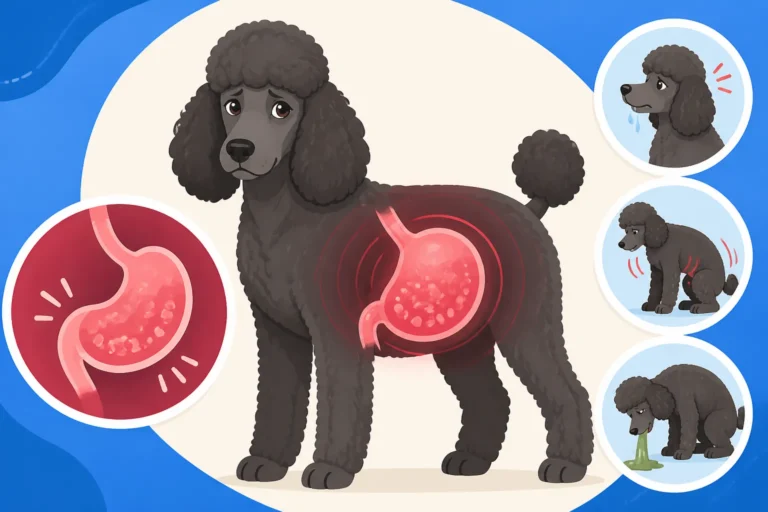
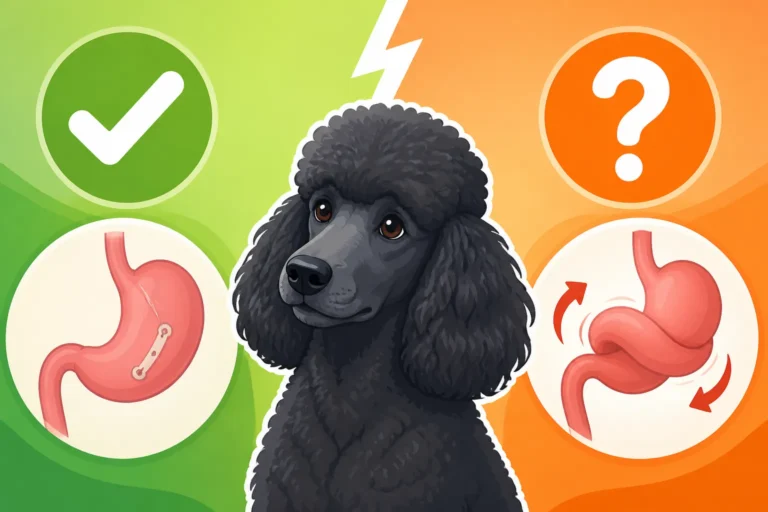
Gastric Dilatation-Volvulus (GDV), commonly known as bloat, is an acute, life-threatening condition where the stomach fills with gas, fluid, or food, then twists on its axis. This cuts off blood supply to the stomach and can lead to organ damage, shock, and death if not treated immediately. The deep, narrow chest of the Standard Poodle makes them particularly predisposed to this emergency.
While there's no genetic test to predict bloat, breeders play a role by focusing on overall health and careful management of environmental factors, as well as being transparent about bloat incidence in their lines. They should advise puppy buyers on preventative measures, such as feeding smaller, more frequent meals, avoiding vigorous exercise after eating, and potentially considering a prophylactic gastropexy surgery. Understanding Bloat and the Deep Standard Poodle Chest and the emergency signs of Poodle bloat is paramount for any Standard Poodle owner, and a responsible breeder will equip you with all necessary information to minimize this risk.
Critical Tests for Miniature Poodles
Miniature Poodles, while not as prone to bloat or Addison's as their larger cousins, have their own set of hereditary health concerns that require diligent screening. Breeders dedicated to the Miniature Poodle variety focus on ensuring clear lines for these specific conditions to safeguard the health of their puppies.
Patellar Luxation Assessment
Luxating patellas, or "slipping kneecaps," are a common orthopedic issue in smaller dog breeds, including Miniature Poodles. This condition occurs when the patella (kneecap) dislocates from its normal position in the groove of the femur. It can range from mild (occasionally slipping out and back in) to severe (permanently dislocated), causing pain, limping, and ultimately arthritis.
Breeders should have their Miniature Poodles screened for patellar luxation by a veterinarian, often through manual palpation and an orthopedic exam, typically from 12 months of age. The Orthopedic Foundation for Animals (OFA) provides a registry for patellar evaluations, grading them from normal to Grades 1-4, with Grade 4 being the most severe. Responsible breeders will only use dogs with normal or Grade 1 patella ratings in their breeding program to avoid passing on this painful condition. For more insight into Luxating Patella in Toy and Miniature Poodles, a good breeder will be able to show you the official clearances for their breeding dogs.
Eye Examinations and Progressive Retinal Atrophy
While Progressive Retinal Atrophy (PRA) affects all Poodle sizes, it's particularly well-documented in Miniature Poodles. As discussed earlier, PRA causes a progressive loss of vision, ultimately leading to blindness. Beyond the genetic DNA test for PRCD-PRA, breeders should also have their breeding Miniature Poodles undergo regular eye examinations by a board-certified veterinary ophthalmologist.
These examinations, often referred to as CERF (Canine Eye Registration Foundation) or OFA Eye Certifications, look for a range of inherited eye conditions, including but not limited to PRA. These certifications are typically done annually, as some conditions can develop later in a dog's life. A breeder should be able to provide clear and current eye certifications for both parents of a litter, along with DNA test results for PRCD-PRA. This dual approach helps ensure that puppies inherit the best possible chance for lifelong sight. Understanding Progressive Retinal Atrophy in Miniature Poodles is a significant step in identifying a responsible breeder.
Epilepsy Screening and Management
Idiopathic epilepsy, meaning seizures of unknown cause, is another health concern for Miniature Poodles. While seizures can be caused by many factors (toxins, metabolic disease, brain tumors), idiopathic epilepsy is hereditary and can be a significant health challenge for affected dogs and their owners. Seizures can range from mild, subtle episodes to severe, full-body convulsions.
There isn't a simple genetic test for idiopathic epilepsy, as it's likely a complex, polygenic trait. Therefore, breeders must rely on careful pedigree research, transparent communication, and avoiding breeding any dog that has experienced recurrent, unexplainable seizures, or has close relatives with idiopathic epilepsy. A breeder committed to healthy Miniature Poodles will keep meticulous health records and be open about any instances of seizures in their lines. They understand the heartbreak and expense that can come with Idiopathic Epilepsy in Miniature Poodles, and they work tirelessly to reduce its incidence through selective breeding. Even with the best efforts, unexpected issues can arise, making flexible pet insurance options like those from Healthy Paws a comforting backup for many families.
Specialized Health Checks for Toy Poodles
Toy Poodles, the smallest and most delicate of the Poodle varieties, come with their own unique set of health vulnerabilities that require specific attention from breeders. Their diminutive size and fine bone structure mean that different types of screenings are paramount to their well-being.
Luxating Patellas and Legg-Calve-Perthes Disease
Just like Miniature Poodles, Toy Poodles are highly susceptible to luxating patellas. In fact, due to their even smaller size and more delicate joints, it can be an even more pronounced concern. As discussed, this condition causes the kneecap to slip out of place, leading to lameness and potential arthritis. Breeders must have their Toy Poodles' patellas formally assessed by a veterinarian, with OFA certifications for normal or Grade 1 being the accepted standard for breeding.
In addition to luxating patellas, Toy Poodles can also be affected by Legg-Calve-Perthes Disease. This is a degenerative disease of the hip joint where the head of the femur (thigh bone) spontaneously degenerates, losing its blood supply, leading to bone death and collapse. It typically affects small breeds between 4 and 12 months of age. Signs often include limping, pain, and reluctance to bear weight on the affected leg. While there's no specific genetic test, breeders should monitor for cases in their lines and avoid breeding affected dogs. Early diagnosis and careful management can often lead to a good prognosis for puppies with Legg-Calve-Perthes in Small Poodles, but preventing it through careful breeding is the ideal.
Collapsing Trachea and Cardiac Health
Another concern for the dainty Toy Poodle is a collapsing trachea. The trachea (windpipe) is supported by rings of cartilage. In dogs prone to this condition, these rings can weaken and flatten, making it difficult for air to pass through, leading to a characteristic "honking" cough, especially when excited, pulling on a leash, or exercising. This issue can significantly impact a Toy Poodle's quality of life. Understanding Collapsing Trachea in a Toy Poodle and why harnesses matter for a Toy Poodle's throat are important discussions to have with a breeder.
While there isn't a specific breed-wide health certification for tracheal collapse, breeders should carefully assess the health of their breeding stock, looking for any signs of respiratory issues and ensuring that their dogs have good overall conformation. They should also screen for cardiac health. Many breeders will have their Toy Poodles undergo a cardiac examination by a veterinary cardiologist, looking for any heart murmurs or structural abnormalities that could indicate congenital heart disease. These checks help ensure that puppies are born with strong, healthy hearts, capable of supporting their active, playful lives.
Managing Hypoglycemia Risk in Puppies
Toy Poodle puppies, especially those on the smaller side, are particularly vulnerable to hypoglycemia, or low blood sugar. Because their tiny bodies have less fat and muscle reserves, they can quickly deplete their glucose stores if they miss a meal, get too cold, or over-exert themselves. A blood sugar crash in a Toy Poodle puppy is a serious emergency. Signs include lethargy, weakness, wobbling, disorientation, and even seizures or coma.
A responsible Toy Poodle breeder is extremely knowledgeable about this risk and takes proactive steps to prevent it. They will ensure puppies are fed frequently, kept warm, and observed closely. They will educate new puppy owners thoroughly on the signs of low blood sugar in a Toy Poodle puppy and provide detailed instructions on emergency sugar for a crashing Toy Poodle, such as glucose gel. While not a "test" on breeding adults, a breeder's awareness and management of this puppy-specific risk are a critical part of their health commitment. Knowing Blood Sugar Crashes in a Toy Poodle is crucial for anyone bringing home one of these tiny companions.
Decoding Health Certifications and Databases
Navigating the world of Poodle health can feel like learning a new language, full of acronyms and official-sounding names. However, understanding organizations like the OFA and the CHIC program is absolutely essential for verifying a breeder's claims and making an informed decision about your future Poodle companion. These certifications aren't just fancy pieces of paper; they represent objective assessments by veterinary specialists.
The Role of OFA and CERF
The Orthopedic Foundation for Animals (OFA) is perhaps the most well-known and respected database for canine health information in the United States. When a breeder talks about "OFA clearances," they're referring to certifications issued by this organization for various genetic and orthopedic conditions. For Poodles, common OFA certifications include:
- Hip Dysplasia: Graded as Excellent, Good, Fair, Borderline, or Dysplastic. Only Fair, Good, or Excellent are considered passing.
- Elbow Dysplasia: Graded as Normal or Dysplastic (Grades 1, 2, or 3). Only Normal is passing.
- Patellar Luxation: Graded as Normal or luxating (Grades 1-4). Only Normal is passing.
- Cardiac Disease: Clinical exams or advanced cardiac screenings performed by a cardiologist.
- Thyroid Disease: Screening for hypothyroidism.
Similarly, the Canine Eye Registry Foundation (CERF), now operating under the OFA Eye Certification Registry, provides eye clearances. Veterinary ophthalmologists examine dogs for inherited eye diseases like cataracts, glaucoma, and Progressive Retinal Atrophy (PRA). These eye exams are typically recommended annually because some eye conditions can develop later in life.
A reputable breeder will not only perform these tests but will be able to provide you with the official OFA certificates or direct you to the OFA public database where you can verify the results for their breeding dogs by searching their registered names or registration numbers. This transparency is a hallmark of ethical breeding and helps explain Which Poodle Tests Actually Change Outcomes.
Utilizing the CHIC Program for Comprehensive Health Data
The Canine Health Information Center (CHIC) is a health database co-sponsored by the OFA and the AKC Canine Health Foundation. The CHIC program aims to provide a clear, centralized health information resource for breeders and owners. For a dog to receive a CHIC number, it must have undergone all the health screenings recommended by the parent breed club. These recommended tests often vary by breed and size.
For example, the Poodle Club of America (PCA) has specific CHIC requirements for each Poodle size. These typically include:
- Standard Poodles: OFA Hips, OFA Elbows, OFA Eye (CERF), OFA Thyroid, Addison’s Testing (often through a DNA marker test for genes associated with increased risk, or more commonly, diligent pedigree research and transparency), and Sebaceous Adenitis (SA) skin biopsy (often a voluntary database registry).
- Miniature Poodles: OFA Patellas, OFA Eye (CERF), OFA Thyroid, and specific DNA tests like PRCD-PRA and vWD.
- Toy Poodles: OFA Patellas, OFA Eye (CERF), OFA Thyroid, and specific DNA tests like PRCD-PRA and vWD.
A dog with a CHIC number signifies that its breeder has gone above and beyond to complete all recommended health tests for its specific breed and size. While a CHIC number doesn't guarantee a dog is free from all health issues (no such guarantee exists), it indicates that the breeder has thoroughly addressed the known genetic predispositions for the breed. Always ask a breeder for CHIC numbers or the equivalent comprehensive panel of health results for both parent dogs. This helps you confirm Genetic Panels for the Three Poodle Sizes have been run.
| Poodle Size | Minimum Recommended Health Tests (OFA/Genetic) | Primary Concerns |
|---|---|---|
| Standard | OFA Hips, OFA Elbows, OFA Eyes (CERF), OFA Thyroid, vWD (DNA), DM (DNA), Addison's (pedigree analysis/screening), SA (skin biopsy/pedigree) | Hip/Elbow Dysplasia, Bloat, Addison's, SA, PRA, vWD, DM |
| Miniature | OFA Patellas, OFA Eyes (CERF), OFA Thyroid, vWD (DNA), PRA (DNA), DM (DNA) | Patellar Luxation, PRA, vWD, Idiopathic Epilepsy, DM |
| Toy | OFA Patellas, OFA Eyes (CERF), OFA Thyroid, vWD (DNA), PRA (DNA), DM (DNA) | Patellar Luxation, Legg-Calve-Perthes, Collapsing Trachea, PRA, vWD, DM |
Note: This table represents a general guideline. Specific breed clubs may have additional or evolving recommendations. Always consult directly with a breeder and review their specific health clearances.
Beyond Testing: The Holistic Approach of a Reputable Breeder
While health testing is absolutely foundational, it's just one piece of the puzzle when it comes to responsible breeding. A truly dedicated Poodle breeder encompasses a much broader philosophy, focusing on the overall well-being, temperament, and future success of their puppies. They understand that a puppy’s health isn't solely determined by genetics but also by its early environment, socialization, and the support system provided by the breeder.
Temperament and Conformation Considerations
A Poodle isn't just a collection of genes; it's a living, breathing individual with a unique personality. A responsible breeder meticulously evaluates the temperament of their breeding dogs, ensuring they are stable, confident, and exemplify the Poodle's intelligent and friendly character. They understand that a dog with excellent health clearances but a shy, aggressive, or overly anxious temperament is not a suitable breeding candidate. They also consider conformation—how well a dog's physical structure aligns with the breed standard. Good conformation is about more than just aesthetics; it contributes to a dog's ability to move soundly and maintain health throughout its life, reducing strain on joints and organs. They carefully select pairings that will produce puppies that are not only genetically healthy but also well-adjusted, structurally sound, and true to the Poodle temperament. This means that a breeder also considers factors like Poodle Lifespan Across the Three Sizes and how conformation contributes to longevity.
Lifelong Support and Breeder Guarantees
The relationship with a reputable Poodle breeder doesn't end when you take your puppy home. In fact, that's often when the most important part of the relationship truly begins. A good breeder provides lifelong support, offering advice on everything from grooming and nutrition to training and health concerns. They act as a mentor, a resource, and a friend, always ready to answer questions or provide guidance.
Furthermore, responsible breeders often include a health guarantee or contract with their puppies. This guarantee typically covers certain genetic conditions for a specified period, often the first one or two years of the puppy's life. While it's essential to read any contract carefully, these guarantees demonstrate a breeder's commitment to the health of their lines and their willingness to stand behind their puppies. They will often require that if an inherited condition covered by the guarantee manifests, the puppy either be returned for a replacement or a portion of the purchase price be refunded. This kind of accountability speaks volumes about a breeder's ethics and investment in the breed's future. They are invested in seeing their Poodles thrive, and that includes being honest about potential challenges and working with owners to overcome them. This extended care is one reason many Poodle owners invest in comprehensive pet insurance early on, like plans from Healthy Paws, to ensure they can always provide the best care, no matter what health issues might arise down the road.
Disclaimer
The information provided in this guide is for informational purposes only and does not constitute veterinary advice. Always consult with a qualified veterinarian for any health concerns or before making any decisions about your Poodle's care.