Why a Poodle Coat Mats Instead of Shedding
If you're a Poodle owner, you've probably heard the wonderful promise: "Poodles don't shed!" And while it's true they don't leave tumbleweeds of fur all over your house like some breeds, many Poodle parents quickly discover a different, equally frustrating reality: matting. Instead of shedding, that luxurious, continuously growing coat can quickly turn into a dense, felted mess that causes discomfort and pain for your beloved companion. This guide is dedicated to unraveling the mystery behind why your Poodle's coat mats so easily and, more importantly, how you can prevent it and keep your Poodle happy and healthy.
Understanding the Poodle Coat's Unique Structure
The Poodle coat is truly one-of-a-kind in the canine world, and understanding its unique characteristics is the first step in winning the battle against mats. It's not just "hair"; it's a marvel of nature that requires specific care.
The 'Hair' Versus 'Fur' Distinction
When people say Poodles have "hair" instead of "fur," they're tapping into a crucial biological difference. Most dog breeds have a coat composed of "fur," which typically grows to a certain length, sheds seasonally, and has a distinct undercoat and topcoat. Poodles, however, possess a single coat that is more akin to human hair. This means it grows continuously throughout their lives, without the typical seasonal shedding cycles you see in many other breeds.
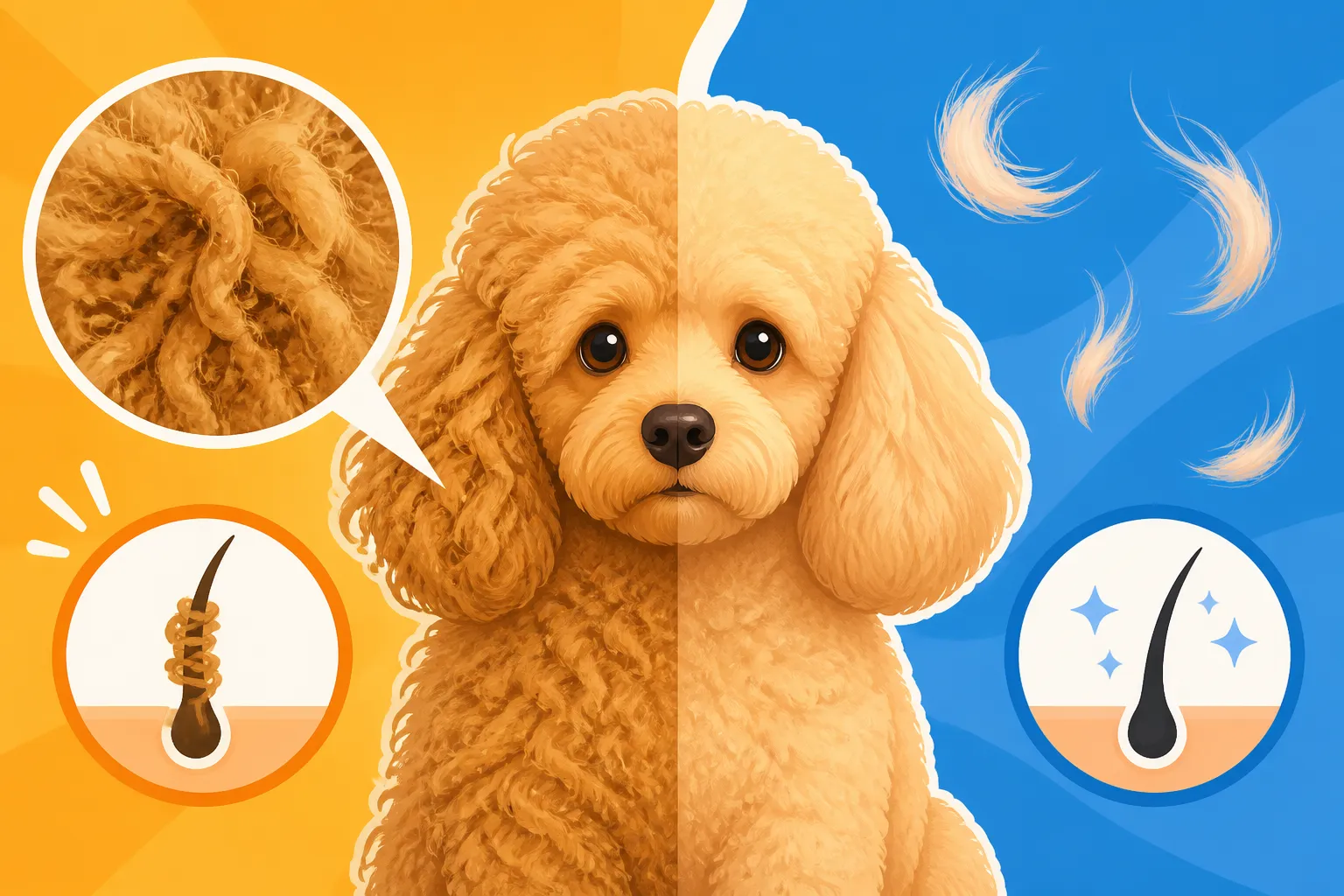
Because there isn't a massive "blow-out" of old hair twice a year, many Poodle owners initially breathe a sigh of relief. Less vacuuming, right? And to some extent, that's true. You won't find significant amounts of Poodle hair clinging to your furniture or clothing the way you would with a Labrador or a German Shepherd. The individual hairs do still die and detach from the follicle, just like human hair. But instead of falling out and spreading everywhere, these dead hairs get trapped within the dense, curly mass of the surrounding live coat. This trapped dead hair is the fundamental building block of every mat your Poodle will ever form. It's a double-edged sword: minimal shedding, but maximum potential for tangles. For a deeper dive into this unique characteristic, you might find Why a Poodle Has Hair Rather Than Fur an interesting read.
The Curl and Its Consequences
Beyond continuous growth, the Poodle's signature tight, dense curl is perhaps the biggest contributing factor to matting. Imagine trying to comb through a tangled ball of yarn – that's essentially what happens on a microscopic level within your Poodle's coat. The curly structure means that each strand of hair, dead or alive, is constantly intertwining with its neighbors.
When a dead hair detaches, it doesn't just fall away; it becomes snagged and woven into the surrounding curls. As more dead hairs accumulate, and as your Poodle moves, plays, and even just lies down, these trapped hairs begin to felt together. The curls act like tiny hooks and loops, grabbing onto anything loose and binding it into an increasingly tight knot. This process is exacerbated by any kind of friction or moisture. What might start as a small, barely noticeable tangle can quickly escalate into a dense, painful mat in a surprisingly short amount of time. Understanding Where Shed Poodle Hair Actually Goes really drives home why this happens.
The Mechanics of Mat Formation
Mats don't just appear out of nowhere; they are a gradual, relentless process fueled by the very nature of the Poodle's coat. It's a battle of physics and biology, and understanding how they form is crucial for effective prevention.
Trapped Dead Hair
As we touched upon, the primary culprit in mat formation is trapped dead hair. Think about your own hair: if you don't brush it, dead strands accumulate and can cause tangles. Now, imagine your hair is tightly curled and never stops growing. That's your Poodle's reality. Every day, your Poodle loses old hair, just like any other living creature. However, because their coat is so dense and curly, these shed hairs don't simply fall out. Instead, they get caught within the intricate web of living curls.
Initially, this might just feel like a minor snag when you run a comb through the coat. But as more and more dead hairs become entangled, they start to bind together, forming a denser, more cohesive mass. This process is similar to how wool felts: individual fibers interlock and compact. The tighter the curls, the more effectively they hold onto these shed hairs, creating the perfect environment for mats to develop. Without diligent and consistent removal of these trapped dead hairs, small tangles will inevitably grow into full-blown mats.
Friction and Pressure Points
While trapped hair is the ingredient, friction is often the catalyst that turns a small tangle into a stubborn mat. Any area of your Poodle's body that experiences regular rubbing, pressure, or movement is a prime target for matting. These are the spots where the hairs are constantly being pushed and pulled against each other, encouraging them to intertwine and compact.
Common "hot spots" for mats include:
- Behind the ears: This is a notorious area. Every time your Poodle shakes their head, scratches, or even just leans against something, the hair behind their ears gets rubbed, twisted, and matted. It's often one of the first places new owners find a mat.
- Armpits and inner thighs: These areas constantly rub with movement during walking, running, and playing. The fine, soft hair in these zones is particularly prone to felting quickly.
- Under the collar or harness: The constant pressure and rubbing from neckwear will quickly cause mats to form, sometimes in a tight band that can be hard to detect until it's severe.
- Hocks (ankles) and tail base: When your Poodle sits or lies down, these areas often bear weight or rub against surfaces, leading to matting.
- The topknot: If your Poodle has a longer topknot, the hair around their eyes and muzzle can easily mat from eating, drinking, or simply rubbing their face.
It's truly exasperating to think you've just brushed your Poodle, only to discover a new, stubborn mat in one of these hidden areas hours later. This is why thoroughness in these specific The Spots Mats Form First on a Poodle is absolutely essential. Checking your Poodle's Checking a Poodle's Armpits and Ears for Mats regularly should become a habit.
| Characteristic | Poodle Coat (Hair) | Typical Dog Coat (Fur) | Impact on Matting |
|---|---|---|---|
| Growth Cycle | Continuous growth, similar to human hair | Grows to a certain length, then sheds | Dead hair gets trapped within curls, leading to mats |
| Shedding Pattern | Minimal visible shedding; dead hairs retained | Seasonal shedding (blowing coat) | No natural release of dead hair, must be manually removed |
| Texture/Structure | Dense, tightly curled, single coat (minimal undercoat) | Varies, often double-coated with dense undercoat | Curls act like velcro, intertwining and binding trapped hair |
| Maintenance Need | High daily/weekly brushing, professional grooming | Varies by breed; often less frequent brushing required | Absolute necessity to prevent mats and skin issues |
Factors Accelerating Matting
While the Poodle's coat structure is the root cause, several external and routine factors can dramatically speed up the matting process, turning a minor tangle into a major problem in no time.
Inadequate Grooming Routine
This is, hands down, the biggest accelerator of matting. Many new Poodle owners underestimate the sheer commitment required to maintain that beautiful, non-shedding coat. It's not enough to just give a quick brush over the top, especially if you have a Poodle with a longer clip. Surface brushing, while making the top layers look nice, does absolutely nothing to address the trapped dead hair and forming tangles closer to the skin.
What constitutes an inadequate routine?
- Infrequent brushing: A Poodle in a longer clip often needs daily brushing, or at the very least, every other day. If brushing only happens once a week, or worse, less often, mats will develop rapidly, especially in those friction-prone areas. For an in-depth guide, check out How Often a Poodle Must Be Brushed.
- Using the wrong tools: A simple bristle brush or a comb not designed for dense, curly coats will glide over mats rather than penetrating to the skin. This leaves the underlying problem unaddressed.
- "Surface only" brushing: This is a common mistake. Owners brush the top layer, but the hair underneath and close to the skin remains matted. You need to learn how to line brush properly to ensure every inch of that coat is clear. The technique of Line Brushing a Poodle Explained is a game-changer for many owners.
- Skipping difficult areas: Those spots we mentioned – armpits, behind ears, between legs – are often uncomfortable or awkward for both dog and owner to brush. If these are consistently missed, mats will inevitably form there.
It's easy to feel overwhelmed by the grooming demands, especially if you're juggling a busy life. But neglecting the routine for even a few days can set you back significantly, turning a quick brush into a lengthy, arduous detangling session.
Moisture and Humidity
Water is a friend to mats, not a foe. When a Poodle's coat gets wet, especially if it's already a bit tangled, the individual hairs swell and then contract as they dry. This process makes tangles pull tighter and bind together more firmly, accelerating the matting process. This is why a quick dip in the lake or a rainy walk can lead to severe matting if the coat isn't immediately and thoroughly dried and brushed out.
Even a simple bath at home, if not followed by proper drying and brushing, can cause widespread matting. If you let your Poodle air dry, those curls will shrink and tighten, pulling any existing tangles into dense, hard mats close to the skin. High humidity in the air can also contribute, making the coat more prone to knotting, even if your Poodle hasn't been directly wet. Always make sure your Poodle is completely dry, down to the skin, and thoroughly brushed after any encounter with water.
Coat Change
Perhaps the most challenging period for Poodle owners is the dreaded "coat change." This typically occurs between 9 and 18 months of age, though it can vary. During this time, your Poodle's soft, often finer puppy coat is transitioning into their denser, coarser adult coat. Both types of hair are present, growing in at different rates, and intertwining with each other.
This mixture of textures is an absolute magnet for mats. The puppy coat, which might have been relatively easy to maintain, suddenly becomes a matting nightmare. What once took 15 minutes to brush now takes an hour, and even then, new mats seem to appear out of nowhere. It's an incredibly frustrating time for owners, and many Poodles end up being shaved down during this phase because the mats become too extensive or painful to brush out. Patience, dedication, and even more frequent, thorough grooming are the only ways to navigate this period with a long coat intact. It’s worth reading up on When a Poodle Puppy Coat Changes and Getting Through a Poodle's Coat Change to be prepared.
The Impact of Matting on Your Poodle's Health and Comfort
Beyond being an aesthetic concern, mats are a serious health and welfare issue for your Poodle. They are not merely cosmetic; they cause real pain, discomfort, and can lead to significant medical problems if left untreated.
Skin Irritation and Infections
Imagine wearing a tight, unbreathable sweater for weeks or months, never taking it off, even when it gets dirty or wet. That's what matting feels like for your Poodle's skin. Mats pull on the skin, causing constant irritation, similar to a perpetual itch. This alone can make your Poodle miserable and lead them to scratch or bite at the area, exacerbating the problem.
More critically, mats create an environment ripe for skin infections. They trap moisture, dirt, and debris against the skin, blocking airflow and creating a warm, damp breeding ground for bacteria and yeast. This can lead to:
- Hotspots: Localized areas of acute moist dermatitis, where the skin becomes red, inflamed, oozing, and intensely itchy.
- Dermatitis: General inflammation of the skin, often accompanied by redness, scaling, and odor.
- Fungal infections: Yeast (Malassezia) and ringworm thrive in moist, dark conditions underneath mats.
- Parasites: Fleas, ticks, and other parasites can hide deep within mats, making them incredibly difficult to detect and treat. The dense matting provides excellent cover, allowing them to feast on your Poodle unnoticed.
The pain and itchiness from these conditions can lead to behavioral changes, stress, and a significant drop in your Poodle's quality of life.
Pain and Restricted Movement
Mats are not just surface-level tangles; they can pull tightly on the skin, causing severe pain and restricting your Poodle's natural movement. As mats grow and tighten, they act like a straitjacket, tugging at the underlying skin with every step your Poodle takes. Imagine having your hair constantly pulled at the roots – that's the sensation your Poodle experiences.
Large mats can severely restrict blood flow and nerve function in affected areas. When mats form in crucial joints like armpits, elbows, or behind the knees, they prevent your Poodle from fully extending their limbs, making walking, running, and playing incredibly painful and difficult. They might become reluctant to move, jump, or even stretch. This can lead to muscle atrophy in unused limbs and joint issues down the line. Even sleeping comfortably becomes a challenge, as shifting positions can cause the mats to pull and pinch. The pain can be so intense that some Poodles become withdrawn, irritable, or even aggressive when touched, simply because they associate touch with agony.
Extreme Cases and the Necessity of Shave Downs
When matting becomes severe, covering large portions of the body and pulling tightly on the skin, a complete shave down is often the only humane solution. This is a common and often heartbreaking scenario for both owners and groomers. Owners feel immense guilt, and groomers, despite their best efforts, cannot brush out felted mats without inflicting terrible pain on the dog.
A shave down means removing all the matted hair, usually with a short blade that gets underneath the mats, right down to the skin. This procedure must be done with extreme care, as the skin underneath mats is often inflamed, thin, and prone to nicks and cuts. In some severe cases, a veterinarian may need to sedate the Poodle to perform the shave down safely and humanely, due to the pain and stress involved. The relief a Poodle experiences after being freed from a severe, painful matted coat is usually immediate and obvious, even if they look a bit shocking.
It's important to understand that when a groomer recommends a full shave, it's not a judgment on you; it's a necessity for your Poodle's well-being. Trying to "save" a severely matted coat is cruel and causes unnecessary suffering. If you're ever in this situation, it's important to understand When a Poodle Coat Has to Be Shaved Off and Why Groomers Shave a Matted Poodle.
Preventing Mats: Your Action Plan
Preventing mats is not just about aesthetics; it's a fundamental part of responsible Poodle ownership and crucial for their comfort and health. It requires consistency, the right tools, and a bit of technique.
The Right Tools and Techniques
Having the correct grooming tools is non-negotiable for a Poodle owner. Skimping here will only lead to frustration and matting.
Here’s your essential toolkit:
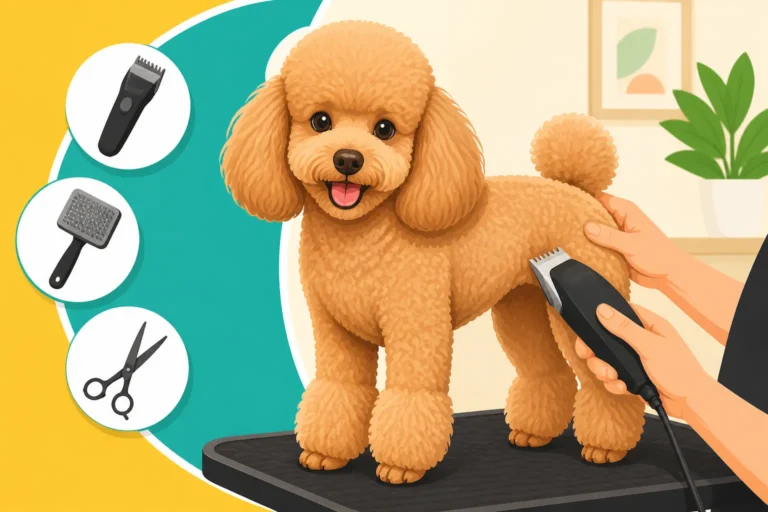
- Slicker Brush: This brush has fine, wire pins packed closely together, designed to grab and separate individual hairs. It's your primary weapon against tangles. Always choose one with coated tips or a flexible head to prevent scratching your Poodle's skin. You can find a wide variety of these on platforms like Amazon or Chewy. For guidance, consider Which Slicker Suits a Poodle Coat.
- Greyhound Comb (or metal comb with varying tooth spacing): This is your detector. After using the slicker, the comb is what truly confirms if you've gotten down to the skin and removed all tangles. If the comb glides smoothly from root to tip, you're clear. If it snags, you still have work to do. Don't underestimate the importance of Whether a Poodle Owner Needs a Greyhound Comb.
- Detangling Spray/Conditioner: A good quality spray can make a world of difference. It lubricates the hair, making it easier for tangles to slip apart and preventing static, which can also contribute to matting.
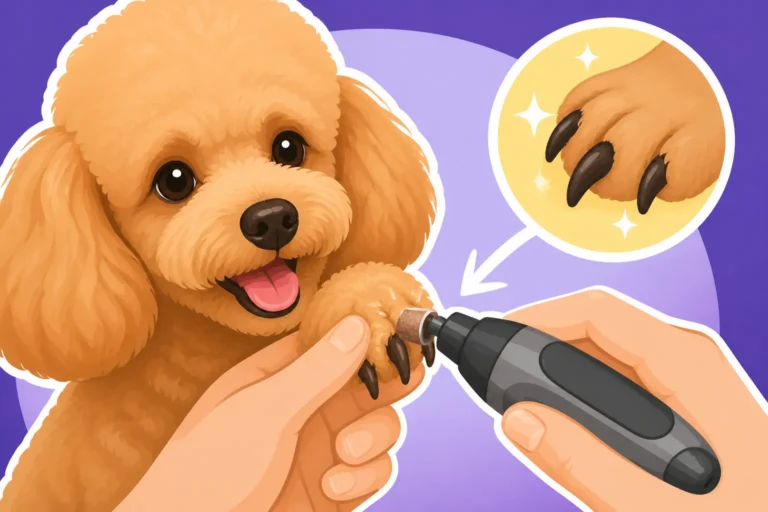
- Nail Clippers/Grinder: While not directly for mats, keeping nails trimmed prevents uncomfortable walking and can avoid issues where Poodles inadvertently scratch and irritate their skin, leading to more matting.
Technique: Line Brushing
This is the single most important skill to master. Instead of just brushing the top, you need to systematically brush your Poodle in sections, down to the skin.
- Sectioning: Part the hair horizontally or vertically, starting at the bottom of a leg or flank.
- Brush a small section: Hold the hair above the section you're working on with one hand. With the other, use your slicker brush to brush the exposed section downwards, starting from the skin and working your way out.
- Comb check: Once you think that section is clear, run your metal comb through it. If the comb catches, go back with the slicker brush until it glides smoothly.
- Move up: Take another small section of hair, let it fall over the previously brushed section, and repeat the process. Continue this method over your Poodle's entire body.
Consistent and Thorough Brushing Schedule
The frequency of brushing depends on your Poodle's coat length and texture, as well as their activity level. However, for most Poodles in a pet clip (anything longer than a very short shave), daily brushing is ideal. At a minimum, plan for thorough, head-to-tail line brushing sessions every 2-3 days.
Make brushing a positive experience from puppyhood. Keep sessions short initially, offer treats and praise, and handle their paws, ears, and tail gently. Consistency is key. It's much easier to spend 15-20 minutes daily preventing mats than to spend hours trying to remove painful, well-established ones. Integrating brushing into your daily routine, perhaps while you're watching TV or winding down, can make it less of a chore.
Professional Grooming as a Partner
Even with diligent home care, professional grooming is a non-negotiable part of Poodle ownership. Think of your groomer as your partner in maintaining your Poodle's coat and overall health. They have specialized tools, expertise, and a keen eye for spotting potential problems you might miss.
Regular professional grooming, typically every 4-8 weeks depending on your Poodle's clip length and how much you do at home, is essential. During these visits, the groomer will thoroughly wash, dry, and clip your Poodle's coat, ensuring it's free of mats and styled appropriately. They can also perform essential tasks like ear cleaning (especially important for Poodles' drop ears), nail trims, and sanitary trims. Communicating openly with your groomer about your Poodle's coat condition and your home grooming routine will help them provide the best care. Many groomers will be happy to show you how to tackle tricky spots or recommend specific tools. The cost of regular grooming is an investment in your Poodle's well-being and prevents more expensive vet visits for skin issues or sedated shave-downs. Understanding How Many Grooms a Poodle Needs a Year can help you budget and plan.
When Mats Form: Damage Control
Despite your best efforts, sometimes a mat or two might sneak in. Life happens, and even the most diligent Poodle parents occasionally find themselves facing a stubborn tangle. Knowing how to handle these situations effectively can prevent them from escalating and becoming a painful problem for your Poodle.
Gentle Detangling at Home
For small, isolated tangles or minor mats that aren't tight against the skin, you might be able to tackle them at home. The key is patience and gentleness. Rushing or pulling will only cause pain and make the mat worse.
Here's a step-by-step approach:
- Assess the Mat: Determine its size, location, and how close it is to the skin. If it's larger than your thumb, very tight, or your Poodle shows signs of pain, it's usually best to leave it to a professional.
- Apply Detangling Spray/Conditioner: Liberally spray the mat with a good quality detangling spray or a leave-in conditioner. Let it soak for a few minutes to help lubricate and loosen the hairs. You can find excellent options on Amazon or Chewy.
- Isolate the Mat: Use your fingers to gently separate the mat from the surrounding healthy hair.
- Work from the Outside In: Using the very tips of a metal comb or the corner of a slicker brush, start picking at the outer edges of the mat. Do not try to pull the comb straight through the mat. Work slowly, picking out individual strands or small clusters of hair at a time.
- Hold the Skin: Always place your fingers between the mat and your Poodle's skin to protect the skin from pulling and tension. This prevents discomfort and potential injury.
- Praise and Treat: Keep the session positive. Offer treats and praise your Poodle for tolerating the process. If they become uncomfortable or agitated, take a break.
- Check with a Comb: Once you think the mat is gone, run your metal comb through the area to ensure no tangles remain.
Remember, this method is only for minor mats. For stubborn ones, a Detangling Spray for a Matted Poodle can be a lifesaver, but temper your expectations.
When to Seek Professional Help
There comes a point where home detangling is no longer safe or humane. Recognizing these limits is crucial for your Poodle's welfare.
You should seek professional help from a groomer (or vet in severe cases) if:
- The mat is large and tight: Mats that are dense, extensive, and felted close to the skin are extremely painful to remove and very difficult to get out without specialized tools and techniques.
- Your Poodle shows pain or aggression: If your Poodle flinches, cries, growls, or tries to bite when you touch the mat, it's a clear sign they're in pain. Forcing the issue will only create a negative association with grooming and erode trust.
- Mats are in sensitive areas: Mats around the ears, eyes, genitals, or paw pads are particularly delicate and easy to injure.
- You don't have the right tools or expertise: Attempting to cut out mats with scissors is incredibly dangerous and often results in accidental cuts to the skin, which is paper-thin underneath mats. Never use scissors to cut out a mat unless you are a trained professional.
- The mats are causing skin irritation: If you see redness, scabs, or any signs of infection under a mat, a vet visit is needed alongside professional grooming to address the skin issue.
A professional groomer has the experience, the right clippers, and the knowledge to safely and humanely remove even severe matting. They understand how to work around sensitive areas and can often get under mats without causing unnecessary pain. While a shave down might be necessary, it's a far better outcome than allowing your Poodle to suffer from painful, untreated mats.
Disclaimer
This article is for general informational purposes only and does not constitute professional advice. Laws, prices and regulations vary by location and change over time. Consult a qualified professional for guidance on your specific situation.