Treats and a Poodle’s Waistline
It’s a tale as old as time for Poodle owners: you love your smart, eager-to-please companion, and what better way to show that love and reinforce good behavior than with a tasty treat? But let’s be honest, those little rewards can add up fast, leaving us scratching our heads when our lean Poodle starts looking a little… rounder. This comprehensive guide will help you navigate the world of Poodle treats, ensuring you can still indulge your furry friend without sabotaging their sleek physique and overall health.
The Poodle's Unique Metabolism and Weight Challenges
Poodles, regardless of their size – Standard, Miniature, or Toy – are known for their elegant, athletic builds. But don't let that fool you into thinking they can eat anything they want without consequence. Their metabolism, combined with their sharp minds and often sedentary home lives, can make weight management a surprising challenge.
Why Poodles Can Pack on Pounds Easily
Many Poodle owners, especially those with Toy or Miniature Poodles, might underestimate the caloric needs of their dogs. A Standard Poodle might burn more calories running in a field, but a Toy Poodle often spends more time cuddling on the couch, meaning every treat counts. It's easy to fall into the trap of thinking a small dog needs just a little bit of food, but also that a "tiny" treat won't make a difference. The truth is, relative to their body size, even small treats can contribute significantly to their daily caloric intake.
Moreover, Poodles are incredibly intelligent. This is a double-edged sword. While it makes them highly trainable, it also means they quickly learn how to work you for treats. They'll perform every trick in their repertoire, give you those soulful Poodle eyes, and seem utterly deprived, even if they've just had their dinner. Their cleverness can lead to owners inadvertently over-treating them throughout the day, often without realizing how many extra calories are being consumed. A Poodle's often lean, athletic build also means that even a few extra pounds can be more noticeable and put undue stress on their delicate joints, potentially worsening conditions like Poodle Hip Dysplasia by Size in larger Poodles or Luxating Patella in Toy and Miniature Poodles in smaller ones.
The Hidden Calories in Everyday Treats
It's astonishing how many calories are packed into those seemingly innocent dog treats we buy off the shelf. Many commercial dog treats are formulated to be palatable, which often translates to being high in fat, sugar, or simple carbohydrates. A single biscuit might contain as many calories as a small meal for a Toy Poodle. And for a Standard Poodle, while one biscuit might seem insignificant, a handful throughout the day can easily push them over their caloric limit.
Then there's the human food factor. We love to share with our beloved Poodles, and they are masters at convincing us they need that bite of toast, that piece of cheese, or that little bit of chicken. While some human foods can be healthy in moderation, many common table scraps are incredibly rich, high in fat, sodium, or even contain ingredients toxic to dogs. A dollop of peanut butter on a puzzle toy can be a wonderful distraction, but if it's full of sugar or Xylitol (a sugar substitute that is extremely dangerous for dogs), it's doing more harm than good. Even seemingly benign items like a piece of bread can be surprisingly calorie-dense, and for a Poodle with a sensitive digestive system, it might lead to more than just weight gain. That "just one more" philosophy, especially when applied to a tiny Toy Poodle, can quickly lead to an unhealthy weight.
Understanding Treat Types and Their Calorie Content
Choosing the right treats for your Poodle is just as important as choosing their regular food. Not all treats are created equal, and understanding the differences can make a huge impact on managing your Poodle's waistline.
Commercial Treats: What to Look For and What to Avoid
When you're perusing the treat aisle at your local pet store or browsing online retailers like Chewy or Amazon, it can feel overwhelming. There are so many options! The key is to become a label detective. Look for treats that explicitly state they are low-calorie or have a clear breakdown of their nutritional content. Single-ingredient treats are often an excellent choice. Think dehydrated liver, freeze-dried chicken, or pure sweet potato chews. These usually have fewer hidden additives and a more transparent calorie count.
Always read the ingredient list carefully. Avoid treats that list corn syrup, excessive sugars, artificial colors, or a long list of unpronounceable chemicals. These are often fillers that add calories without much nutritional value. Pay close attention to the calorie count per treat. Some treats might seem small, but be incredibly dense. For a Toy Poodle, even a seemingly small treat can be too much. Brands often make smaller versions of treats for tiny dogs, or you might find larger treats that are easily broken into smaller, more appropriate pieces. Remember, it's the reward that matters to your Poodle, not necessarily the size of the treat itself.
Healthy Human Food Alternatives
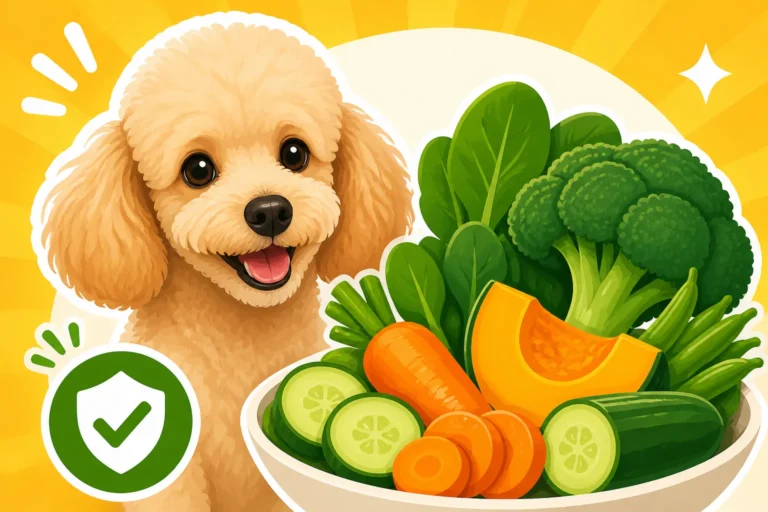
One of the best ways to ensure your Poodle is getting nutritious, low-calorie treats is to turn to your own refrigerator. Many fruits and vegetables make fantastic, healthy snacks.
Consider:
- Carrots: Great for crunch, good for teeth, and low in calories.
- Green beans: A classic diet staple for dogs, low-calorie and filling.
- Apple slices: (Seeds removed!) A sweet, crunchy treat in moderation.
- Blueberries: Small, antioxidant-rich, and easy for Poodles of all sizes.
- Cucumber slices: Hydrating and very low in calories.
- Cooked, plain chicken or turkey breast: A high-value, lean protein source, great for training.
- Plain pumpkin puree: Excellent for digestion and low in calories.
The critical factor, even with healthy human foods, is portion control. A single baby carrot might be perfect for a Toy Poodle, while a few pieces could work for a Standard. Too much of even a good thing can lead to an upset stomach or still contribute to weight gain. Always ensure the foods you offer are safe for dogs. Avoid grapes, raisins, onions, garlic, avocados, chocolate, and anything sweetened with Xylitol, as these can be toxic. Remember, just because it's healthy for you doesn't mean it's suitable or safe for your Poodle.
| Treat Type | Examples | Pros | Cons | Suggested Poodle Portion (Adjust by Size) |
|---|---|---|---|---|
| Low-Calorie Commercial | Zuke's Mini Naturals, freeze-dried liver, single-ingredient jerkies (e.g., from Chewy) | Specifically designed to be low in calories; high-value for training; often made with limited ingredients | Still require label reading; can be expensive; some may still have fillers | 1-3 small pieces (Toy), 3-5 pieces (Miniature), 5-8 pieces (Standard) per training session |
| Healthy Fruits/Veggies | Carrots, green beans, apple slices (no seeds), blueberries, cucumber | Natural, nutrient-rich, low in calories, hydrating; often readily available at home | Must be safe for dogs; can cause digestive upset if given in excess; some Poodles might be picky | 1 baby carrot/few green beans (Toy), 2-3 pieces (Miniature), 1/4 cup chopped (Standard) |
| High-Calorie Commercial | Biscuits, chewy soft treats, dental chews (if large/many) | Highly palatable; good for occasional, special treats | Very easy to overfeed; often contain fillers, sugars, or fats; can lead to rapid weight gain | Avoid daily use for weight management. Max 1 small piece (Toy) or 1/2 piece (Standard) sparingly. |
| Human Food (Fatty/Rich) | Cheese, peanut butter (with Xylitol), fatty meats, pastries | Extremely high value; Poodles love them | High in fat, sugar, sodium; very easy to overfeed; many items are toxic or unhealthy | Avoid completely. Only tiny, plain, safe human food as rare, high-value rewards. |
Strategies for Smart Treat Giving
Treats are an invaluable tool for training, bonding, and enrichment, especially with a brilliant breed like the Poodle. The trick isn't to eliminate them entirely, but to use them strategically and mindfully.
Integrating Treats into Training and Enrichment
Poodles thrive on mental stimulation, and treats are an excellent way to provide it. Instead of just handing your Poodle a treat for no reason, make them work for it. Use treats as high-value rewards for learning new cues or practicing complex behaviors. Their intelligence means they learn quickly, often only needing a few repetitions to grasp a new concept. This quick learning can also mean they become complacent if treats are always easy. Fading Rewards With a Quick-Learning Poodle is an important concept here, where you gradually reduce the frequency of treats as the behavior becomes reliable, replacing them with praise or play.
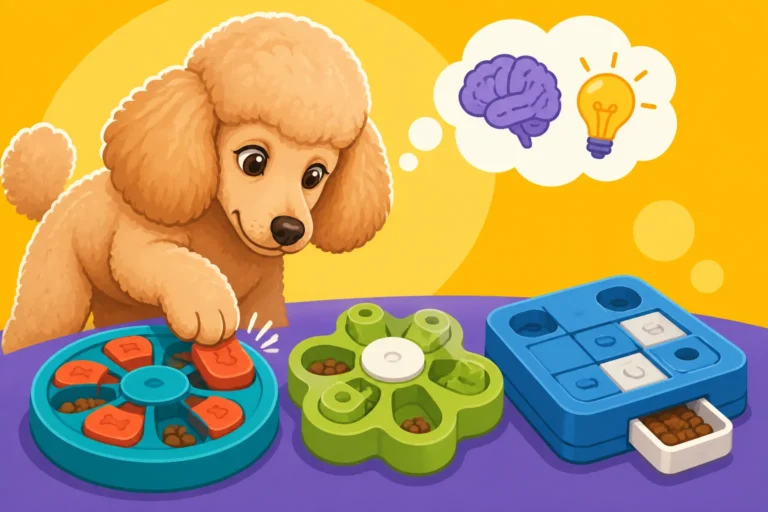
Puzzle toys are another fantastic way to incorporate treats without overfeeding. Stuff a Kong with a tiny smear of peanut butter (make sure it's Xylitol-free!) and a few pieces of low-calorie kibble, or use a treat-dispensing ball. This makes the treat last longer, provides mental engagement, and slows down consumption. Feeders That Make a Poodle Think for Dinner can also be used for treats, turning snack time into an enriching activity. For Toy Poodles, ensure the treats used are Treats Small Enough for a Toy Poodle to prevent choking hazards and manage calories appropriately. Remember, a bored Poodle is a mischievous Poodle, and mental exercise can be just as tiring as physical exercise!
Calculating Daily Treat Allowance
This is where the math comes in, and it's less daunting than it sounds. A general rule of thumb for treats is that they should make up no more than 10% of your Poodle's total daily caloric intake. If your Poodle needs 500 calories a day to maintain a healthy weight, then treats should only account for 50 of those calories.
To figure this out, you first need to know your Poodle's ideal daily caloric intake. This can vary significantly based on their size, age, activity level, and whether they are spayed or neutered. Your veterinarian is the best resource for determining this number accurately. Once you have that figure, you can use the calorie information on treat packaging (or estimate for healthy human foods) to ensure you're staying within that 10% limit.
If you give a lot of treats, especially during intensive training sessions, you must adjust their main meal portions accordingly. If you've given 50 calories worth of treats, you need to reduce their kibble by roughly 50 calories to avoid overfeeding. It requires diligence, but it’s essential for weight management. For a senior Poodle, whose metabolism might be slowing down, Calorie Needs of a Senior Poodle will be different than a young, active Poodle, making careful treat allowance even more critical.
Managing Treats in a Multi-Poodle Household or During Social Gatherings
Life with multiple Poodles or frequent guests can complicate treat management. In a multi-Poodle home, it’s common for one Poodle to be a speedy eater, while another might be more leisurely, leading to the quicker one "cleaning up" any forgotten treats. Or, if Poodles of different sizes live together, a treat perfectly fine for a Standard Poodle might be too much for a Toy. Always supervise treat time and ensure each Poodle gets their appropriate share, or separate them for treats.
Social gatherings present another challenge. Well-meaning friends and family might not understand your Poodle's dietary needs or the caloric impact of their offerings. The "just a little bit won't hurt" mentality is a Poodle's best friend and an owner's biggest foe. Politely educate your guests beforehand. Have a small container of approved, low-calorie treats on hand that guests can give your Poodle instead of table scraps. This allows your Poodle to still enjoy the attention and the "reward" without compromising their health. Consistency is key; if your Poodle knows that begging from guests sometimes works, they'll always try.
Monitoring Your Poodle's Waistline and Health
Regularly assessing your Poodle's body condition is paramount. Since Poodles have that gorgeous, constantly growing coat, it can be deceptively easy to miss subtle weight changes until they become significant.
How to Assess Your Poodle's Body Condition
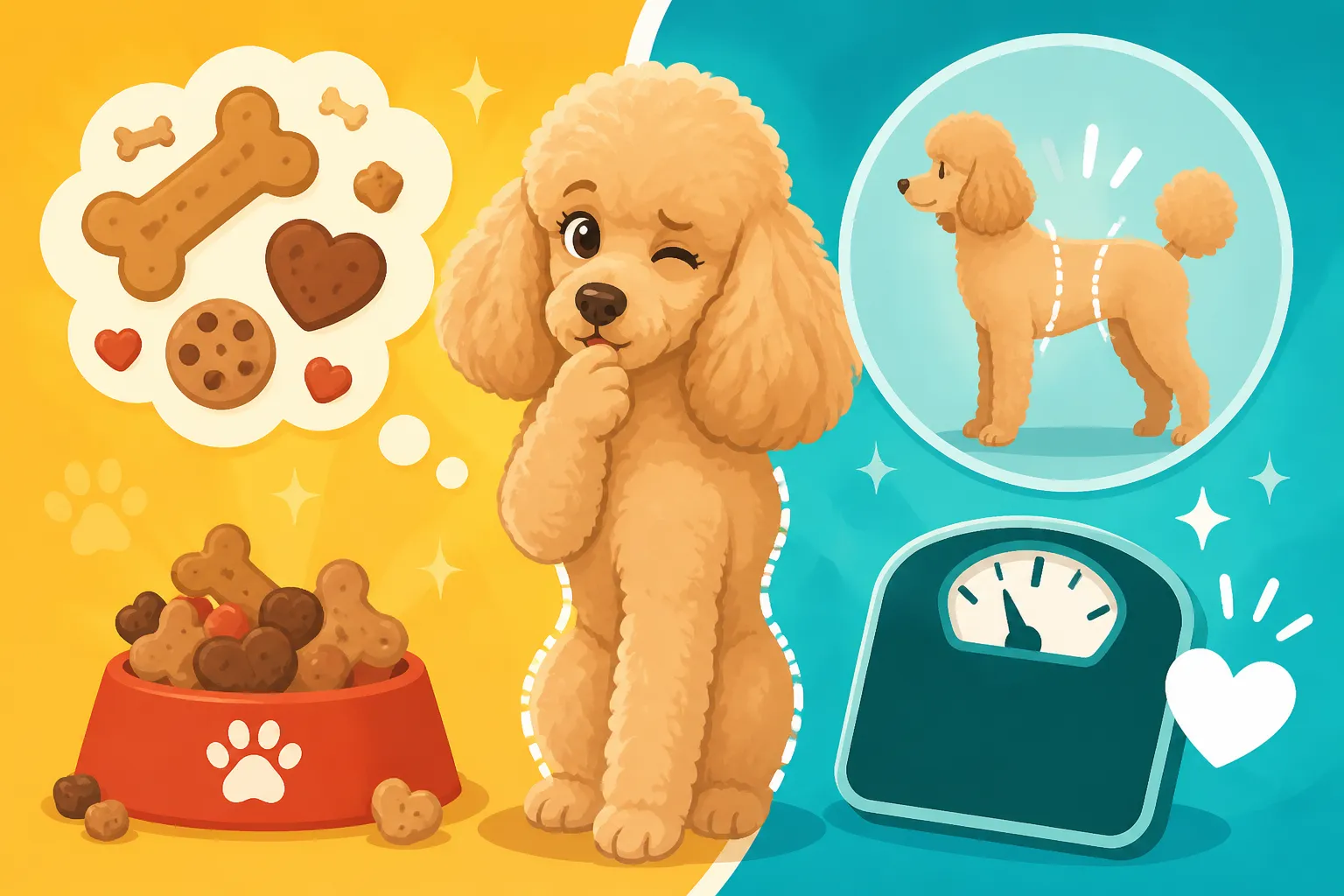
The best way to know if your Poodle is at a healthy weight isn't just looking at them, but feeling them. You'll want to assess their Body Condition Score (BCS). This involves three key areas:
- Ribs: You should be able to easily feel your Poodle's ribs without pressing hard, like feeling the back of your hand. You shouldn't see them prominently sticking out, but a light touch should detect them under the skin and muscle. With a Poodle's thick coat, this requires a good, thorough feel. It's often easier to do this when their coat is wet after a bath, or right after a professional groom when they're in a shorter clip. Feeling Ribs Under a Thick Poodle Coat can be tricky, but it's a skill worth developing.
- Waist Tuck: When looking at your Poodle from above, you should see a discernible waistline behind their ribs. From the side, their abdomen should tuck up slightly rather than hanging straight down or bulging.
- Abdominal Fat: Feel along their belly. It should feel firm, not saggy or overly squishy.
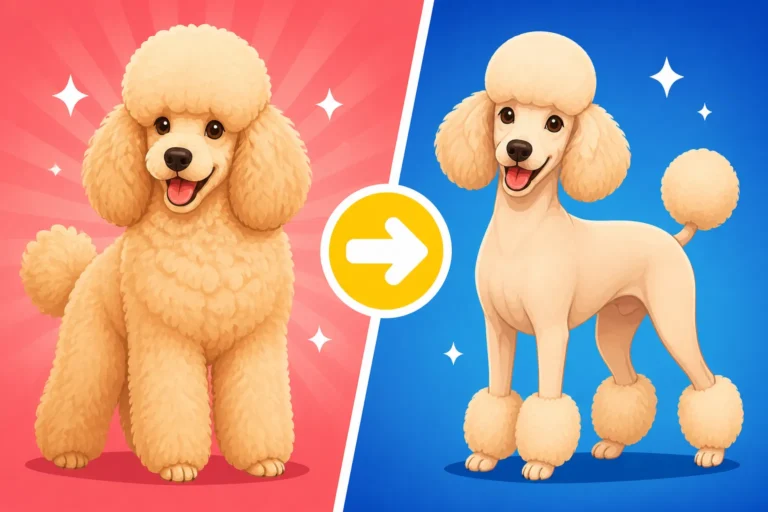
The Poodle's curly coat can be a magnificent disguise, masking several pounds of extra fluff. What might look like a healthy, full-bodied Poodle under all that hair could actually be an overweight dog. It's why groomers sometimes get comments like, "Wow, Fifi looks so thin!" after a shave down. That's often because the owner is finally seeing their Poodle's true body shape without the optical illusion of the coat. Why a Groomed Poodle Looks Thinner highlights this very point – it's not that the Poodle lost weight during the groom, but that their true physique became visible.
Signs Your Poodle is Gaining Too Much Weight
Beyond the physical assessment, there are behavioral and health indicators that your Poodle might be carrying too many pounds:
- Decreased Energy Levels: An overweight Poodle might be less enthusiastic about walks, play, or their usual zoomies. They might tire more quickly.
- Reluctance to Play: Jumping, running, or even getting up from a lying position can become more effortful.
- Increased Panting: Even with minimal exertion, an overweight Poodle might pant more heavily than usual due to the extra strain on their cardiovascular system.
- Difficulty with Grooming: They might struggle to reach certain spots to lick, and you might find it harder to brush them thoroughly, leading to more matting.
- Joint Issues: Excess weight puts incredible stress on joints, which can exacerbate existing conditions or lead to new ones like arthritis. Poodle Obesity and Its Consequences are far-reaching, from joint pain to organ strain. For older Poodles, extra weight can certainly worsen Arthritis in a Twelve-Year-Old Poodle, making their golden years less comfortable.
Catching these signs early is crucial. The sooner you address weight gain, the easier it is to reverse course and prevent more serious health problems.
When to Talk to Your Vet About Weight Management
Your veterinarian is your most important partner in your Poodle's health journey, especially when it comes to weight. Don't wait until your Poodle is clearly obese to have the conversation. Bring it up during routine check-ups, or schedule a specific appointment if you have concerns.
Your vet can:
- Accurately assess your Poodle's Body Condition Score and ideal weight.
- Help you calculate their precise daily caloric needs.
- Rule out any underlying medical conditions that might contribute to weight gain, such as Hypothyroid Symptoms in a Poodle or other metabolic disorders.
- Recommend specific prescription diets if needed.
- Help you create a safe and effective weight loss plan, including dietary changes and an appropriate exercise routine.
Sometimes, weight gain isn't just about too many treats; it can be a symptom of a larger health issue. A thorough vet examination, potentially including blood tests, can provide peace of mind and ensure you're addressing the root cause. Never hesitate to consult with your vet if you're concerned about your Poodle's weight or overall health.
The Psychological Aspect of Treats for Poodles
For Poodle owners, treats are more than just food; they're a language of love, a training tool, and a way to communicate appreciation. Understanding the psychological role treats play for both you and your Poodle can help you navigate healthy giving habits.
The Poodle's Relationship with Food and Rewards
Poodles are famously intelligent, and this intelligence profoundly shapes their relationship with food and rewards. They quickly make associations: "If I sit, I get a treat." "If I give you my paw, I get a treat." This makes them highly trainable, but also incredibly adept at manipulating us with their charm. They learn quickly which behaviors elicit a reward, and they'll try them all. Why Poodles Read People So Well means they can gauge your mood, your intentions, and exactly how to get what they want – often with those melting, expressive eyes.
Beyond training, treats can be powerful for building positive associations. If your Poodle is a bit wary of new experiences or people, a carefully placed, high-value treat can turn a potentially negative interaction into a positive one. For sensitive Poodles, positive reinforcement with treats is far more effective than harsh corrections, which can cause them to shut down. The key is to use treats deliberately, not just indiscriminately. They should be earned, even if it's just for a moment of calm attention.
Avoiding Emotional Feeding and Guilt
Let's face it, we all do it. We feel a little guilty leaving our Poodle home alone, so we offer a treat. Our Poodle looks sad, so we give them a treat. They had a tough day at the groomer (in our minds, anyway), so they deserve a treat. This is emotional feeding, and it's driven by our human desire to show love and alleviate our own guilt. While it comes from a good place, it's one of the quickest ways to contribute to weight gain.
It's important to remember that love isn't solely expressed through food. Poodles crave attention, interaction, and mental engagement just as much, if not more, than food. Find non-food ways to show affection:
- Playtime: A game of fetch, tug-of-war, or hide-and-seek.
- Cuddles and pets: Nothing beats a good snuggle on the couch.
- Walks and adventures: Exploring new sights and smells is incredibly enriching.
- Training sessions: Even five minutes of practicing known cues or learning a new trick can be bonding.
When your Poodle gives you "the look" or Whether Poodles Sulk after you've denied them a treat, it can be hard to resist. But stand firm. You're doing what's best for their long-term health, and that's the ultimate expression of love. Redirect their attention to a toy, a gentle scratch behind the ears, or an offer of a quick, engaging play session instead.
Practical Tools and Tips for Treat Management
Managing your Poodle's treat intake doesn't have to be a constant struggle. With the right tools and a little planning, you can make healthy treat habits a seamless part of your daily routine.
Recommended Treat Dispensers and Puzzle Toys
These are your secret weapons in the fight against boredom and rapid treat consumption. Puzzle toys and treat dispensers force your Poodle to use their brain and paws to extract their reward, slowing down the eating process and extending mental stimulation.
Consider:
- Kong Toys: Fill them with a small amount of low-fat yogurt, pumpkin puree, or a few pieces of their regular kibble mixed with a tiny dollop of peanut butter (Xylitol-free!). Freeze for an even longer-lasting challenge.
- Treat-Dispensing Balls: These toys drop kibble or small treats as your Poodle nudges them around. Great for engaging their natural foraging instincts. Brands like Chewy and Amazon offer a wide variety of these.
- Snuffle Mats: These fabric mats have various pockets and flaps where you can hide treats or kibble, encouraging your Poodle to sniff them out. Excellent for nose work and mental exercise.
- Slow Feeder Bowls: While primarily for meals, these can also be used for distributing a portion of their daily treat allowance, ensuring they don't gulp everything down in seconds. Feeders That Make a Poodle Think for Dinner are fantastic for this purpose, turning mealtime into a brain game.
These tools are especially beneficial for Poodles who are left alone for periods, helping to reduce boredom and potential destructive behaviors.
Meal Prepping and Portioning Strategies
Accuracy is everything when it comes to managing your Poodle's calories. Eyeballing amounts can lead to significant overfeeding over time.
- Use a Kitchen Scale: This is by far the most accurate way to measure your Poodle's kibble and any measurable treats. Scoop their daily portion into a bowl and then remove the estimated caloric equivalent for the treats you plan to give that day. For example, if your Toy Poodle's Monthly Food Cost for a Toy Poodle factors in a certain amount of kibble, ensure you're sticking to it, and adjust when treats are added. Similarly, for a Standard Poodle, managing Feeding a Standard Poodle for a Month accurately means precise measurements for both meals and treats.
- Divide Daily Treat Allowance: Instead of giving all the treats at once or haphazardly throughout the day, pre-portion them. Get a small container each morning and put in exactly how many treats your Poodle is allowed for the entire day. Once they're gone, they're gone! This helps prevent accidental overfeeding and keeps you accountable.
- Break Treats into Smaller Pieces: Even if a treat is low-calorie, a smaller piece often provides the same rewarding experience for your Poodle. Break larger treats into pea-sized portions, especially for training. Your Poodle doesn't care if it's a whole biscuit or a crumb; they care about the act of getting a reward.
- Incorporate Kibble as Treats: Don't underestimate the power of their regular kibble as a reward, particularly for training. If your Poodle likes their food, using a portion of their daily kibble as treats saves calories and ensures they're still getting balanced nutrition.
By being mindful and implementing these practical strategies, you can continue to enjoy the joy of giving treats to your Poodle without compromising their health or contributing to an expanding waistline.
Disclaimer
This article is for general informational purposes only and does not constitute professional advice. Laws, prices and regulations vary by location and change over time. Consult a qualified professional for guidance on your specific situation.